 Richard Bodin
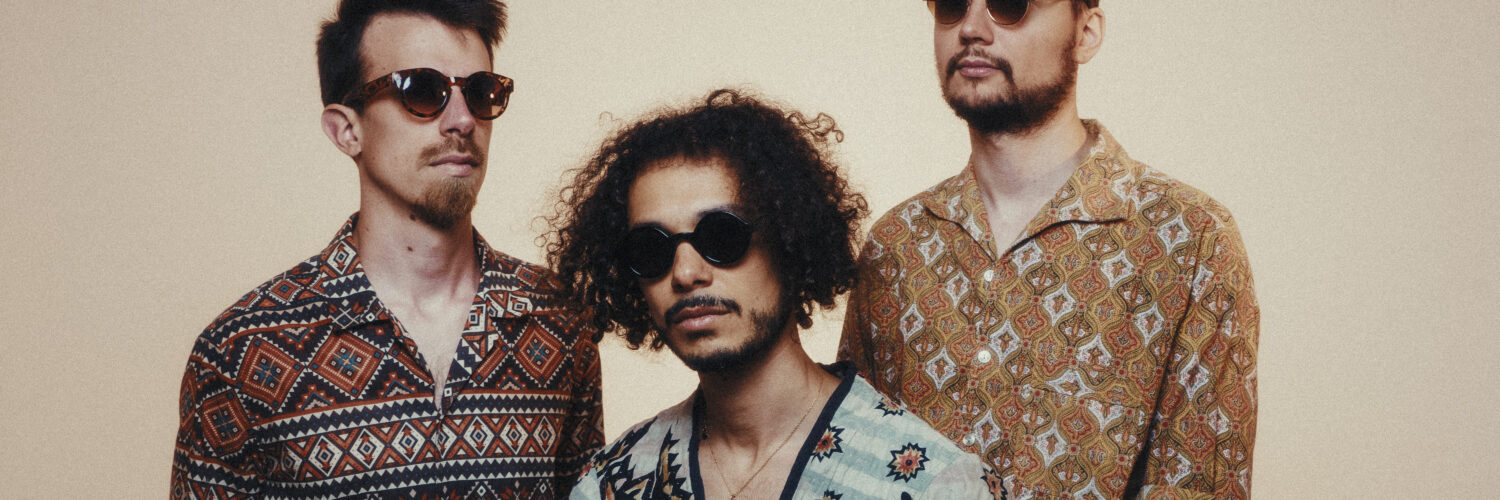
A few months ago, while visiting my hometown of Angers, back in France, I discovered a band with a peculiar sound that instantly appealed to me. They go by the name of Gondhawa and play a delicious blend of psychedelic rock mixed with oriental influences and complex rhythmic structures. After diving into their latest album Täkomā, I immediately ordered their debut EPMäanthagorī, and debut album Käampâla.
A very singular aspect to their music is their approach to the musicality of the language. They felt that coming up with their own language would allow them to express themselves more freely with their music. Gondhawa, named after a lost world in Barjavel’s novel “La Nuit Des Temps” (The Ice People), then had their own language, the Gondhawii.
But the language is only one part of the world Gondhawa have created. Their music moves freely between psychedelic and Tuareg rock, blues, garage, stoner and other influences. Their visual universe too draws on sci-fi, fantasy and adventure. It’s a world that doesn’t easily fit into one box — and perhaps that’s precisely the point. I had to meet them to understand where they came from, how that world came together, and where they might take it next.
The Making of Gondhawa
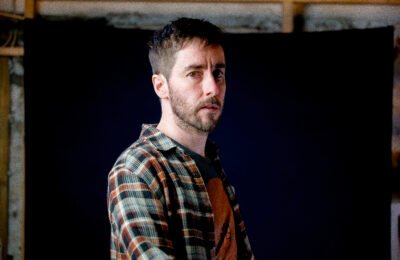
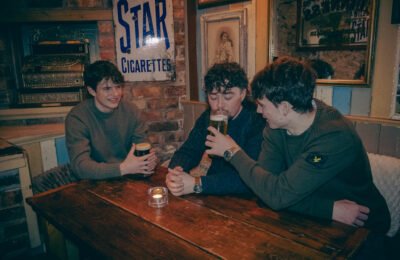
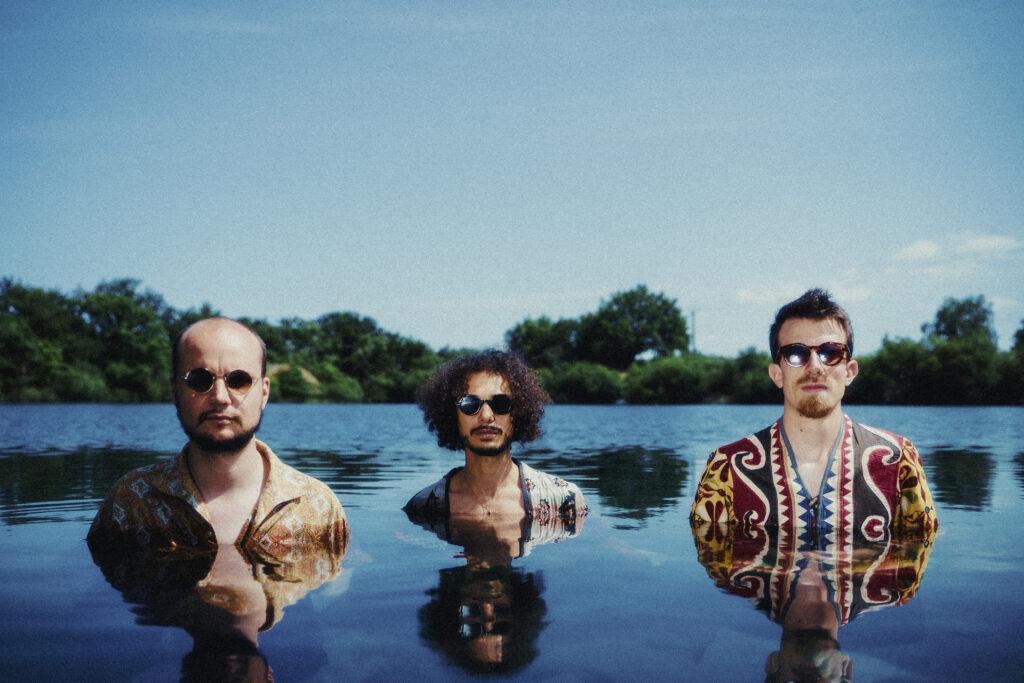
Gondhawa, what is it first and foremost? Three friends? Music? Or an imaginary world?
A bit of all three. It started with music first. Then we became friends — well, we were already kind of friends before that… Then the imaginary side developed gradually. At first, it was something more stripped back, more blues / garage rock. Then it moved towards more oriental music, with slightly different horizons.
Where did Gondhawii come from? Did you know from the beginning that it would become a language of its own, rather than just a collection of sounds?
At first, yes, it was more of a collection of sounds. When we compose, we tend to start by finding a rhythm, and then we just sing gibberish to try to illustrate it. We pushed that a little further to turn it into a language, while keeping that rhythmic and vocal aspect. That slightly more visceral thing that comes out when you’re composing. But not necessarily the language that sits behind it, you know.
It’s constantly evolving. It’s a relationship with language where we try to put it into music. It never really stops. We’re always looking at where we could take it next.
Is there a meaning behind the lyrics…?
I think what you’re really asking is: “Do you have a dictionary?” But I’ll tell you straight away: you’re not getting one. Laughs.
No, actually, there isn’t necessarily any underlying meaning. We haven’t made a dictionary. When we’re composing, we try to think more in terms of images and colours. So the language also helps illustrate that. But there isn’t a specific meaning behind every word.
Beyond France
Your music is fascinating, wonderfully psychedelic, with microtonal melodies, complex rhythms and exotic instruments that add a sense of mystery… How did all of this come together? Was that the direction you wanted to take from the beginning, or not at all?
Originally, there were just Idriss and Clément in the band. The influences were more blues-oriented: The White Stripes, Seasick Steve, Bjørn Berge, who came to play in Angers several times. Then Paul joined the band, and things became a little more complex, with much more rock-oriented influences. Little by little, we listened to loads of different things. We also saw lots of artists in Angers. And then we discovered King Gizzard & the Lizard Wizard, Mdou Moctar, loads of Tuareg rock bands. We started moving away from pure rock and towards something more open.
You’ve received quite a bit of attention abroad, particularly after that KEXP live session at the TransMusicales in 2022… Is there a difference between how the band is received abroad and in France?
In terms of touring, in France we’ve mostly played individual shows on specific dates, rather than doing continuous tours.
Then, after that KEXP session, we met a Portuguese booking agent who contacted us — Bullet Seed — and thanks to them we toured Portugal, Spain, Italy and Switzerland. That allowed us to reach a wider audience than we had in France. I don’t know if our music necessarily connects better abroad, but it certainly lends itself to it.
Sometimes I get the impression that some bands find a bigger audience abroad than they do in France. As if they’re better understood outside the country. Is that the case for you?
Yeah. I don’t know whether that’s actually true or just a fantasy, but historically, in France, rock has been a matter of different little scenes. In one city, things happen one way, and in another city, they happen differently. And if you’re not part of that scene, people don’t really understand you.
And then — although I think that’s becoming less true — anything that mixes lots of different styles can immediately seem a bit confusing to French audiences, I think.
In Angers, for example, things are very focused on psychedelic rock / Black Angels. It would be really different in Toulouse. But it happens naturally: there are more bands listening to and producing the same kind of music.
We’ve always struggled to fit into one fixed category. That makes things more complicated when it comes to touring or getting our message across.
The Cost of Staying Independent
Have you reached a point where you can make a living from your music?
Overall, no. Just from Gondhawa, no. The band isn’t at the point where it can support us.
Most of our income comes from playing live. It gives us a little bit of cash from selling things directly after the shows. But it’s still negligible. We’re talking about really small amounts. We couldn’t even buy our equipment with it. Clearly, we’re a long way from having a financially viable project. Considering the amount of time and money we’ve invested, we’re basically just about breaking even.
Actually, the money we make mainly goes towards funding our videos, studio sessions, album artwork, all that stuff. It just goes towards keeping the band going… And even then, it’s not always enough.
At the same time, given the music we make, we knew we weren’t going to sign with Universal or Sony. We knew we’d be on small independent labels and that it was going to be a struggle. But that’s rock’n’roll.
I saw in an interview from February 2025 that Täkomā had already been recorded, but it didn’t come out until a year later. What happened in between?
Lots of things, and not much at the same time. All the usual stuff: mixing, mastering, creating the artwork, promotion… And we didn’t have a French label at the time either. We only had Stolen Body. We wanted to have a bit more of a foothold in France, so we looked for a label, and that took a little while.
That pushed the release back, which was originally supposed to come out in autumn 2025. Then we pushed it back a little further because the release schedule didn’t work with the touring.
Is the third album already in the works?
We’re working on it… We’d like to have an EP out sometime in 2027. Anyway, with Gondhawa, we always get ahead of ourselves whenever we say anything. Laughs… In any case, we’re going to be working hard.
And we’re probably going to do things a little differently, maybe in a more DIY, more rootsy way. We want to get back to something a bit more instinctive, sometimes less thought-out.
With Gondhawa, we often take a long time to produce things, think about the songs and release them. We compose collectively, democratically, and all three of us have to approve every step. So obviously, it’s quite a slow process.
So now, maybe we’d like to change our methods a little, shake things up, step outside our usual lines and try different things. With every release, we try a new method. We learn a new way of doing things. And every time, we say to ourselves: “I don’t know if this is really for us.”
Three-Way Chemistry
When you start working on an album, do you usually have a concept or direction in mind, or is it more a collection of songs that gradually comes together as a whole?
On the first album, it really was a collection of songs. And with a bit of luck, we hoped it would work. Apparently, some people say it did. Laughs…
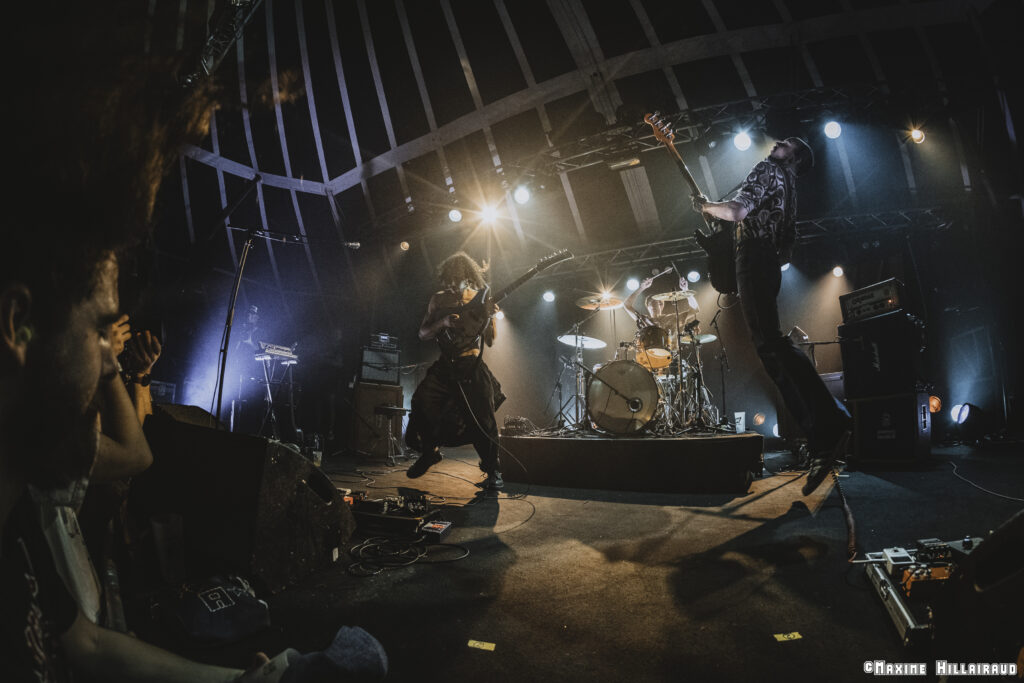
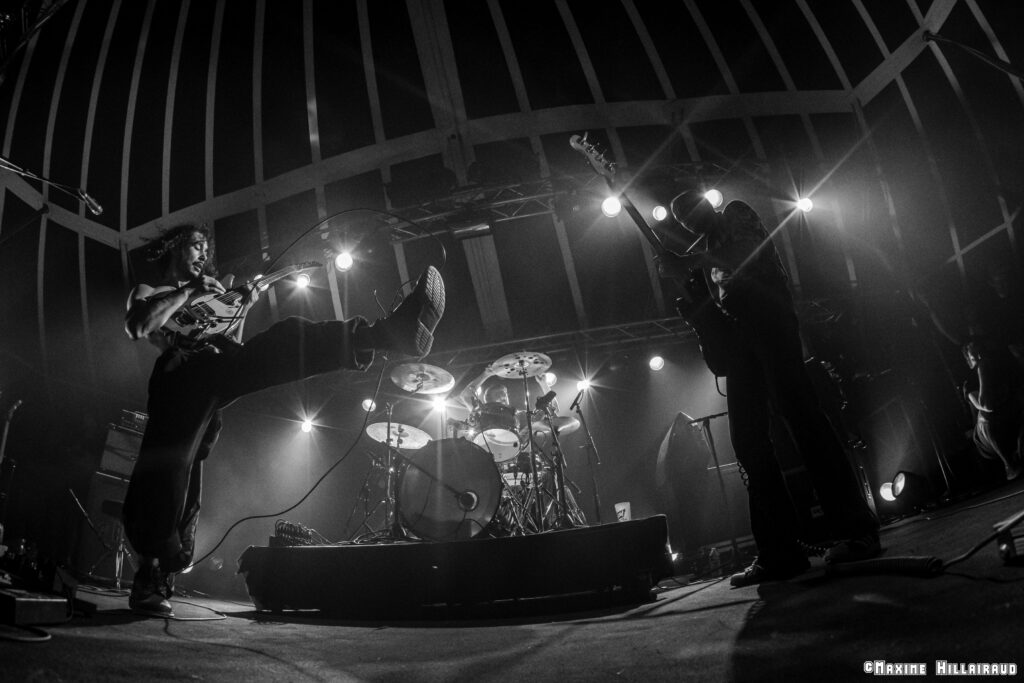
On stage, we have different energies. The set develops throughout the show. The end of the set is much heavier, with more fuzz, and it can become a bit stoner, whereas the beginning is more Tuareg rock.
It’s true that we have all these different directions. When we were writing the last album, we asked ourselves: which direction are we going to take?
At first, we had this idea of making something really danceable, a bit disco, oriental rock. We tried a few things, but that’s not what came out. We drifted somewhere else. Rock caught up with us.
It turned into what it turned into, but we were trying to aim towards oriental rock with a groovy, psychedelic vibe.
How does the creative process work between the three of you?
Often, we start with a riff — guitar, bass, or something else… It’s usually a guitar riff that Idriss brings in. On the last album, there were also moments where we started with these kind of bass mantras that we would loop, and then develop things from there.
It starts with an idea, and then we see how each person can expand on it. How do we each see it individually, and then collectively? We think a lot during the process about which direction to take. What does it mean to start from here? What do we want it to tell us musically?
In the end, normally, if we’re lucky, it becomes a song.
Building the visual world
Your visual universe is fascinating too, I have to say. The artwork as much as the videos… Is it all DIY? Who is behind this visual world? Who is the artist?
Most of our videos — apart from the very latest one — were made by a friend of ours called Mathias Eyer, who works in film. There’s definitely a DIY aspect to it. On the older videos, there were lots of models and costumes. We all got really involved. We spent time making cardboard monsters.
The latest one is a little different. It was made by another friend of ours called Josic, who’s the guitarist in Fragile. The video is a little different from the aesthetic we’d had before, and we’re really happy with it.
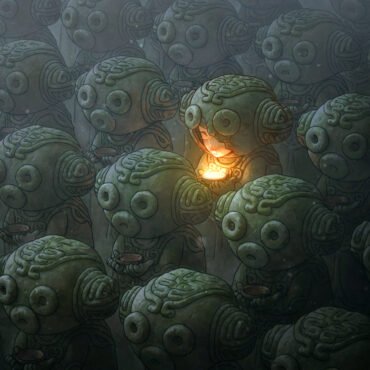
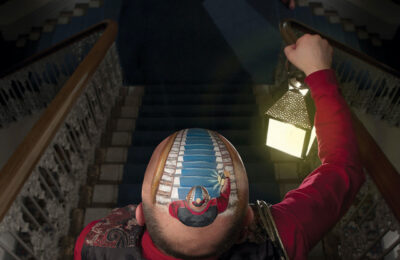
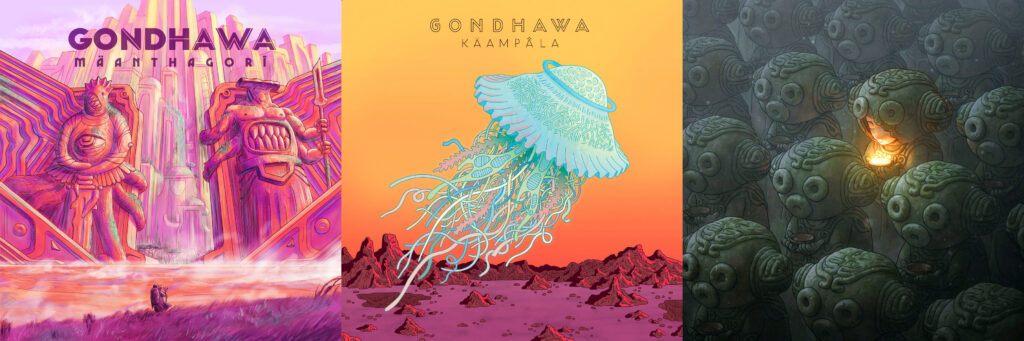
For the artwork, we’ve always looked for artists we liked who could bridge our world with something a little sci-fi, while also drawing on influences like Moebius and Hayao Miyazaki, things that are a bit imaginary like that. Since our EP Mäanthagorī, there’s also been a bit of an adventure / Zelda side to it. It connects with our invented language, the structures that aren’t always obvious, and the visual world, which works in much the same way.
Do you see the music and the visual universe as two parts of the same artistic project?
One doesn’t really work without the other. They’re complementary. But what we’re trying to do above all is make music. Then there’s the whole universe that comes with it. We really love that side of it too. At the beginning, we actually paid much more attention to the visual side. It took up more space in our creative process. Whereas now, what we enjoy most is making sounds and playing with people.
Playlist of Your Life
First song on the radio
Paul: I have a very vivid memory of hearing “J’ai Demandé À La Lune” by Indochine. And it’s really strange because I knew it was the first time I’d ever heard that song, but I felt like I already knew all the lyrics and knew the song by heart. As if the song had always existed in my brain.
Idriss: I think it was a song by Jacques Dutronc.
Clément: For me, it must have been a song by Renaud.
First album
Clément: Dances of Resistance by Babylon Circus.
Paul: It’s very cliché, but Nevermind by Nirvana.
Idriss: Same!
First concert
Paul: It was the fourth Agagla Festival, a small festival in the region that doesn’t exist anymore. I went specifically to see a band called The Elderberries, a French-English band from Saint-Étienne. Their discography started out with AC/DC-style hard rock. They did the soundtrack for Hellphone with Jean-Baptiste Maunier. Then they released another album, Ignorance & Bliss, which is really, really cool. I was a huge fan of that band.
Idriss: I went to the Garorock festival in Marmande, and I remember The Ting Tings absolutely blowing The Offspring away. Their sound was incredible, whereas The Offspring were bizarrely mixed and you couldn’t really hear much.
Clément: I don’t really remember… But it must have been shows at T’es Rock Coco. It’s a rock bar in Angers with concerts in the basement, mostly punk shows with local bands. I remember seeing Totorro there.
Album that has influenced you the most
Clément: I think we all love Nevermind by Nirvana.
Paul: I’m a big fan of Black Sabbath, Led Zeppelin and so on. Particularly because of the bass playing, and the way it complements the music.
Idriss: I was really into The White Stripes, for the bottleneck and open tunings. Very rock.
An album you heard just one song from before deciding you needed it?
Idriss: Pet Crow. They’re a bunch of dads who play surf rock, a bit punk. They’re not well known and they’re incredibly cool. The song structures are crazy, and when you go on their Instagram, you can tell they’re absolutely terrible at promotion. Yet the music is really, really good.
Paul: For me, it was Plug by Sloy. They’re an old French band, the French Jesus Lizard, and they were also produced by Steve Albini. I’m a huge Jesus Lizard fan, and when I heard just one song by Plug, I thought: “Right! That’s it, I’m taking this home.”