 Ronan O'Brien
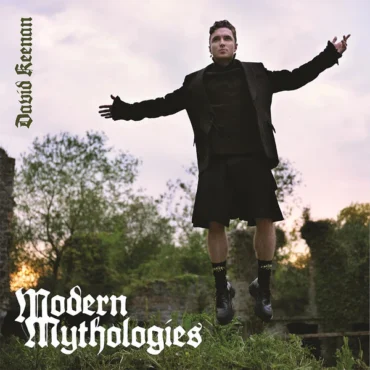
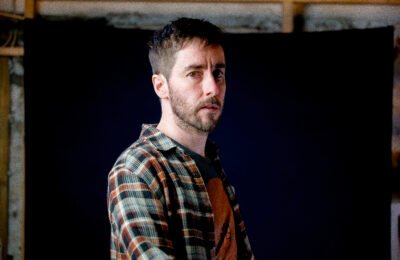
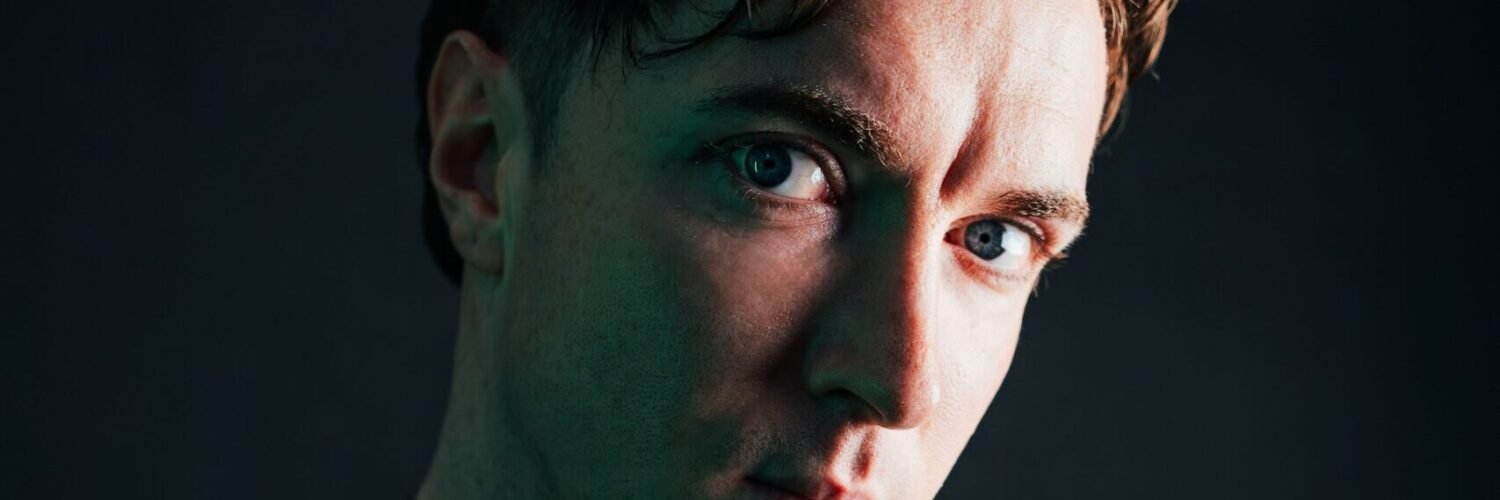
While on the road with his Modern Mythologies Tour, I had the absolute pleasure of chatting with David Keenan right before his exemplary show in Dolan’s Warehouse.
Hey David, thanks a million for agreeing to an interview! Going back to your roots, I believe it was your grandfather who passed down the tradition of Irish storytelling. Is that what really influenced you into the art of storytelling and poetry?
Well, I think he just embodied the Irish character. He didn’t verbalise that, but he was a great storyteller. All of his stories seemed to be riddled with characters and tragedy and comedy. Everybody seemed to die a horrific death at the end of the story, y’know? So there was always an element of tragedy in there.
In terms of wordsmithing, it wasn’t until I was thirteen and I discovered Wilfred Owen and Siegfried Sassoon who were fighting for the British in World War One. They were part of the officer class and they were going against a narrative; from empire imperialism but also their class. Because they were giving it back. They were really reporting on the horror and the futility of what was happening. So inadvertently that taught me you can be a true storyteller. You can go against the grain by using language. I don’t think I had heard that or read it up until that point. In school, you’d be reading the likes of Paddy Kavanagh but that is what really impacted me. Not only to say their piece, but to say it with the risk of being ostracised. I find that very inspiring.
I was always scribbling from a very early age, but around that time I had also discovered Jinx Lennon and he was providing social commentary of Dundalk, where he was from. He wasn’t afraid to write about the underbelly of the town. That was a real lesson, and I learned you can cultivate your own imagination and then it starts to spill out into your reality. I just found it to be an escape from home life and school, and then I started to find my own voice.
You’ve managed to take that inspiration and put it to music, which is incredibly admirable. I remember you spoke on some of your earlier days busking in Liverpool. What did those early days look like for you?
I was in FÁS before that particular trip and we were allowed to go on the internet for the last module. From there I discovered a blog called Diaries of a Rock ‘n’ Dole Star by this guy called Chris Parkes. Chris was getting cancer treatment, he was only a young man. He spent all of his grant money, probably because he didn’t know if he was going to make it, on seeing The La’s who Lee Mavers had gotten back with. A songwriter who I became obsessed with, really. He was playing in Amsterdam around 2011 and Chris had gone to see him. And I was reading all of this and I was so enthralled. It was about 2013 when this was happening to me, so I knew I had to go to Liverpool.
I wanted to get out and just get adventure and be around like-minded people. Liverpool was the first stop on the ferry, so it was in my budget. Then I just busked there for about a year. I just studied people; looking at and annoying them. I was plaguing bands to let me play in their rehearsal room and it broke through the shyness barrier. Because you had to busk to pay for the hostel and to eat. It was just pure adventure. It was edgy and dangerous at times as well, but I found all of that very exciting.
Thinking back to your latest studio album, Modern Mythologies, it definitely showcases the art of storytelling with a range of characters. Is that where your inspiration comes from – looking at people and telling their stories through a different perspective?
I think it’s a way for me to understand how to build a bit of compassion for other people, because I’d like to be treated with a bit of compassion myself. Being flawed, imperfect and a human full of contradictions, that feels like the most honest approach to writing. You learn a lot from listening. There’s a great Irish storyteller, Eddie Lenihan, who told me he had to listen for about fifteen years before he started telling stories. There’s so much power in listening and observing. And I mean active listening; not just listening to give your reply, that’s not really listening. That feels few and far between now with all the distractions we have.
I think characters and songs can represent myself and parts of myself that I’m trying to figure out. In storytelling, you try to find a balance between the colloquial and the profundity. You need to have that balancing act, otherwise it’s not accessible. It doesn’t have to be accessible to everybody, but if you’re trying to communicate something, it’s just something to be aware of.
Right after that album, just recently, you released Just For Today. Walking into a studio and deciding there and then to release an album to commemorate Bandcamp Friday, how did that inspiration hit you?
I think it was very spontaneous and wanting to lean into that. But it wasn’t a case of going in trying to break a Guinness world record or anything. It was just very, very spontaneous and the culmination of years spent trying to find myself and figure out what’s right and wrong, what can I do and what can’t I do. What am I doing for the sake of it and what am I doing just in the moment. I got about six songs done; we’re talking two takes, just me and the guitar. Me and the electric and me and the acoustic.
Then Megan [Nic Ruairí] came in to record the duet, and that was about five or six takes as we hadn’t played the song together. It sounded great to me. The backdrop of this was Modern Mythologies was put out by a record label who were huge, and they didn’t even promote the thing. In the run-up to it I had that feeling of this time would be different because it’s in their interest to promote it. They’ve invested in it. Well, all they’ve invested in it was printing the vinyl, I never got paid for it. It’s 16 songs, I signed the rights away, still haven’t been paid. So there was the thought that this model is actually fucked, y’know?
So essentially it was a bit of a middle finger to the industry?
It was, but that was in the background. I didn’t want to release a load of songs motivated by resentment, I think there was a bit of that in Crude. I don’t think that record really communicates what I was trying to do, but there was definitely a bit of that. Even me and Megan were chatting about previous experience having people in and around, telling you things like “the start of that song is great, but if you’d only cut there” and “that needs a hook, the radio will reject it otherwise”. And at the end of it you’re all disillusioned, you’re not enjoying it and you’re disempowered.
I think I’m lucky that I can just sit with the guitar and Cian [Synnott] in the studio is gonna make it sound great, because he’s great. So just put it out and also give people the option to pay for the music.
Unfortunately the industry seems to be going that way, and you did have a [Instagram] Reel the other day which really spoke to me and it spoke to a lot of people about the growing role of AI in music. Are you a bit fearful that this is the way the industry and the arts in general is heading?
Well, it’s there already. I think it’s just a matter of reminding people and reminding yourself of what the alternative is. We have this amazing alternative called the live gig, where anything could happen. It’s unscripted, so it’s not like you can put it through an algorithm and it’s going to throw out a set list. Anything could happen. Somebody can shout something out. Somebody could propose to their partner. Anything could happen. And it’s connection. Real connection.
I’m really encouraged by people coming out, I’m truly blessed people come to the gigs. But it’s also worth reminding. Friends of mine who are artists are affected deeply by it. People throw random things into ChatGPT and get a poster. And they would say it costs nothing and they can’t afford to maybe pay someone to do it for them. But the implications are you could have something bespoke where somebody took the time and it maybe only cost thirty euro, and you have a unique poster. It’s not condemning that needs to happen, because I don’t respond to somebody telling me this is what you should do or this is how you should vote. It’s just holding it up for the person to make their own choice and let them know this is affecting us.
Then it’s up to the person watching it think about it, or not think about it for that matter.
I can certainly echo that sentiment. On this tour and over the years you have played countless gigs. Which one is your favourite, or have you any favourite memories from previous gigs you’ve played?
The last few gigs, because it’s present in my head. Just people singing the songs back, but singing the new songs back in particular. There’s a song in Modern Mythologies, “Incandescent Morning“ and it’s only out a few months but it’s just something that hit me last night in Galway when I heard that being sung back. It’s just a blessing. I’m really enjoying doing the gigs where it’s just me and the guitar mainly. The audience are singing and there’s this kinda communal choir in the room.
The most important thing to me is to enjoy playing music and to feel I’m of use to people around me. I want to feel the purpose and I do feel it. My head is good because of that. And I’m not getting distracted by anyone else’s idea of what it should be, people are showing up as patrons. Because of that, I’m going to leave everything behind on the stage, so hopefully people can float out and then we’re onto the next gig. I’m getting full up in the process.
An Inimate & Incandescent Show
Following our chat, I caught the tail end of the support act for the night. A four-piece band from Limerick, The Labourers were teeming with energy and immense talent. I felt enthralled for the duration of their set, I couldn’t step away for even a second. A band rooted in trad music delivered with a rock’n’roll edge, they are certainly one to keep an eye on. I know I will.
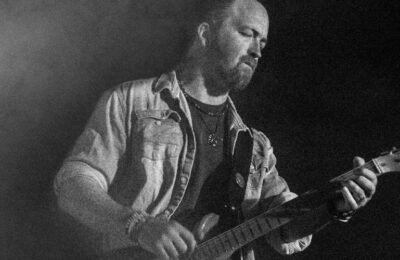
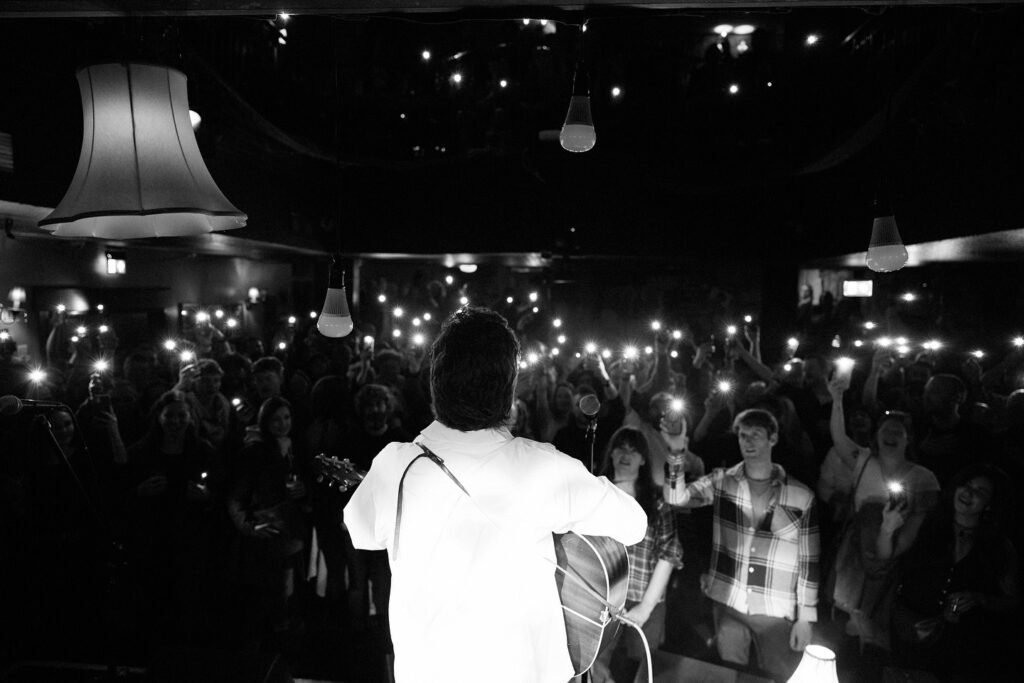
Soon after their departure, David emerged to a dim stage lit by soft candlelight. A far more intimate show that I was expecting. The crowd and performer melded as one. The emotionally poetic lyricism and anecdotal preludes provided a beautiful environment for the evening. While I was more than familiar with Keenan’s style, the gasps of astonishment and amazement at his voice echoed the room by those who were less acquainted. Fluctuating between newer and older songs, the setlist was a fantastic presentation of what David Keenan represents. The connection was felt before and after the show and it’s something I will never forget.