Richard Bodin
In times of international uncertainty shaped by the whims of a single man, one word keeps resurfacing: impeachment. Heavy with constitutional and symbolic weight, the term is far from new. The last U.S. president to face an impeachment process is, in fact, the very same figure once again dominating headlines: Donald Trump. When proceedings began in 2019, an obscure funk single from the early ’70s unexpectedly surged back into public consciousness, with streaming numbers reportedly spiking by over 1,000%.
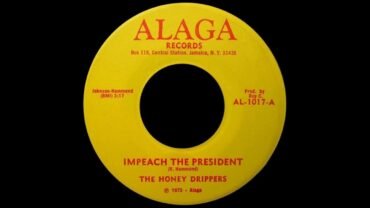
The Honey Drippers’ “Impeach The President” came out in 1973, aiming at President ‘Tricky Dick’ Nixon following the Watergate Scandal. The single didn’t meet much of a success, but turned out to leave an huge mark in music history.
A High-School Band from Queens
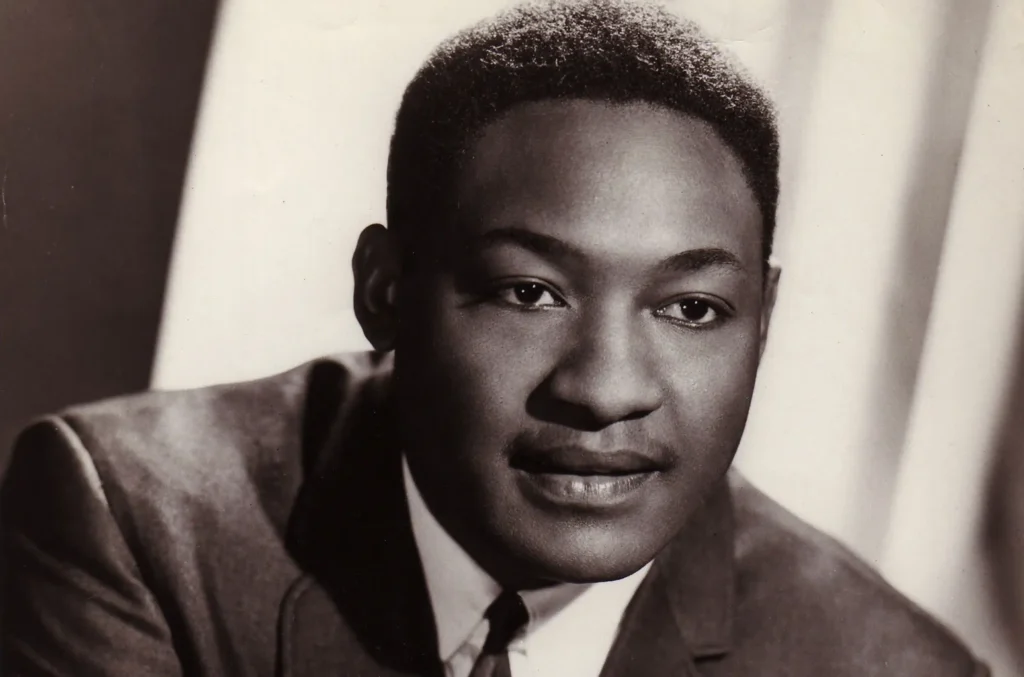
Very little is known about the Honey Drippers, and they didn’t leave many recordings behind. What we know is that they were a high school band hailing from the Jamaica neighbourhood of Queens in New York City. The talented young musicians caught the attention of local soul musician and producer Roy C Hammond. Although he had released the successful single “Shotgun wedding” in 1965, and was quite respected in the industry, Hammond never really met much success.
Roy C immediately recognised potential in the young group and considered them as his backing band. According to some sources, Hammond used them on his 1971 b-side “Open Letter to The President” in which he addressed President Nixon about the Vietnam war.
The only substantial source of information comes from the producer himself. In “Roy C’s Theme”, the b-side for “Impeach the President”, he introduces the band. Fred, on the bass, Larry the bad boy guitarist, Morris on the drums, Micheal the good looking horn player, and finally the band leader: Ronnie. The only other valuable information is that Roy C wasn’t too happy with the drummer’s skills. He spent a lot of time to bring him up to his expectations. Which clearly paid off in regard to the hit’s place in history…
The Watergate Scandal
“Impeach The President” was written in the early days of 1973. A few months prior, burglars had been caught planting listening devices in the Watergate Hotel. Quickly the investigation established these men were secret operatives linked to President Nixon 1972 re-election campaign. Of course, Nixon denied the allegation and after a successful cover up operation, he was re-elected by a landslide. But suspicions and in February 1973 the senate established a committee to investigate the Watergate scandal further…
Roy C Hammond was partial to politics, and not particularly fond of Tricky Dick. But he made no secrets about it. So news of this scandal, and growing rumours of Nixon’s involvement he set up to write « Impeach The President ». He proceeded to have the Honey Drippers record it.
A Breakbeat with Something to Say
Upon a fantastic opening beat, we can hear Hammond framing the band as returning from Washington with something to say. A deep, rolling bassline, clipped guitar stabs and sharp horn accents fall into place as the vocals start. The Honey Drippers deliver a balanced lyrics about the president. « Some say he’s guilty / some say I don’t know / some say give him a chance / Some people say, wait til he’s convicted ». Balance quickly gives way to conviction as the chant erupts: “Impeach the President!”, to which Hammond theatrically responds, “Oh no, man, you can’t do that.” The highshool band doesn’t offer a lot of melodic depth in their vocals, but this what makes the charm of this little gem of a protest song.
Despite its restraint and groove, the single was rejected by Mercury Records, where Hammond was signed. He later recalled: “If they offended some of the white people out there, they could lose all that support. But I had nothing to lose.” Undeterred, he released the track independently on his own Alaga label. Only a few hundred copies were pressed, and commercial success never came.
Dug out from the crates to make history
It did however found its way in the hands of a few pioneers of the Hip-Hop scene. They would use the opening beat of the track in their live DJ sets. Eventually, it reached hip hop producer Marley Marl. Marl was famous for his early experiments sampling individual drum beats and re-assembling them using a sampling drum machine. Using the beat from “Impeach The President” he built MC Shan’s “The Bridge”, making it the first ever sample of the Honey Dripper’s song in a recorded track. He even nods at Hammond’s introduction of the band on the track’s intro.
Around the same time, Louis ‘Breakbeat Lou’ Flores was compiling tracks with influential drum breaks from a wide range of genre: Rock, Funk, R&B, soul or jazz… With his partner “BreakBeat Lenny” Roberts, he would release a series of 21 compilation called the Ultimate Breaks and Beats between 1986 and 1991. This series became foundational for hip-hop producers worldwide, and “Impeach The President” featured prominently among its holy grails. Many great legendary name used it: Run DMC, NWA, Geto Boys, TuPac, Notorious B.I.G, and so many more….
An enduring legacy
In the end, the opening beat for “Impeach The President” —the same one performed by the so-called ‘weakest link’ of the band— grew up to be one of the most sampled break beat of all time. More than 800 tracks officially used the sample, with countless more unofficially. Some estimates even suggest that one out of five hip-hop songs sample the Honey Dripper’s beat.
Not bad for a high school band!
History on repeat
What began as a modest protest song aimed at one of the most disgraced figures in American political history ultimately became a cornerstone of hip-hop’s sonic language. Its repeated returns to relevance serve as an uncomfortable reminder that history, political and musical, has a habit of looping.
Something tells me that “Impeach The President” may yet have more comebacks ahead of it.