

 Ronan O'Brien
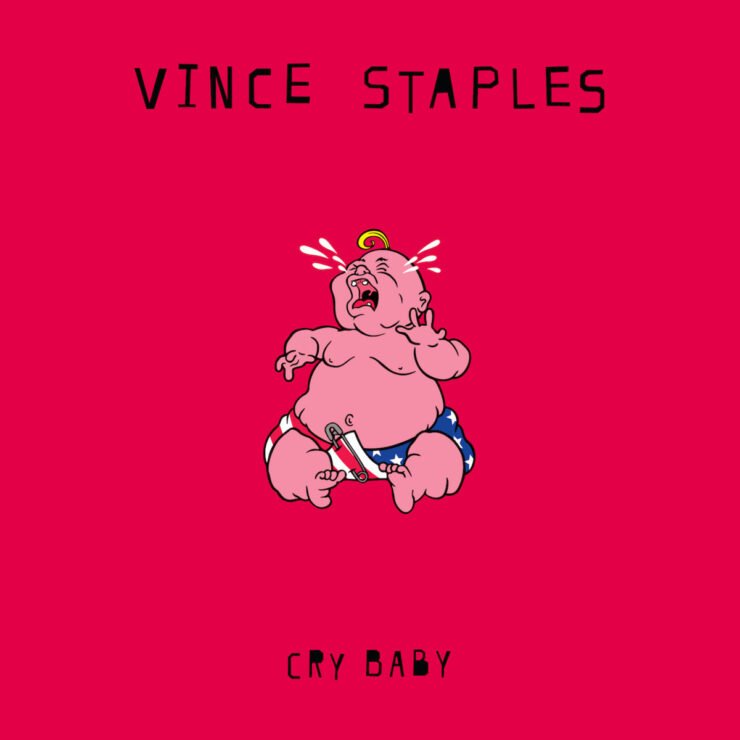
Vince Staples returns with his seventh studio album. A huge deviation in style sees Vince explore a rock-infused sound and topics of black oppression in the US of A.
Long Beach Boy
Born in the infamous Compton neighbourhood of California, Vince Staples only ever knew gang culture. Even an education in a private black-owned school couldn’t save him from the gang life he inevitably found himself intertwined in. Spending a majority of his young life in the Long Beach area, his lyricism is heavily influenced by his childhood surroundings.
Staples’ music career began with a chance encounter with Odd Future‘s Syd tha Kyd. Soon becoming an affiliate of the hip-hop collective, Staples became closest to member Earl Sweatshirt. Featuring on several collaborations with Earl, Staples’ own career was starting to grow momentum. Four mixtapes later, Staples was elected to support Schoolboy Q on his Oxymoron tour in 2014.
2015 saw the release of Staples’ debut studio album, Summertime ’06. His third single from the album, “Norf Norf“, attained platinum status, further propelling Staples’ success. Two years later, the critically-acclaimed Big Fish Theory turned the heads of many. Its experimental attributes and SOPHIE-produced beats have solidified the album as one of Staples’ best. And probably his only album I dislike.
The Kenny Beats-produced FM! and the self-titled Vince Staples both followed, showcasing Staples’ consistency in superb fashion. Further acclaim followed with the release of two albums that delve further into Staples’ upbringing. The introspective Ramona Park Broke My Heart and Dark Times show a far more vulnerable side to Staples, while allowing his artistic merits to be on full display. A change in record labels, along with the cancellation of his proposed Netflix series, has Staples in a new environment, a new mindset, and ready to showcase his creativity once more.
Promise Me You Won’t Gun Me Down
The lead single, “Blackberry Marmalade“ opens the album, letting the listener know quite quickly that this is not a typical hip-hop album. A buzzing guitar and bouncy live drums coat the song with raw, punk energy. The instrumental is infectious, resembling that of “B.O.B – Bombs Over Baghdad“ in a really cool way. Perhaps most punk-inspired of all are the opening lyrics, “Empires built on bloodstained ground”, framing the entire album as an eye-opener to the horrors of imperialism. The lyrics further detail the historical systems of oppression on which the USA was created. With homages to Jay-Z’s “The Story of O.J.“ and police brutality towards unarmed, black civilians, the message is clear from the start. Vince is telling it how it is.
The commentary of police brutality continues in “Go! Go! Gorilla“. With an instrumental that cannot escape Tame Impala comparisons, it symbolises the edge this track protrudes ceaselessly. Once again, the lyrics are a stark commentary on the reality of black people in America. With historical references like “Red-lined, gentrified / They gave wrist slaps to them and sentenced mines” to personal anecdotes, “I was twelve years old when they tried to sit me / On the curb, I got chokeslammed”, Staples’ patience has been erased completely. Even the recurring hook of “Gorilla, gorilla” symbolises the dehumanisation of black people by the police forces.
“White Flag“ takes a more relaxed approach to racial injustice. The refrain symbolises the message behind the song impeccably, “Sometimes love can turn to war”. As Staples vocalises, all we really need to do to tackle prejudice is to love one another. The laid-back beat that accompanies the song throughout doesn’t change, and exists mellowly in the background. Almost serving as a reminder to the message, it’s as tired as Vince is. Despite all the passion and fight in him for racial equality, Staples realises he is powerless against a corrupt system. Defeated, he echoes the feelings of many, “White flag, I don’t wanna fight no more”.
Execution and Mind Pollution
The foreboding bass and drums of “The Running Man“ give it such a dark and eerie feel. “‘Bout time for a revolution” is uttered by Staples, which only reinforce the feelings that something is afoot. Using the 1987 film of the same name, Staples compares the dystopian world to today’s reality. The bridge sees a change, with Staples now exhausted from all this running. His lyrics take a more introspective approach here, perhaps in response to the world around him; “Lost my hope and happiness / Can’t retrace my steps”.
In a similar vein, “TV Guide“ lyrically explores the mass-media-produced propaganda that a large population consumes mindlessly. Wrapped around a fat bassline, the instrumental is clunky in all the right ways. While the hook is a little too repetitive for me, the lyrics detail some fantastic commentary on modern Americans. From “Breakin’ news on the TV, must be true, it’s on TV” to “Dare to dream, how to get on that silver screen?“, there are so many fantastic snippets on ingenuity in Staples’ wordplay.
“The Big Bad Wolf“ is another powerful lyrical display by Staples, wrapped up in a fantastically funky beat. Featuring heavy sampling of Slick Rick’s “Children’s Story“, which highlights police violence towards black Americans, it fits perfectly with Staple’s message. He warns of people’s blissful ignorance towards violence, both by police and government, and the dangers of their willingness to turn a blind eye. Challenging this, Staples asks the listener what they would do when “the big bad wolf come and blow down yours”.
Drop The Needle, Turn Up That Volume
Another fantastically produced beat introduces “Only In America“. To nobody’s surprise at this point, the lyrics provide further commentary of “the greatest country in the world”. Speaking on its traditional values and the “American Dream”, Staples takes several jabs at this hypocrisy. From “You can live by the gun, die by the gun” to “You can lie, you can steal, house on a hill”, he points out the irony in America’s less-than-progressive values.
“Do You Know The Devil“ has a more live performance feel to it, with heavy bass and drums providing a cool atmosphere. There is an eerie sound to it however, and Staples’ more reserved approach to vocals definitely maintain that feeling. Lyrically it depicts the devil as the capitalist system, and the guilt Staples feels as a black artist benefitting from it. While I get the message is there, it fails to do much for me.
The sound immediately turns brighter with the Steve Lacy-inspired guitar of “Cotton“. The instrumental is so enjoyable and Staples’ vocals go alongside in a hypnotising manner. It’s expressive and repetitive in a really cool way and at first glance, the lyrics aren’t deep. But as always with Vince Staples there is more to the story. Using cotton as a metaphor for his art being exploited in the same way as black slaves were, it’s certainly a powerful message.
The album closes with the heavy beats of “7 In The Morning“. Desolate and slow, the song highlights the brutality of war and the desensitisation to it. The opening verse points to the horrors in Palestine, with “Desecrated holy land, the devil’s near”. Staples’ delivery is unhurried, almost defeated in a sense. The chorus is perhaps most powerful of all, mimicking soldiers’ marching orders and comparing it to the mindless swing in politics. It’s certainly a powerful statement to make to end this politically-charged album.
Final Thoughts
Admittedly it took me a couple of listens to get on board with this album. First of all, I wholeheartedly respect any artist trying to break the mould and have creative freedom. Vince going in a rock-inspired direction was not something I had on my bingo card for 2026, but I’m absolutely here for it. While the instrumentals themselves are brilliantly produced, they’re nothing to write home about. However, they’re just a support for Vince’s incredible lyricism.
Vince Staples has always been a fantastic poet, but this album takes that to a whole new level. Attacking the pillars of modern society and the hypocrisy that comes with it, his lyrics are not only deep but relatable too. However, I have criticisms in that too. Some of the bars weren’t Vince’s best, and the instrumentals were a bit flat at times too. But that being said, the lyrics may relate to somebody a hell of a lot more than me at present, I’m fully aware of the privileges I unknowingly carry.
Overall, it’s a good album though and certainly worth a listen. I have to take my hat off to any artist willing to cut ties with a record label and pursue one that will support a new artistic direction. Vince rarely disappoints, and I’m definitely excited to see what comes next.