

 Ronan O'Brien
Fifty years ago, Mort Garson wrote and recorded a score of music specifically designed to help plants grow. One thing he never expected was how much of a cult classic this album has become today.
The Wozard of Iz
Mort Garson is not a household name by any means. When one thinks of famous electronic composers, the names that come to mind are often Jean-Michel Jarre or Brian Eno. However, Garson’s impact on electronic music as a whole cannot be understated.
A Canadian native who relocated to New York, Garson studied music before working as a pianist and arranger. Like many Americans at the time, Garson was deployed by the army to fight in World War II. After the war, Garson’s music career continued. Working as an arranger, composer and multi-instrumentalist, his list of accolades are impressive. From co-writing songs performed by Brenda Lee and Cliff Richard, to arranging albums of Doris Day and Bill Withers. This upward trajectory allowed him to meet Robert Moog; the inventor of the first commercial synthesiser.
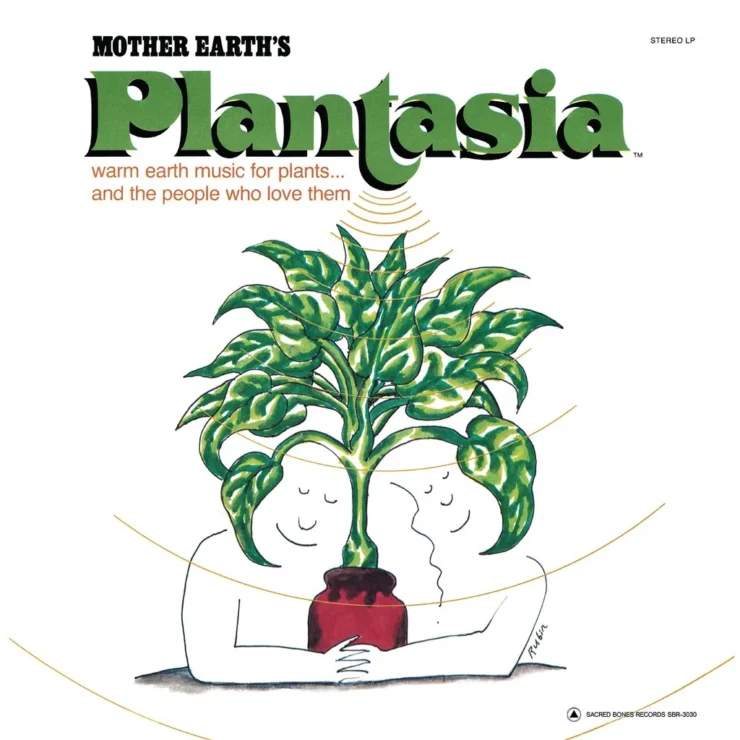
Garson was a heavy user of the Moog synthesiser, allowing him to create a catalogue of electronic albums. Inspired by his wife’s love of growing plants, coupled with his friendship to plant care authors Lynn and Joel Rapp, the idea of creating an album for plants bloomed. Released in 1976, Mother Earth’s Plantasia was distributed only to those who bought a houseplant from a store called Mother Earth, or to those who ordered a specific mattress from Sears.
Now Get Growing
A repetitive, spacey melody opens “Plantasia“, accompanied with a high-pitched sister pattern. Elements resembling bassoon and tuba provide the backing, before the uplifting melody of artificial horns make their presence known. According to the included booklet with this album, this song is a meticulous creation that encourages growth. The pitch here is specifically designed to affect the stomata, allowing them to open wider and breathe better.
“Symphony for a Spider Plant“ has a more twinkly rhythm, with the main piano-style melody taking an ever-so-slightly classical approach. The space-filled bass melodies ground it incredibly, allowing the upper melodies to truly soar. There is also a recurring string-based melody which serenades the soul – or the plant – to such delicious appeal.
A groovy, walking melody opens “Baby’s Tears Blues“ which evokes head-bopping and finger-snapping in me every time. The melancholy cuts through in the chorus melody, which is delivered with a beautiful arrangement. It’s astonishing how emotions are so easily conveyed in an instrumental album like this. While this song is an outlier for it’s jazz arrangement rather than the classical style Garson is more familiar with, it gives the plant its own personality. Like every other song on this record.
The Great Green Rush!
“Ode to an African Violet“ takes a melody that brings this album to new geographical places. The percussion and bass elements give this track a tribal feel, inspired by the Kenyan and Tanzanian origins of the plant. It’s an interesting and enjoyable track, and would not sound any bit out of place in a Nintendo game.
The serenading melody of “Concerto for Pilodendron & Pothos“ is such an easy listen. Much like the care required associated houseplants, there is such minimalism to this track. The arrangement is simple, with repetitive melodies providing just enough. It’s hypnotic in a really enjoyable way. It makes me forget I’m even listening to something in my ears.
The minimalist arrangement of “Rhapsody in Green“ is somewhat deceiving at first. While the song itself is not dedicated to a specific plant like many of its counterparts, the composition is just as lush. The synth melodies are sweet, as always. But there are incredibly spacey and experimental sounds added as the track evolves. It’s as if this song in particular details the lifespan of a plant, from beginning to bloom.
“Swingin’ Spathiphyllums“ soon cuts through the silence with one of the catchiest hooks heard in this project. The melody is bright and incredibly infectious. Garson shows his ingenuity here, building on that fantastic melody to create something of utter joy. This song welcomes in the bright sun and allows flowers to blossom in their magnificence.
Propogation
The harpsichord-inspired sound of “You Don’t Have to Walk a Begonia“ fills me with utter delight. The melody once again builds on itself, with horn-like accompaniments providing backing to lift the sound to a new level. It sounds like a choir in parts, yet plain smooth in others. It’s another song to make your head bop and fill your heart with love that people get from keeping plants.
A more ambient, spacey melody changes the tone completely in “A Mellow Mood for Maidenhair“. It’s exactly what it says on the tin; a sensitive melody for a delicate plant. While the pitch can be shrill at times, the mood is soft nonetheless. The high notes are almost played with a pluck, while the dampened melody carries the weight.
“Music to Soothe the Savage Snake Plant“ follows another geographic theme; this time from Western Africa. The flute plays with meaning, its tones wafting through to create a sense of calm. Much like the fearsome cobras, I can feel my head sway along to the melody, completely enthralled. The melody has some dark, foreboding elements to it, like the snake is about to pounce. It finishes with a flourish, snapping me back to reality.
Final Thoughts
Every time I listen to this album I have to remind myself it was created entirely on a synthesiser in 1976. With the number of software and hardware available to electronic composers today, it’s worth noting the talents of Mort Garson to achieve such a feat.
The melodies are simple and it’s such an easy listen, but don’t let that fool you. It’s evident that each track on this album was created so meticulously to accompany its dedicated houseplant. Taking away the botanic inspiration and you have an album brimming with bright, beautiful melodies that take you on a mildly psychedelic journey.
Keeping plants has never really been my thing, but I understand they can be a pain to keep alive at times. While this album may help your plants to grow, it also helps you grow with them. So while plants may not be my thing, I truly understand the beauty that comes with them. Sometimes all that glitters isn’t gold. Maybe it’s green.