


 Richard Bodin
What happens when a band haunted by the past stumbles into the future? “Blue Monday” didn’t just signal a new direction for New Order—it helped rewire the DNA of popular music. Born from frustration, improvisation, and a fascination with machines, this unlikely track became the best-selling 12” single of all time. Here’s the strange, brilliant story behind it.
From Joy Division to New Order
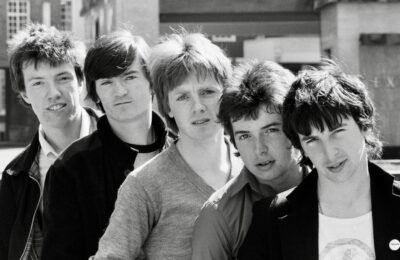
Soon after the tragic loss of Ian Curtis by suicide, the surviving members of Joy Division decided to keep going. But they had all agreed: if one of them were to leave or die, they wouldn’t continue under the same name. So guitarist Bernard Sumner, bassist Peter Hook, and drummer Stephen Morris began operating without a band name—until keyboardist Gillian Gilbert joined.
For their first live performance, they needed something to call themselves. The story goes they hesitated between “The New Order of the Kampuchean Rebels” and “The Witch Doctors.” They chose the former, which was soon shortened to “New Order”—
The New Order was already taken by the band of former Stooges Ron Asheton.
Their first album, Movement—which included two tracks originally written as Joy Division—was released in 1981 and received mixed reviews. It sounded a lot like Joy Division, only with synths. The band was still trying to figure out who they were in the wake of Curtis’s death.
The New York Turning Point
During a trip to New York, the band discovered new styles of music: post-disco, freestyle, electro. Not long after, these influences began creeping into their own songs, with dancier beats and more prominent synths. They started exploring new gadgets that allowed them to sample sounds, mix them, and program drums.
One day, they decided to put this new approach to use and come up with a special track. At live shows, audiences were often annoyed that New Order never played encores. So the band came up with a clever idea: a robotic kind of song that could be triggered by the push of a button—no instruments, no encore—just hit play and walk off stage.
That was the concept that started “Blue Monday.”
Building the Track (and Breaking It Too)
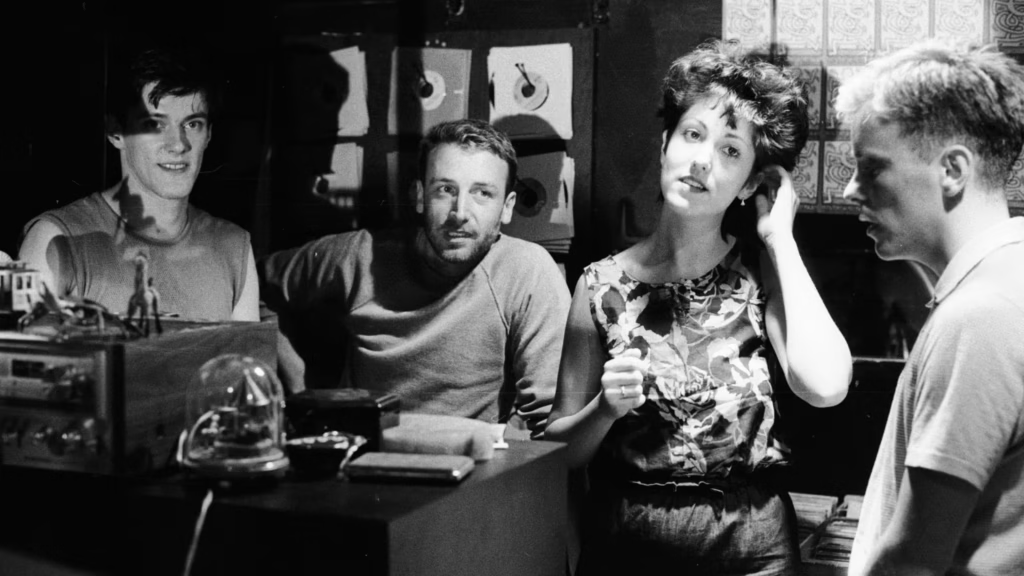
The band began experimenting. An Oberheim DMX drum machine was used for the rhythm. Sumner programmed a sequencer, and after playing around with a Moog Source, came up with the sound that would become the synth bass line. They also bought a sampler—the Emulator 1—which they learned to use by recording their own farts before sampling choir sounds from Kraftwerk’s “Uranium.”
This was all before the invention of MIDI, so everything had to be done manually, in step-time, using binary code and digital readouts1. Gilbert, who handled the programming, taped together multiple A4 sheets and laid them across the length of the recording studio, writing out the entire pattern by hand. But she accidentally left out one note—throwing the synth melody slightly out of sync with the beat.
The plan to have a fully robotic, button-triggered song didn’t quite work. Synchronising all the gear proved harder than expected. And the track originally included a robotic voice saying “How does it feel?”—but the file got lost. So Sumner ended up singing the line himself and expanding on the lyrics. Supposedly, he wrote them out of frustration with journalists constantly speculating about how he was feeling.
Interestingly, there’s no mention of a “Blue Monday” in the lyrics. The title came from a book Stephen Morris was reading—Breakfast of Champions by Kurt Vonnegut—which included an illustration captioned “Goodbye Blue Monday.” It was reportedly referring to the invention of the washing machine and how it improved housewives’ lives.2
The Sound of Something New
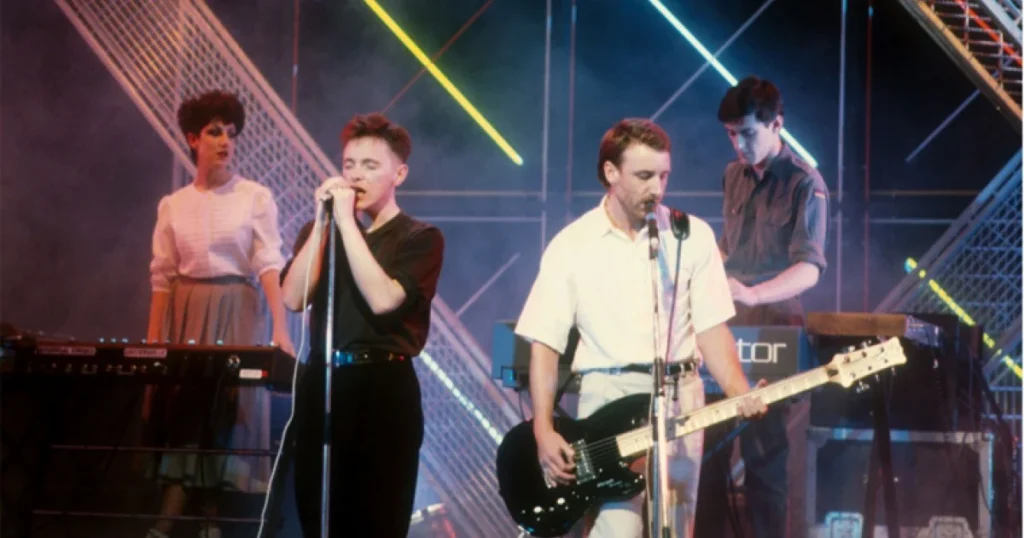
What “Blue Monday” became was nothing less than a groundbreaking masterpiece. The drum sequence that opens the song is obsessive, immediately pulling the listener in and setting the stage for the driving synth bass and layered melodies. Peter Hook’s bass—reportedly influenced by a spaghetti western theme by Ennio Morricone—adds a haunting, cinematic texture.
Everything is built to make you want to move. Yet at its core, there’s still the melancholy of Joy Division. Released in 1983, “Blue Monday” sounded completely new. It introduced the sound of post-punk to the world of disco and electronic music. It was exciting, it was danceable, and it marked the beginning of a new chapter for the band.
Borrowed and Rebuilt
The influences were clear—and the band never denied them. Peter Hook has said the song was “stolen” from Donna Summer’s “Our Love.” Sumner admitted copying parts of the arrangements from “Dirty Talk” by Klein + MBO, and the synth bassline owes something to Sylvester’s “You Make Me Feel (Mighty Real).” Kraftwerk’s influence is obvious, too.3
There were even claims the track resembled “Gerry and the Holograms” by another Mancunian band, though New Order denied ever hearing it. And frankly, it’s hard to doubt them—especially when they’ve been so open about everything else they borrowed. The way I see it, they didn’t just copy. They absorbed their influences, blended them with their own voice, and created something entirely new.
The Sleeve That Cost Them
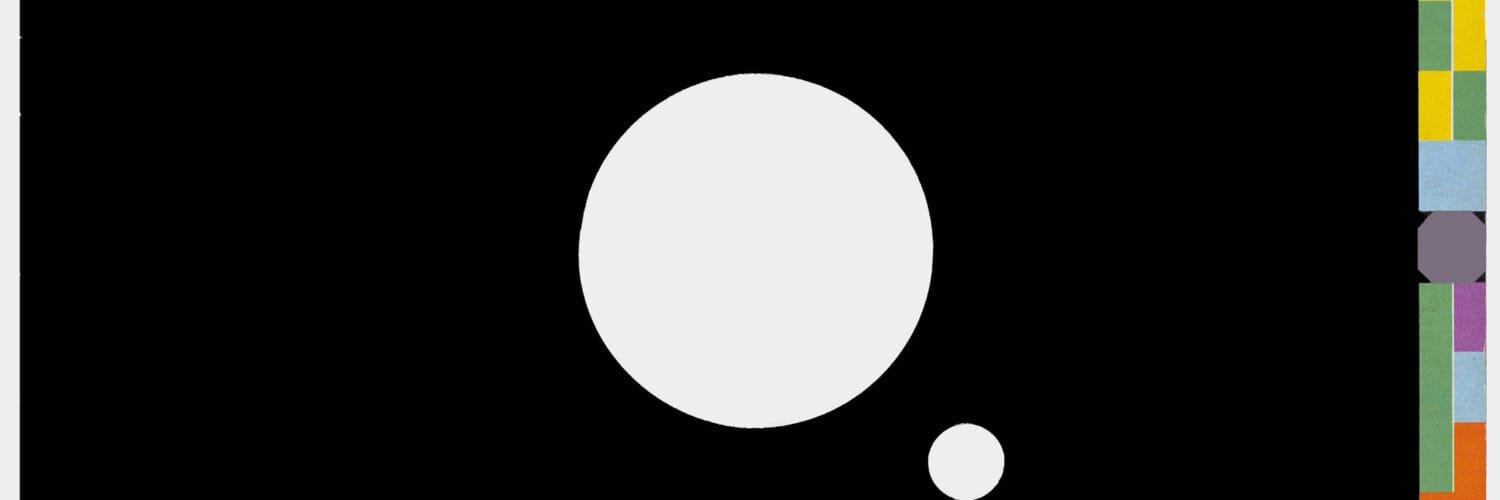
One thing that made “Blue Monday” even more distinctive was Peter Saville’s cover design. The single was released as a 12” with a sleeve mimicking a 5¼” floppy disk. The outer sleeve was die-cut, revealing a silver inner sleeve. There were no markings—no band name, no song title, nothing.
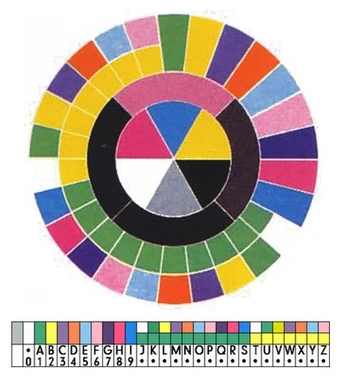
Well… almost nothing. Saville created a color-coded cipher that spelled out the song and band names. The key to the code appeared a month later on the back of the Power, Corruption & Lies album.
The single was a smash success—critically and commercially. In fact, it remains the best-selling 12” single of all time. But despite this, the band didn’t make any profit on the original release. The cost of manufacturing the elaborate sleeve was so high that they lost up to 5p per copy. As Saville later admitted, “Nobody expected ‘Blue Monday’ to be a commercially successful record at all, so nobody expected the cost to be an issue.”
How Does It Feel? Timeless!
“Blue Monday” wasn’t supposed to be a hit. It was born from frustration, shaped by experimentation, and nearly broken by its own ambition. But somehow, against the odds, it became a turning point—not just for New Order, but for music itself. It’s the sound of a band stepping into the future, with drum machines, synths, and sequencers all slightly out of sync—and everything falling into place.
In the end, the band did play Blue Monday as encore after every concert. Just playing it live. Not by just pressing a button. Which is even better if you ask me!