 Richard Bodin
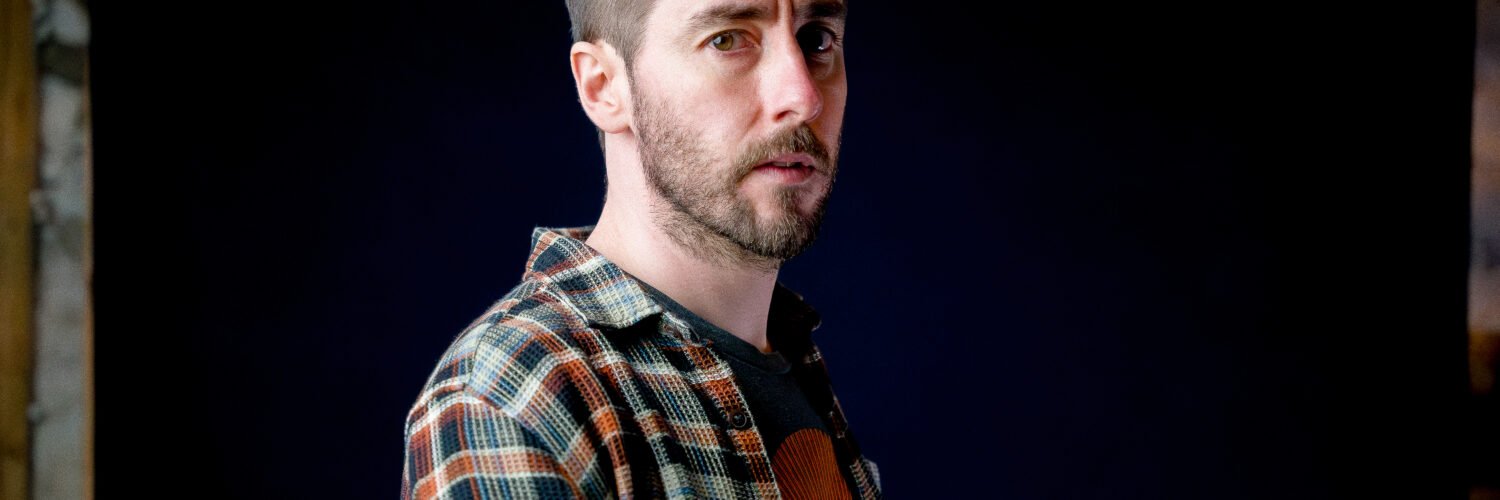
When Whozyerman? released “Miles Away” a couple of months ago, it wasn’t just the music that caught my attention. Alongside the single came the announcement that Paul Savage had removed his music from Spotify as part of a boycott of the platform.
In an era where streaming is often treated as unavoidable, it struck me as a rare example of an artist putting his principles ahead of convenience. That alone made me want to know more. I managed to catch up with him the very day he was releasing his new single “Long Stretch”.
Of course, our conversation ended up being about much more than Spotify. From the natural end of O Emperor to rediscovering the joy of making music, the creative process behind “Long Stretch”, and the challenges of remaining an independent artist in 2026, Savage proved to be as thoughtful in conversation as he is in song.
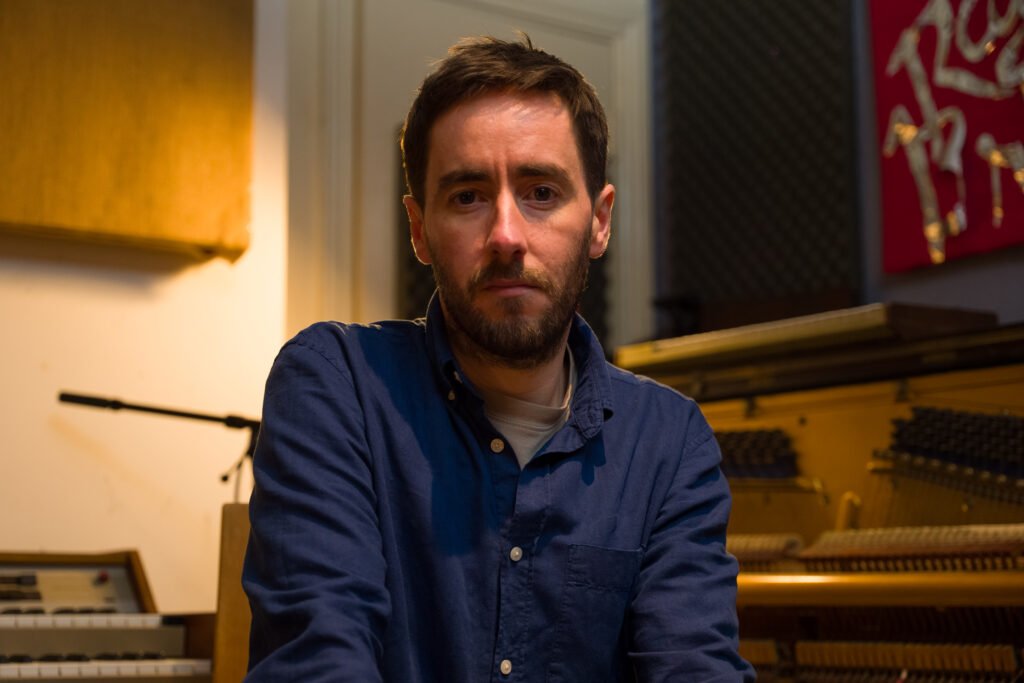
Out of curiosity, why did you choose ‘Whozyerman?” as a moniker ?
I thought it worked as a clever name. That it’s something that people familiar with on a day-to-day sense. It’s your colloquial language, a very Irish thing to say “Who’s your man?”. It also came from a song’s working title with my old band O Emperor.
After more than 15 years in music, several critically acclaimed albums with O Emperor, a Choice Music Prize, and a well-received solo debut, what motivates you to keep pushing forward creatively?
For a while there was a lull, post O Emperor… Life got in the way, there was other things that needed to be doing. But with enough time away from the industry, the scheduling and the cycles of albums and recording, that creative energy was allowed to have its own space.
Especially in the past two or three years. I went away and learned piano and drums as well. It was like going for walks or meditating. I’d learn a new instrument but not in a way that was career orientated. It was the therapeutic thing to do.
That gave me a new energy into writing songs and I discovered the love for it again. It really lit a fire with writing because I was able to write with a new instrument. Piano became the first primary instrument. It’s like learning a new language, there’s an excitement of actually being able to communicate when it finally clicks. There is a freshness to it. That’s what’s driving me on at the moment.
Where did that lull come from?
We ended the band on a nice natural conclusion. There was no kind of animosity or anything. Everyone naturally came to the point that they were happy to conclude and move on. We finished on something that we felt was our best output, and it was actually well received. It was a positive thing to step away from.
But, but there was the wear and tear of the logistics of being in the industry. We felt like: “Okay, we need to preserve the nice things about creating music, so we won’t drive this into the ground or like let it fade away. Just kind of stop it dead at a really nice point, and that will actually preserve it in the long run.”
How is your creative process as a solo artist ? And how has it evolved since your debut album “Blink”?
Blink was a very intuitive. I was messing around and, layering sounds very playfully, using sequencers or drum machines. I was letting the blips and bloops of those machines inform what I was doing and building up the textures. That was a nice fun way of creating music. You’re letting the atmosphere of those instruments build up something. It just hangs in tonal sort of space. It is a bit like krautrock where it’s very linear, bobbing along in almost a straight line.
The new album is going to be much different. I wrote it on piano, so basically there’s just more chords in the song or there’s a more traditional band feel to it, as opposed to, a more anonymous textural sounds that was Blink. This is definitely a departure from Blink.
You’ve returned to a more band-oriented approach for the new album. What prompted that decision?
It’s just hanging out with people. It’s nice to be in a room with people playing music as opposed to being on your own recording it. Blink was mostly recorded on the eve of COVID and lockdown. It went into that period of isolation enjoying your own solitude. But then after you’ve done that, and you’ve got as much as you can of that, you definitely want to be a bit more extroverted, out in the world and seeing people. So yeah, it’s just nice to go meet up people and get their collaboration going as well on this.
We’re forming the music as a band. I bring the songs, the main ideas to the band, and then the individual players —bass, drums, guitars— are bringing their parts into it.
Is Whozyerman? now a band or does it remain a solo act?
I would still classify it as a solo act. I would definitely be doing some solo shows or rearranging songs for a solo performance. But I will be trying to play with a band as much as possible, but it probably will be a revolving door of players as well.
It is my understanding that “Long Stretch” began life several years ago as a demo titled “Summer”. How did that song evolve between its initial conception and the version we hear today?
Originally, at the time, I didn’t really know how to play piano. I kinda just had basic chords. So I was just playing it with the right hand, blocking out the chords, with no left hand. The chords actually are still mostly there from what’s released now, only a little bit more arpeggiated.
It was interesting to hear the demo a few weeks ago, with this really rudimentary piano and a drum machine. It clearly evolved, but the essence of it is still there from what we ended up recording.
Were the Lyrics there already ?
No, the lyrics weren’t there. Lyrics are usually the last thing for me. I often have ideas sitting around for a long time, and the lyrics are something I put on the long finger until I really have to do the vocals.
Sometimes there are a few lines sketched out, and I’m humming things and trying to work them out, Sometimes the atmosphere in the chords will dictate what the lyrics might be about. It can give you a cinematic feel, where you think, “Oh yeah, I could imagine this.” But other times, it is harder to pin down, and if you try to put a face on it too early, it can lose some of the allure of the demo.
I always find it hard to finally paint in the outlines of a demo. That’s the hard part.
When do you decide “This is it, I am ready to share it with the world” ?
I used to joke about it. When you make a song, you really love the demo and think, “Oh, this is lovely. Maybe I should just put it out as it is.” Then ten years go by, you listen back and think, “Jesus, what was I thinking?”
You can be very enamoured with something at the time, and then two or three years later you’re pulling your hair out wondering, “Should I put a clarinet on it?” You’re tinkering with it all the time, and there’s probably a point where you should just stop.
With this album, the songs actually came together quite naturally. We rehearsed for a few months and recorded most of it over a weekend in Dundalk. After that, I spent another couple of years doing overdubs and mixing.
I’ve been chiselling away at it very slowly, but in truth, it’s been ready for a while.
The lyrics touch on the realities of making ends meet as an artist, as well as some of the pitfalls of the modern music industry. How much of “Long Stretch“ is drawn from personal experience?
It is loosely satirical. It’s just a very caricature-esque way of painting the artist always slightly struggling, not really getting much recognition or a reward while being determined to continue on. Even though some people might be bemused by what you do. “Oh, yeah, you’re still at the music” And you’re like, “Yeah, I am.” They mean well, but they’re still slightly bemused. Some will ask you “ What’s, what’s the point of this?” or “Are you deluded or something?”. Sometimes there’s an admiration, but it’s also like, “Jesus, yeah, that’s a bit mad, isn’t it?”.
It’s a very relatable experience for musicians. That’s really what the song is about.
This might be a slightly personal question, but is music your full-time occupation these days, or do you have other work on the side?
I have a full-time job. But for most of my 20s, I would’ve done it in full time, playing shows. Even with O Emperor, we used to have cover gigs at the weekend, and we used to do weddings and so there. So yeah, I would’ve been full-time musician for about 10 years and then slowly got a job over time.
It is nice having the security of a job. You can then actually enjoy what you do with music as opposed to it being a thing that you have to really sell to make money, which put a pressure on it.
Earlier, you mentioned that the pressures surrounding O Emperor were starting to take some of the joy out of making music. Has Whozyerman? helped you rediscover that joy?
Yeah, I would say so. I’m very eager to get out and play shows with this album. I can’t wait for people to hear it and get involved with it.
Playing shows or being asked to play gigs might have been something I took for granted a few years ago. Now I’m the one asking, “Can I play a show?” or “Would you be interested in doing this?” In a way, I’m almost starting from scratch. But because it’s not the first time I’ve done it, I have a bit more patience. I’m happy to keep at it.
I’m really looking forward to getting back out there, playing shows and having fun with it.
Many artists criticise Spotify while continuing to use it. I suppose they somehow rely on it… probably not for income but maybe for visibility… What made you decide to take the more radical step of removing your music?
Getting older and being around the block, I don’t really have those hang-ups of thinking Spotify is the be-all and end-all. Or that you have to be there to have any chance of making it.
For some artists, that is a legitimate concern. I feel bad about young artists that have to battle with these things and play the game. But I don’t have skin in the game in that way. I don’t have a label or anyone pressuring me, so I can afford to decide what happens with my music.
In a broader sense, I think Spotify is really bad for the industry. When something becomes that powerful, it starts driving down people’s craft. And that’s the case with Spotify: people are changing what they do to meet the demands of the platform. They’re trying to satisfy the algorithm.
It might seem like a radical step, but more artists are starting to question Spotify’s role. Hopefully that pressure eventually forces change.
Like a better remuneration for the artists…
Yeah. That is the crux of it. They need to appreciate what they have been given. It’s kinda crazy when you think about it; how they have been given a free resource to make money off. And now that they are just too big to fail, that’s just a bad model. You can see it happening again with AI.
They make something so cheap and so free that you suddenly become so reliant on it. Then they ramp up the price or they drive down the quality. That’s what happens with these tech firms. So yeah, I think people need just need to make hard decisions at some point.
Speaking of AI… It has become one of the biggest talking points in music. On one hand there are concerns about AI-generated music flooding platforms, while on the other hand it can be a useful creative tool. Where do you see the opportunities and the dangers?
There is an endless division down into where does the technology stop and the person start? You can argue that a lot of electronic music can be generated through different sequencers or different technologies. Electronic musicians have been doing that for a long time before AI…
What matters is the output. If you are just prompting it: “Give me some Cuban fusion with whatever” just for a vibe. Then for me, it’s vacuous. There is no value in that.
The other day I was asking ChatGPT or Co-Pilot about jazz harmony. I was asking it about certain questions about music theory, and that’s really good. It’s like doing research in the library and learning about something. That’s a tool. There is nothing wrong with that.
It depends on what the end game is about. Art is always about exploring a technology and seeing the possibilities, you know. But if the end game is just to monetise output and make money off it, then I don’t have time for that.
What does it mean to be an independent artist in 2026?
It is hard. Some artists are really struggling out there. Spotify has driven artist royalties. It has eradicated them. But then people tend to say that the money now is in live music. It is true to some extent. People are going to big concerts and are spending money every year on big concerts, but it’s not a sustainable thing either.
The grassroots of the industry, when it comes to people going out on a Wednesday or Thursday night to see a local band or even a mid-size band, here in Dublin, the likes of Vicar Street or Whelan’s are still wondering where the crowds have gone. Because, the price of going out is just too much for people. They have to make decisions about going to a big concert a year or maybe once every few months. And that’s having an effect on musicians. It’s becoming very hard.
But here’s still positive. I saw last week an initiative called Gig in a Gaff where people kind of volunteer to let people have a concert in their house. That’s really cool. It’s a nice indie underground way of doing things. Probably what the college scene or the basement scene would’ve done in America for a long time.
Money will drive people out, but they’ll find ways of being creative —whether it is with a rave or a house gig. I’m positive about that.
How do you feel the evolution of social media to promoting your own music ?
That is another string to everyone’s bow. Everyone has to get on board with in some way. It is either all in or not. You have to edit your own videos, and produce them, and put up content. Everything has to be filmed. You have to tell a story. To be honest, it is not really my thing. I don’t feel like you’re getting much for the energy put in it. I’m sorry if I sound pessimistic about it (laughs).
Finally, what’s next for Whozyerman? With a new album on the horizon, what can listeners expect from this next chapter?
The album is called Belly of the Beast and will be announced quite soon, for mid-October. I actually just got the vinyl test pressings back today. So, that’s in the pipeline. Hopefully I’ll be getting some regular gigging later at the end of this year and into next year.
Playlist of His Life
What was the first song you remember on the radio?
I remember I got a portable radio for Christmas when I was a kid. It was the size of a phone at the time. I remember dialling in some random station and it was “Bohemian Rhapsody” that was playing.
The first album you bought for yourself?
I think it was OK Computer, but also around the time it could have been Definitely Maybe by Oasis on tape. Either one of those I definitely remember buying on tape. I don’t know which came first.
The first concert you decided to go to?
That was Radiohead. I went with a friend. They were playing under a big top in Punchestown, for the Kid A tour.
Your most influential album ?
It is hard to say, there’s a lot of albums floating around. Recently, it has been Brian Eno, Before And After Science. That’s a great album. And I do like Brian Eno, and all his production with Talking Heads or David Bowie and his ambient material.
The most underrated album?
Oh, Jesus… There’s a lot of music I listen to that probably doesn’t get much airplay. Maybe an Irish artist doing amazing stuff. “Assurance” by Dan Walsh’s band Fixity is and album I got recently, on Moot Tapes. It’s just great.