

 Richard Bodin
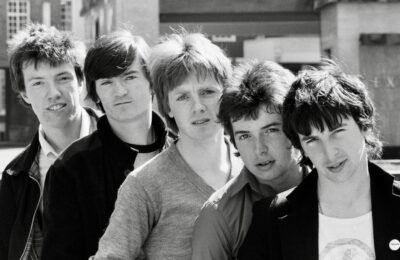
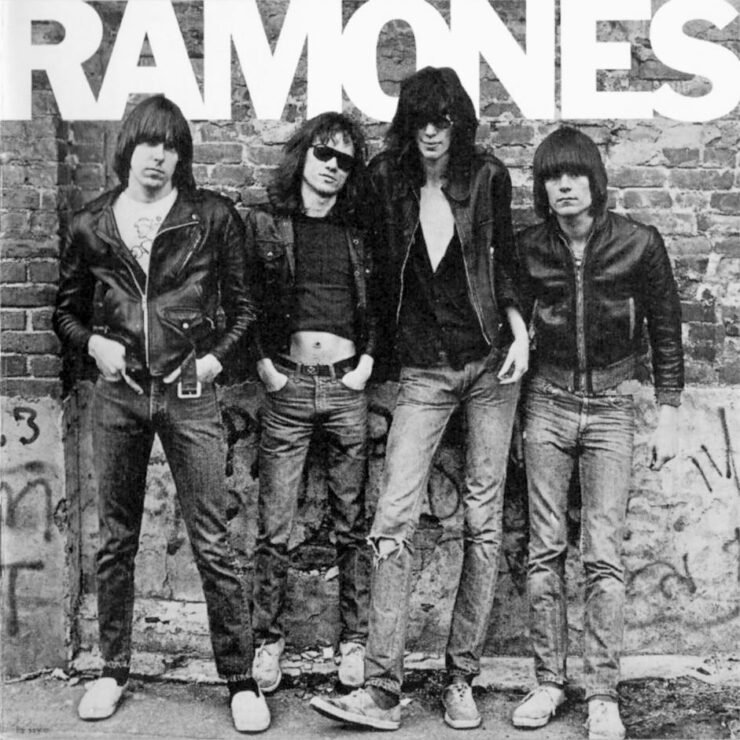
In the mid-seventies, when popular music leaned toward the spectacular theatrics of glam-rock or the dazzling virtuosity of prog rock, a band of thug-looking lads from Queens, going by the name of The Ramones, were honing their craft on the stage of the CBGB. Their debut album, released in 1976, didn’t rock the charts, but went on to change the face of popular music.
Assembling the Family
The story starts a few years before, in 1974, when John Cummings, and Douglas Colvin invited their friend Jeff Hyman —singer and founder of glam rock band Sniper— to join and form a new band, alongside another named Richie Stern. Colvin would sing and play guitar, Cummings would also play guitar, while Hyman would sit behind the drums and Stern would play bass. But plans changed when they discovered that Stern couldn’t play bass. So Colvin took the bass.
At that point, the band didn’t really have a name. Inspired by Paul McCartney, who used to use the pseudonym of Paul Ramon since his Silver Beetles days, Colvin decided to use the stage name of Dee-Dee Ramone. He then convinced the rest of the band to do the same and call themselves The Ramones. Like a Happy Family. John Cummings became Johnny, and Jeff became Joey.
As the band was progressing, Dee-Dee realised that he could not sing and play the bass at the same time. Joey became the new lead singer, while banging the drums, which is not particularly easy. Especially when you are part of The Ramones and your band’s specialty is to play loud and fast. So the band started to look for a replacement.
Long time friend and manager Thomas Erdelyi would sit behind the drums to demonstrate the songs to the audition candidates. Unfortunately, the band could not find a good fit. Not that there was no good drummer around, but they just wouldn’t fit with the band’s style. Ultimately, it was clear that Erdelyi was the one to fulfil the position, and he became Tommy Ramone.
A Radical Simplicity
The Ramones had many influences, starting with MC5 or The Stooges. They would extended to a much wider range from pure pop music like The Beatles and The Beach Boys, to much heavier rock like Alice Cooper. But in the end, The Ramones sounded like no one else. They came back to a simple pop format of songs, but played much faster and much louder.
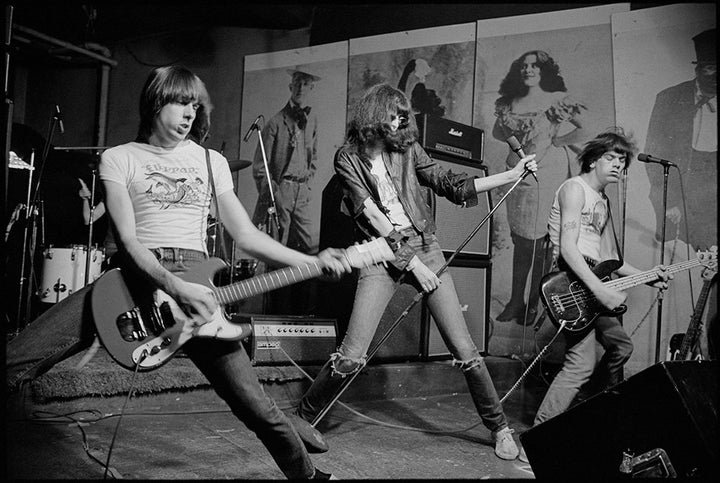
While all the other bands at the time would pay much attention to the theatrics on stage, the light shows, and the technical tour de force… The Ramones stood out with a stark contrast. No pretentious gimmicks, no fancy light show, no never-ending solo… no nonsense! They would just come on stage, looking like thugs with their tight jeans, and biker leather jackets, and throw a show playing at light-speed. And it worked. The band was practically living at the famous CBGBs.
“They were all wearing these black leather jackets. And they counted off this song … and it was just this wall of noise … They looked so striking. These guys were not hippies. This was something completely new.”
Legs McNeil, founder of “Punk” magazine.
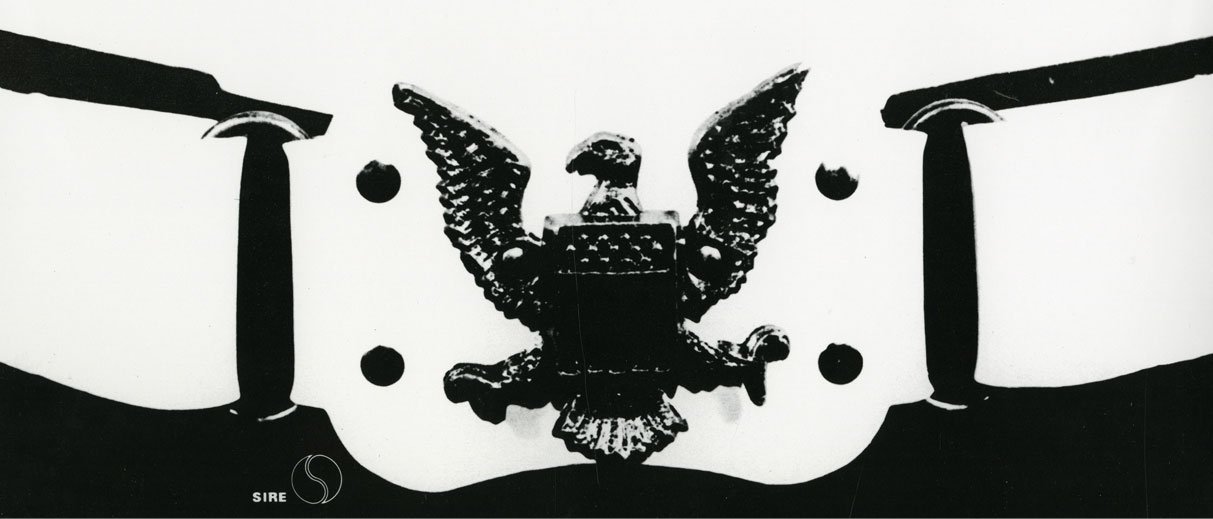
The Ramones performances were making noise, and music journalists, like Lisa Robinson or Lenny Kaye, fascinated, would write extensively about them. Robinson contacted Danny Fields, former manager for the Stooges, to convince him to manage them. Fields didn’t need much convincing: The Ramones were everything he liked. Meanwhile, Craig Leon, A&R for Sire Records, who had seen them live, was doing everything he could to convince the company’s president Seymour Stein to sign a recording contract with the band. At this point, Sire Records was mostly known for producing progressive rock bands, so signing The Ramones was not exactly a given. But Leon succeeded.
Recording at Full Speed
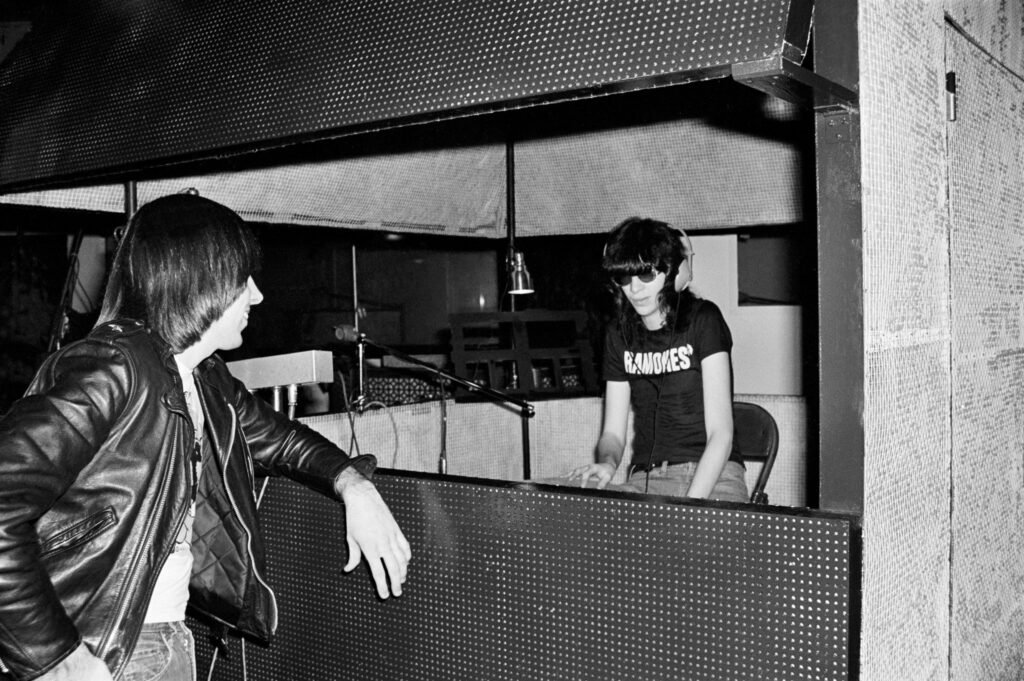
In January 1976, The Ramones entered Plaza Sound Studio, which is part of the Radio City Music Hall building in New York City. It was maybe a debut album, but the band came prepared. They knew exactly what they were doing and how they wanted their album to sound like. One of the few influences they had in common was The Beatles. The way the fab four’s early albums sounded like really marked them, so they wanted to reproduce their recording techniques.
One of the specificities was how the instruments were recorded on different channels. The rhythm guitar would be on the right channel, while the bass would be on the left, and the drums and vocals would be in background and centre. The other technique they picked was about doubling the vocals. They recorded Joey singing the main melody twice.
And because the band had already recorded a demo in a studio a year before, and they kept developing their sound in rehearsals, they knew exactly what they were doing. In two or three days, all the tracks and overdubs, for all the songs were recorded. They then went through a 14 hours marathon to mix the album. The house engineers weren’t sure what to think of this band of thug-looking lads that invaded the studio and their odd requests. But in less than five days, they got the job done.
The Ramones’ debut album unpacked
The Ramones’ debut self-titled album was released on April 23rd 1976. The lyrics cover a wide range of subjects that go from teenage subject of boredom and lust, but also violence, drugs, male prostitution and nazism. Although it may look dark at times, or controversial and provocations, The Ramones claimed they were not trying to be offensive.
The album opens with the now iconic “Blitzkrieg Bop” and its electrifying intro which stops suddenly after twenty seconds. The music gradually creeps back in as Joey shouts his famous chant: “Hey Ho! Let’s Go”. First the bass, then the guitar, and it goes full on until the closing chorus. This mind-blowing hit is only the start, but with its 176bpm —reaching up to 200 live—, it gives a really good idea about what comes next.
No weak spot
Music critic Kris Needs at the time wrote in Zig Zag that it was “impossible to mention highlights, ‘cos the whole album’s a highlight, geared and stripped down for maximum energy and effect.” I just couldn’t say it better. But while it IS impossible to mention any highlights, it is worth acknowledging a few songs. “Chain Saw” for example, is the fastest with 180 bpm, opens with the eerie sound of a circular saw and obviously refers to The Texas Chainsaw Massacre 1974 movie.
“53rd & 3rd”, which was written by Dee-Dee, is about a male-prostitute killing a client with a razor to prove he is not a homosexual. The song is in fact partly autobiographical, as Dee-Dee was for a short time turning tricks at the corner of 53rd Street and Third Avenue in Manhattan, to fund his drug addiction in the early 70s.
The last song of the album “Today Your Love, Tomorrow The World” was almost removed from the album by Seymour Stein. He took issue with the original lyrics of the songs that went “I’m a Nazi, baby, I’m a Nazi, yes I am. I’m a Nazi Schatze, y’know I fight for the Fatherland”. The band ultimately changed it to “I’m a shock trooper in a stupor, yes I am. I’m a Nazi Schatze, y’know I fight for the Fatherland” and the track could be released.
Twenty-Nine Minutes for a Revolution
The fourteen tracks fly by with no respite, all wrapped up in just 29 minutes. The longest one being “I Don’t Wanna Go To The Basement” barely stretches to 2 minutes and 40 seconds, while the slowest, the more melodic “I Wanna Be Your Boyfriend” still clock in at 134 bpm.
Twenty nine minutes of sharp, loud and distorted pure rock energy that just reset the standard of pop music to its bare principle. Take a simple melody, a few verses, and a strong chorus and add The Ramones electric energy and you get a revolution. It took everyone by surprise.
If The Ramones had been influenced by the British Invasion, this was their gift in return
While the album didn’t receive a great commercial success, the critics loved it. The Ramones were the vanguard of a new “punk” movement, and they could see history happening before their eyes. If the public was not ready yet, the seeds had been sown and it would grow. And they were right.
Across the pond, in England, The Ramones’ debut album created a wave of punk bands emerging in its trail. If The Ramones had been influenced by the British Invasion, this was their gift in return. Beyond the impressive speed to which they played, The Ramones had brought back the simplicity of pop music to the front stage. It influenced so many bands that became in turn legendary, like The Clash, The Damned or The Sex Pistols.
A Shock That Never Faded
Now celebrating their debut album fiftieth anniversary, The Ramones still sounds like a shock to the system. In an era that had lost itself in excess, four young punks stripped rock music back to its bare essentials: short songs, simple chords, and just raw energy. They created the blueprint to a new musical movement. One that would ignite scenes, inspire generations of bands, and redefine what rock music could be. It may not have topped the charts in 1976, but its impact echoes far louder than numbers ever could.
Sometimes, changing the world only takes three chords, a leather jacket, and 177bpm of raw electric energy. “Hey Ho! Let’s Go!”