

 Richard Bodin
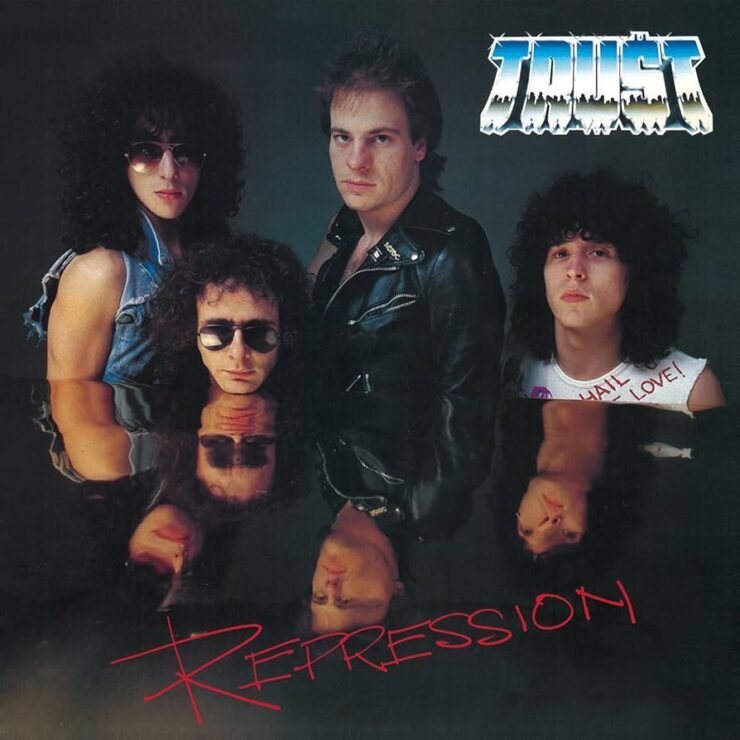
The other day, I was browsing my record collection looking for something ‘refreshing‘. By that, I mean something I haven’t listened to for a while, something that would break away from my recent rotation… And as I flicked through the shelves, I found it, quite obvious, hidden behind Thin Lizzy: Répression, by Trust. While you may not know them much, they are quite the legend where I come from.
Trust: France’s Hard Rock Vanguard
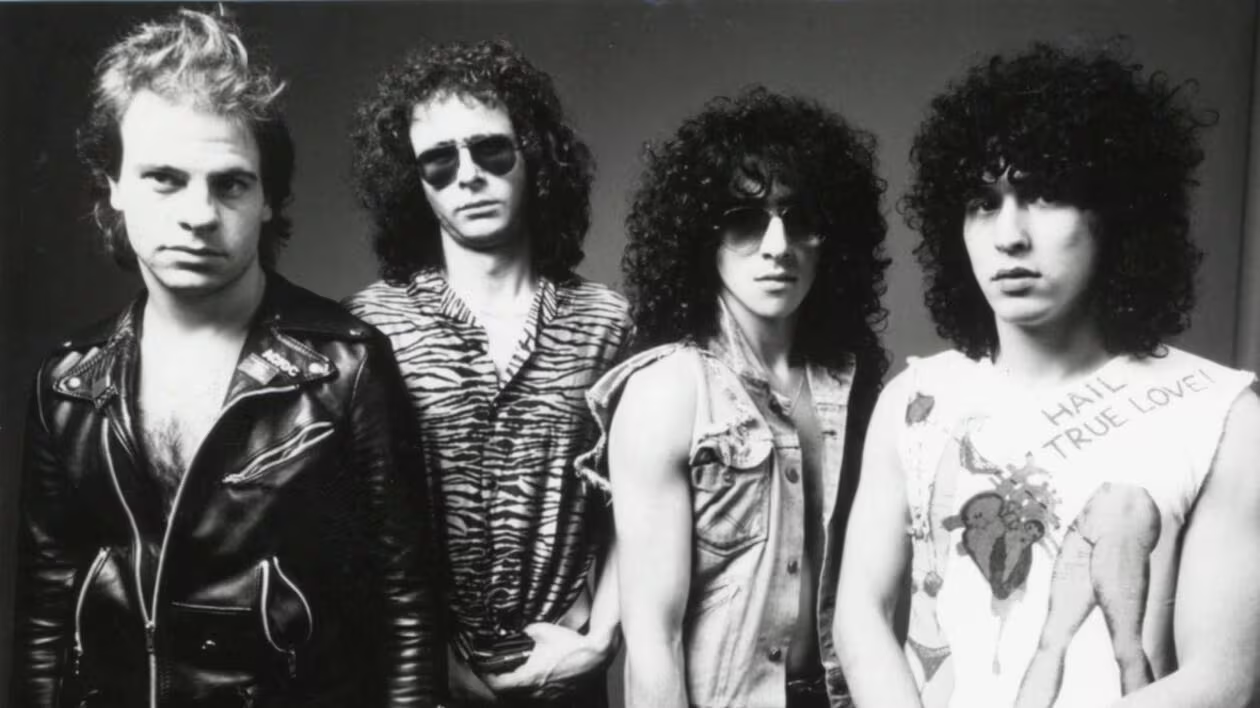
Trust was the leading hard-rock act in France in the late ’70s and early ’80s. They formed in Paris when charismatic frontman Bernie Bonvoisin and bassist and later manager Raymond Manna met genius guitarist Norbert ‘Nono’ Krief. They came up with a sound blending hard rock textures with bluesy melodies. A bit like AC/DC who clearly had some influence as Bon Scott was a close friend to the band. Bernie Bonvoisin also brought a strong punk vibe to the band with his lyrics very much oriented to societal and political subjects. With Nono Krief’s extraordinary skills with the guitars and Bernie Bonvoisin overwhelming vocals reminiscent of his friend Bon Scott, the band quickly made a name for themselves.
Very active in the UK in 1980, they supported many acts like AC/DC (of course), Iron Maiden —with whom they swapped drummers Nicko McBrain and Clive Burr for a while— or Motörhead. Trust also managed to headline their own tour in the UK —quite unusual for French bands at the time— and headline at the Reading Festival. But mostly, they spent time in studios recording their sophomore album: Répression.
“Antisocial” and the Voice of a Generation
The album opens with Norbert Krief’s gentle strumming of a jangly guitar, but it soon enough leaves place to a much more nervous sound and rhythm as Bernie Bonvoisin launches into “Antisocial”. In the lyrics, Bonvoisin encourages an antisocial to stand firm and not succumb to societal conformism. The song progresses through a few rhythms breaks and frenzied guitar solo before ending with a climatic crowd chanting “Anti-Social” adlib.
Upon its release, the single sells more than 250,000 copies in France —outselling “Highway to Hell” and “You Shook Me All Night Long” by AC/DC in the same year. “Antisocial” became the anthem of the French youth.
But Répression goes far beyond a single hit. Bernie Bonvoisin captures the spirit of the moment by addressing societal and world issues that really resonated with French young people. “Monsieur Comédie” takes aim at Khomeini’s rise to power in Iran, and everything that followed: imposition of the veil, bans on music and culture, or public executions. “Au Nom De La Race”, “Saumur” or “Fatalité” paint a critical view of the French society and the struggles met by the lower classes or emigrant communities.
The Mesrine Myth
One of the main topic of the album, however, made a lot of people uncomfortable. Three tracks related to Jacques Mesrine, notorious Public Enemy #1 in France through the 70s, and denouncing the prison system. Mesrine’s attitude toward the system, rebel, unimpressed by the power of the state, targeting banks and rich people, escaping incarceration in spectacular fashion many time made him an anti hero figure for the French popular classes… Despite the violence of his crimes. He was also very vocal about the poor and unsanitary conditions of the prisons, and very good at using media to build his legend… His death, ambushed by French police achieved to make him a martyr by the system.
For a band like Trust, a very much anti-system band, this was a tremendous source of inspiration. “Instinct de mort”, is direct allusion to Mesrine and his book published in 1997 “L’instinct de Mort”. The band starts by mentioning his death by ambush and procedes to give a very sour portrait of a police state. They mention the poor condition of life in the prisons, and refer to it to crime factory.
Breaking the walls
In “Le Mitard”, the band is literally using texts and audio tapes produced by Mesrine during his time in the Fleury Merogis prison, to give another view of the penitentiary system. The song starts with a scarce instrumentation, just a bassline and spoken words, before turning into a driving rythm and another anthemic hard rock track. Through Mesrine’s words they give a view of maximum security prison stripping the prisoner of any humanity.
It is followed by “Sors tes griffes”, denouncing how much former prisoners are not being given another chance by the rest of society after having done their time. They then become second grade citizens, void of any civic rights (no voting rights) but subject to conscription or paying taxes like any other citizen… Prisoners of their past forever, with duties but no rights. Bonvoisin invites the former prisoner to rebel against this.
A World Class Legacy
After its release, Répression reached the #2 spot in the French charts, and managed to sell more than 400,000 copies by 1981. As they recorded the album in London, Trust wanted to release an English version. Bon Scott volunteered to the task of adapting his friend’s lyrics. Unfortunately, the AC/DC’s frontman died before he finished, and his texts were never found. When they released their album three months later, the band published a picture of them with Bon Scott during their studio session, dedicating the album to him.
Ultimately, Jimmy Pursey, Sham 69‘s frontman took over the lyrics adaptation and the band could release an English version in December 1980. But, if you ask me, the original French recordings retain a far greater emotional and political weight. While the English version saw limited success, it would later inspire Anthrax, who famously covered “Antisocial” and “The Sects”.
Trust were the voice of their generation and Répression marked an entire generation and more. People who were twenty in 1980, and their kids (my generation), all know the lyrics of “Antisocial” by heart, and jump on the dancefloor the second Nono Krief’s first strums resonates. Today the band still moves large crowds. In 2017 the band was standing in front of more than 60,000 excited fans.