 Richard Bodin
1973 was a pivotal year in the history of Thin Lizzy. After their debut album with Decca in 1971, the band felt the need to move to London, hoping for more opportunities. But even after their sophomore album Shades of a Blue Orphanage in 1972, success wasn’t exactly coming, despite the successful single “Whiskey in the Jar.” In 1973 the band would release another single, but had less luck with their following album Vagabonds of the Western World. The year would mark the departure of guitarist Eric Bell, but it would also see the start of a longtime collaboration with Jim Fitzpatrick, who would design the album cover.
Breaking the “Whiskey in the Jar” Box
After the successful cover of “Whiskey in the Jar,” the record label tried to push the band into recording more traditional tunes with their own special blend. Thin Lizzy, however, didn’t want to trap themselves in that box, and Phil Lynott had plenty of original material to offer. The follow-up single, “Randolph’s Tango,” unfortunately went almost unnoticed and didn’t meet much acclaim. The pill was hard to swallow, but the band kept touring and working on their upcoming album.
Already, Lynott was looking for someone to design the cover. For the first two albums, he didn’t really have a say, as everything had been handled by Decca’s in-house artists. This time, he wanted control over the artwork. As he was discussing the matter with his friend Frank Murray1, he suggested Jim Fitzpatrick.
Enter Jim Fitzpatrick
At the time, the Irish artist was part of a beat group, Tara Telephone, alongside poet Peter Fallon and Eamonn Carr (future Horslips). Their performances often saw members of the audience getting up to read their own poetry. The project eventually morphed into a series of art magazines called Capella, which would go on to publish small contributions from the likes of Marc Bolan, Allen Ginsberg and John Lennon. Fitzpatrick designed the band’s posters and all the covers of Capella, drawing strong inspiration from Marvel comic artists like Jack Kirby and Steve Ditko. This caught the eye of Phil Lynott, who was also fond of Marvel comic books.
To design the cover, Lynott asked his friend Tim Booth, who had already worked on the band’s logo for Shades of a Blue Orphanage, to come up with ideas and rough sketches. Frank Murray approached Jim Fitzpatrick as well. While they weren’t particularly impressed by the direction of Booth’s design, they did like his new logo, inspired by the emblem of a Cadillac or a Chevrolet. Fitzpatrick’s elaborate first rough for a fully coloured gatefold, however, hit home instantly.
Kindred Vagabond Spirits
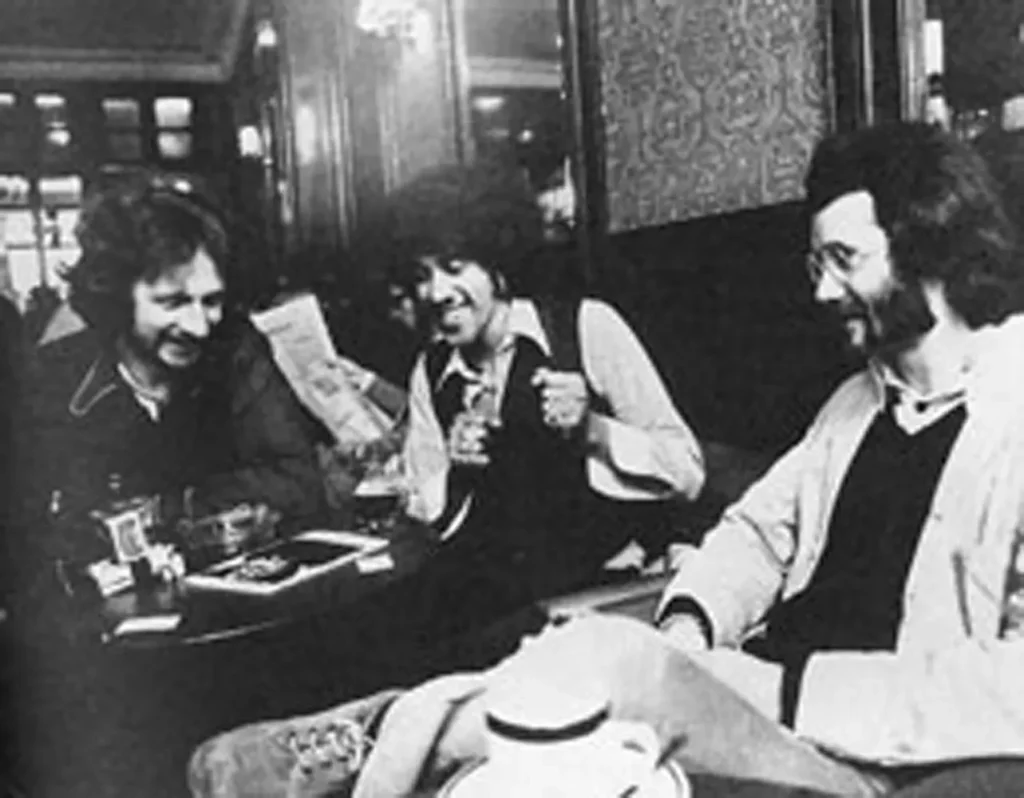
Eventually, Phil Lynott met Jim Fitzpatrick in Neary’s Pub in Dublin. The musician and the designer connected straight away. They discovered a kindred spirit in each other, with much in common. Beyond their shared cultural tastes — comic books, poetry and all things Irish — they had very similar upbringings. Both had grown up fatherless, raised by their grandmothers while their mothers worked to provide for them. Both had also experienced periods where they escaped and roamed around like vagabonds. After this meeting, the pair stayed in touch, speaking regularly on the phone, as Phil felt it was important for them to maintain that connection if they were to collaborate.
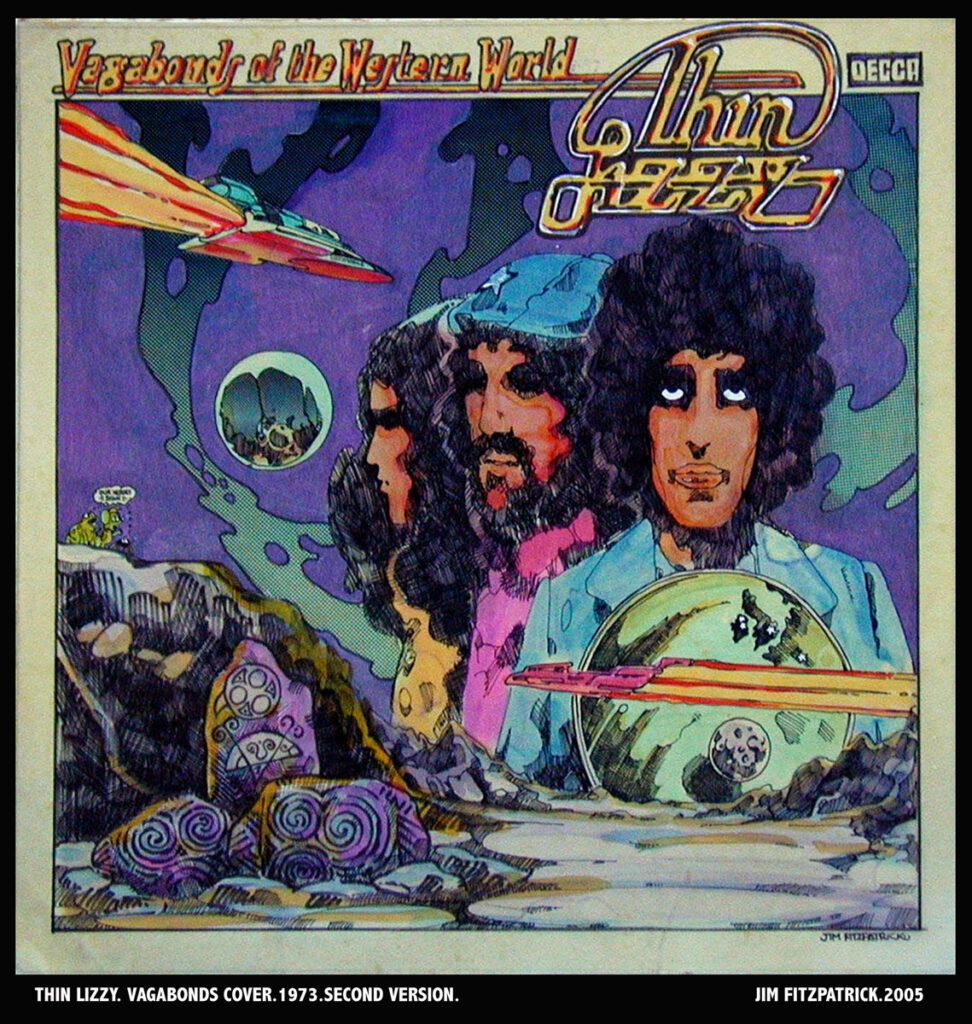
From Rough Sketch to Cosmic Cover
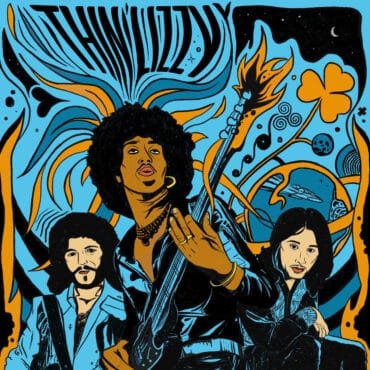
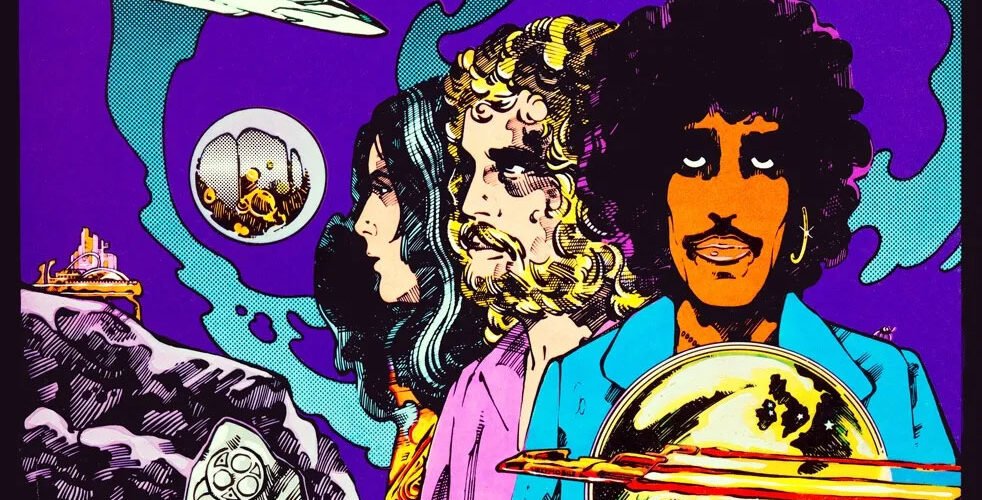
Fitzpatrick’s gatefold idea was ultimately refused by Decca for financial reasons —simply too expensive to print — but the concept and visual style were approved. The artwork was heavily inspired by Marvel comics and featured a lunar landscape with carved stones representing the Newgrange tri-spiral symbol, evoking the band’s Irish origins. A moving spaceship represented the Lizzy Mobile. For the logo and title lettering, Fitzpatrick worked closely with Tim Booth, who had created the original design.
At the centre, Fitzpatrick drew portraits of the three band members. Although the final artwork features beautifully detailed portraits, the early rough sketches were far less precise. The artist only had a couple of poor-quality photographs of Eric Bell and Brian Downey, while Phil Lynott had given him a small passport photo.
To complete the design, Phil asked that a spider, a dormouse and a frog be included. These totems represented the three musicians. The spider was Phil, because of his tall frame and long legs. Brian was the dormouse, as he was famously difficult to get out of bed after a gig. Eric was known as “Frog-Jaws,” as he would occasionally pull frog-like faces.
The end of the first chapter…
Vagabonds of the Western World didn’t meet much commercial success, despite its fantastic cover and these cosmic cowboys. The subsequent single “The Rocker” managed to reach a respectable #11 in the Irish charts upon its release, but failed to chart in the UK. Needless to say, morale within the band wasn’t great.
Eric Bell started to feel trapped between the band’s sound evolving toward something heavier and an audience still requesting a follow-up to “Whiskey in the Jar.” At the same time, his wife left him and moved to Canada with their son. Under the strain, he fell into a dangerous mix of drugs and alcohol. Eventually, things reached the point of no return during a gig on New Year’s Eve in Belfast, when an intoxicated Bell walked off stage in the middle of the show. He left the band the very next day.
Over the years, people looked back on these early “Bell era” with a renewed interest. And if they didn’t meet success at the time of their release, today they are highly regarder.
… and the beginning of a Legacy
While one creative partnership was coming to a close, another had only just begun. Jim Fitzpatrick’s artwork for Vagabonds of the Western World would prove to be more than a one-off collaboration. The connection forged between the designer and Phil Lynott in Neary’s Pub grew into a lasting creative partnership, and, more importantly, a strong friendship. In the years that followed, Fitzpatrick would go on to design most of Thin Lizzy’s iconic covers, helping define the band’s visual identity.
Vagabonds of the Western World stands at a crossroads in Thin Lizzy’s story: the final appearance of the original lineup on record, and the beginning of a visual mythology that would accompany the band for years to come.
- Frank Murray was Thin Lizzy’s road manager and later became band manager for The Pogues ↩︎