

 Richard Bodin
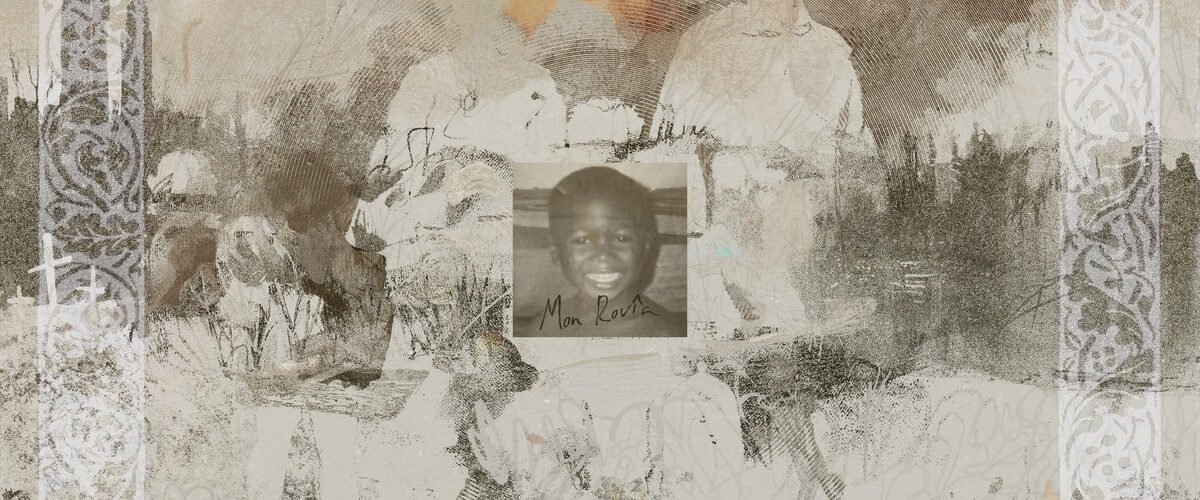
There are debut albums that introduce an artist, and others that quietly lay out an entire life. Bloodlines belongs firmly to the latter. It is not simply a collection of songs, but a carefully shaped narrative in which Janjay Lowe — under the moniker Mon Rovia — retraces his own history, from the violence of Liberia’s civil war to a hard‑won sense of belonging and hope.
Lowe grew up in Liberia during the country’s brutal civil war, losing his parents and narrowly escaping the fate of becoming a child soldier himself. Eventually taken in by American missionaries and adopted, he was brought to the United States, where he grew up in Tennessee. There, he discovered folk music, learned to play the ukulele and guitar, and found a voice through songwriting. With his first EP, Dark Continent, he expressed himself through a blend of RnB, hip hop and folk.
Progressively, he introduced more and more folk into his sound, leaving behind click tracks and electronic drum machines. Today, Mon Rovia describes his music as “Afro Appalachian,”. His music is built on gentle, sliding guitars, ethereal ukulele lines, winding strings and hand‑played rhythms. His voice is calm, soft and unforced, carrying lush melodies that often feel comforting. That warmth is crucial, because it stands in stark contrast to the stories being told. The beauty of the arrangements never softens the subject matter; instead, it makes the weight of it all the more devastating.
A journey to humanity
Over the past few years, Mon Rovia has released four EPs — four Acts: Act I: The Wandering (2023), Act II: Trials (2023), Act III: The Dying of Self (2024), and Act IV: Atonement (2025). Together, they trace the evolution of a human being trying to understand himself and his place in the world. Upon releasing the final Act, Lowe explained: “The aim is for the four parts to take the listener through the natural sequences of discovering their purpose… These four ‘Acts’ have been meant to serve as a peek into my story; a window into what’s next — and Act 4 will leave us at the door of the album that we’re currently working on.”
With Bloodlines, Mon Rovia steps through that door. The album looks back at his own past while trying to figure out his own self, and how one fits into a world shaped by violence, power and history.
Memory and Survival
The opening stretch of Bloodlines is rooted in trauma, returning again and again to Lowe’s childhood in wartime Liberia. “Black Cauldron” sets the tone, confronting the way memory can pull you back without warning. Rifles, burning churches and the constant threat of forced recruitment into armed groups haunt the song, capturing a childhood defined not by innocence but by survival. His repeated plea (“tell me there is a reason for living” ) hangs heavily in the air.
He explores the theme of child soldiers further on “Day at the Soccer Fields.” When daily life should revolve around playing football, Lowe recalls a childhood shaped by terror. “I remember it like it was yesterday,” he sings, before describing RPGs and AK‑40s in the hands of children. The uplifting music carries his harrowing recollection as his body shakes and his mother begs him to “come back alive.”
“Pray the Devil Back to Hell” deepens that sense of lived history. It opens with a journalist’s report from Monrovia, describing exodus and violence, grounding the song in documentary reality. Lowe sings of burying his mother, his father and a close friend, of a conflict with no end in sight. He tells how, in a world where he lost everything, with a closed heart, he witnesses these heroines dressed in white praying not for victory but for love. They were the Women of Liberia Mass Action for Peace, whose daily, peaceful protests pressured political leaders to stop the fighting.
Identity and Inheritance
From there, Bloodlines turns inward. The title track acknowledges the inescapable nature of the past: no matter how far you travel or how much you change, it remains part of you. “Little by Little” and “Old Fort Steel Rail” trace the slow process of growing up. Learning to loosen fear’s grip, gaining confidence, and finding ways to channel pain into something survivable.
“Whose Face Am I” is perhaps the album’s most explicitly personal reflection on identity. Growing up without parents and far from his roots, Lowe navigates a fractured sense of self. His father, a Senegalese soldier likely involved in West African peacekeeping forces, left without knowing Lowe’s mother was pregnant. The question of inheritance, emotional, cultural, even physical, lingers unresolved, and the song never pretends otherwise.
Movement and Perspective
The third act of the album feels restless and outward‑looking. “Running Boy” suggests motion and escape, while also hinting at survival guilt following an encounter with the police. The stomp‑and‑clap “Field Song” is about learning to be at peace with oneself before returning to a loved one, asking for patience along the way.
“Somewhere in Georgia” widens the lens again, connecting personal displacement to the deeper scars of American history, particularly the legacy of slavery. It is a reminder that the land Lowe now inhabits carries its own unresolved trauma. And that survival narratives do not belong to one continent alone.
Resistance and Hope
With “Heavy Foot,” Mon Rovia shifts from personal history to collective responsibility. The song takes aim at controlling governments and systems that divide, manipulate information and keep people subdued. Yet even here, the message is not one of bitterness but of resistance through openness. With its singalong chorus, Lowe encourages unity, critical thinking and understanding rather than judgment.
The album closes on a note of fragile but undeniable hope. “Infinite Pines” feels like light breaking through cloud cover (“though the lights keep fading, there’s a peace waiting for us“). “Where the Mountain Meets the Sea” seals that promise, gently affirming that life, though short,” is made long through love”.
Final Thoughts
Bloodlines is an extraordinary debut: intimate without being insular, political without being didactic. It disarms and devastates through the stories it tells, yet its ultimate message is one of love, hope and tenderness for humanity. Mon Rovia does not ask for sympathy. He invites the listener to walk with him, through memory and trauma, toward a hard‑won sense of peace.