 Richard Bodin
Three years after the bombshell that was the release of OK Computer, Radiohead finally released the long-awaited follow up: Kid A. The album had been a long, chaotic birth. The band spent about 16 months in and out of studios, fighting burnouts, creative dry spells, and experimenting new sounds, with no clear deadline. If OK Computer explored consumerism, capitalism and social alienation in a world more and more technology-driven, what was Kid A about? It came with a much darker mood, exploring the loss of humanity in the face of technology, but also in a much more abstract manner, leaving it opened to anyone’s own interpretation, really.
The Myth of Kid A’s Human Clone
Shortly after the release however, on the official Radiohead website’s message board, a fan asked Thom Yorke and Jonny Greenwood about the inspiration behind the title: “Kid A”. Yorke replied: « Dedicated to the first human clone…I bet it has already happened ». Nothing more. He never expanded further on the subject after that comment. On another occasion he implied it was the nickname of one of the band’s sequencer. But he mostly insisted that he never really had any story or concept in mind. Yorke said: « If you call it something specific, it drives the record in a certain way. I like the non-meaning. »
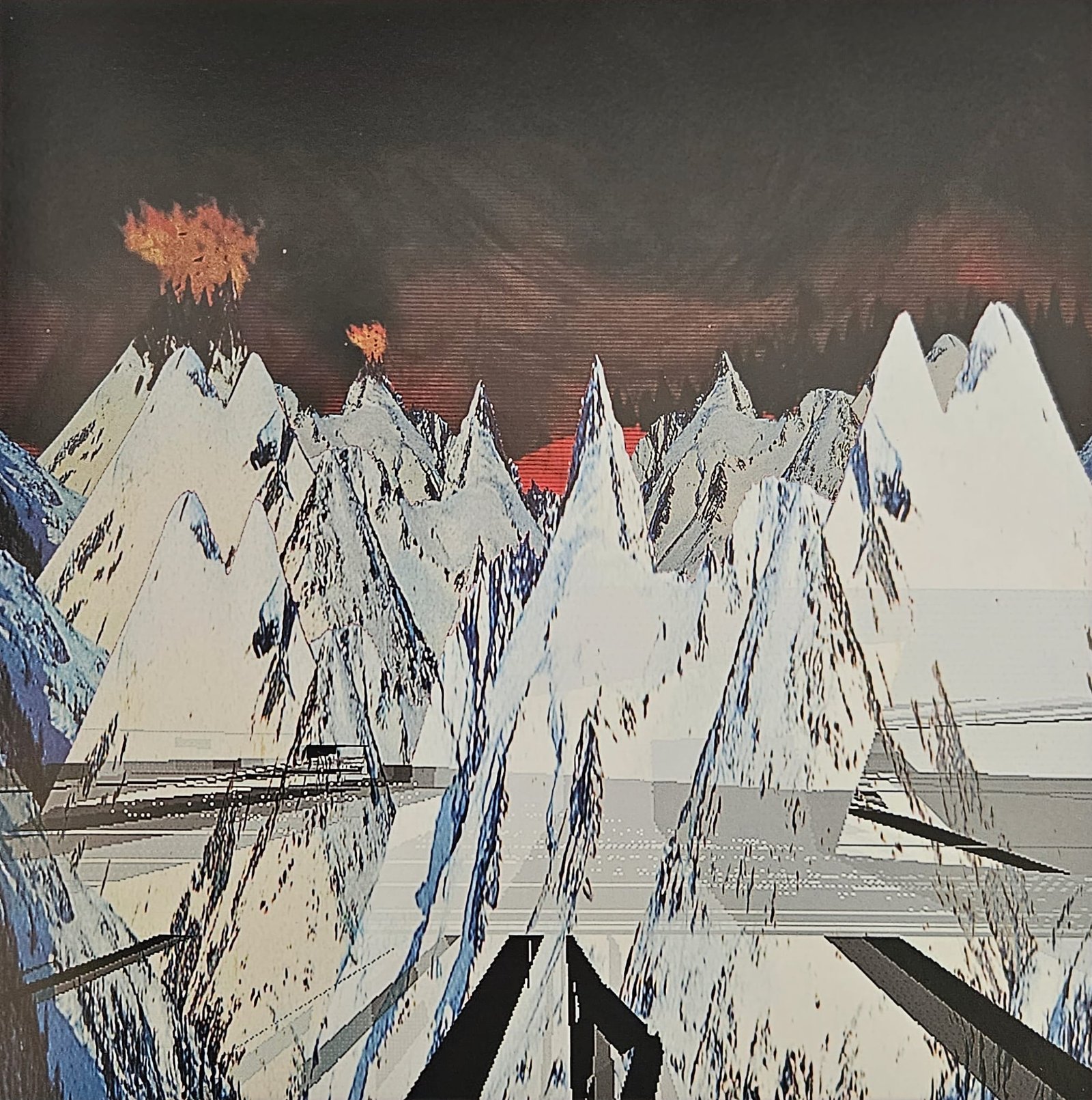
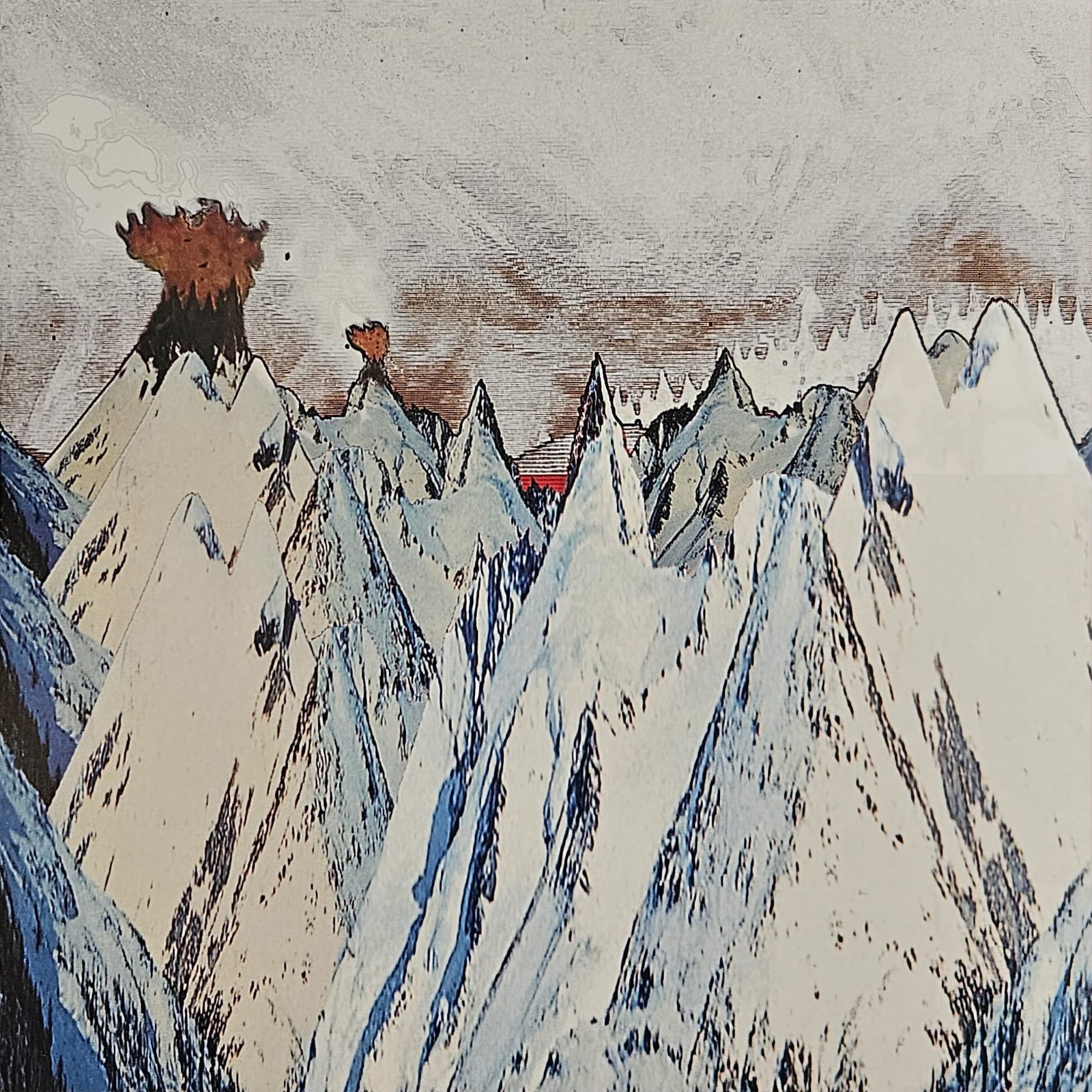
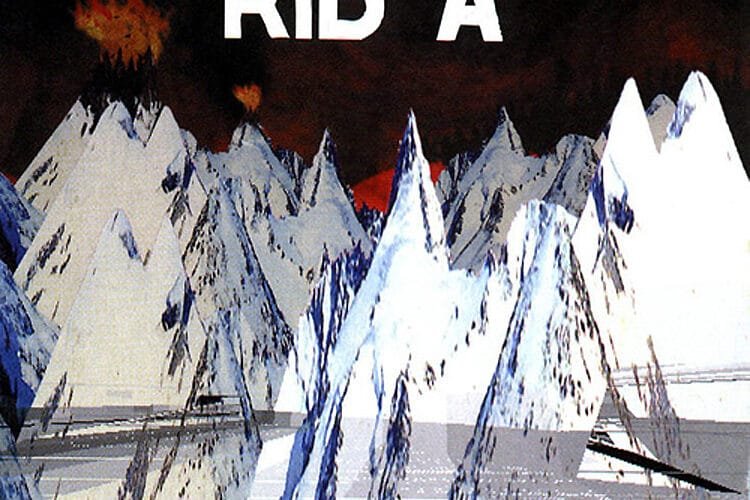
But that single comment about cloning grew legs. Fans started developing theories around it, already anticipating that next album’s working title was “Kid B“. One of the theories focused on the artwork cover. Some argued that the mountain peaks formed a human profile. And with a closer look, the same profile repeated another two or three times, hinting at clones. The theory went as far as measuring the distance of the two ‘clones’ on the left (16.7mm on a CD… what about inches? or on the LP?)… and play two copies of the album with that same delay, and it would create a perfectly timed clone of the album. Mind blowing stuff, right?
Leaving the Myths Behind
Fans can have remarkably vivid imaginations… Did you know that Pink Floyd’s Dark Side Of The Moon plays in perfect sync withThe Wizard Of Oz movie? Or that Paul McCartney was dead according to the artwork of Abbey Road ? Or that The Rise and Fall Of Ziggy Stardust And The Spiders From Mars really prophesied the rise of Kanye West ? Ultimately, the clone theory about Kid A has as much ground than all these other ones: Fans will always see what they want to see.
Why did Thom Yorke commented about cloning that ONE time? I don’t know. Is the album about cloning? No, definitely not… Unless you want it to be! After all it is opened to anyones interpretation… But the story ends there. The artwork has other mysteries behind it… The real story is far more harrowing — and rooted not in science fiction, but in real-world tragedy.
Blood on the snow
Some finds their origin in the Balkans in the late 1990s. Following the fall and disintegration of Yugoslavia this region has know its fair share of turmoil and crimes against humanity. As Stanley Donwood recalls in his book « There Will Be No Quiet », at the time we weren’t as connected as we are today. When some atrocities happened somewhere in the world, we would learn about it in the papers, or at the news on TV. The images submitted to us would be carefully curated, and would not always necessarily hold the proper coverage.
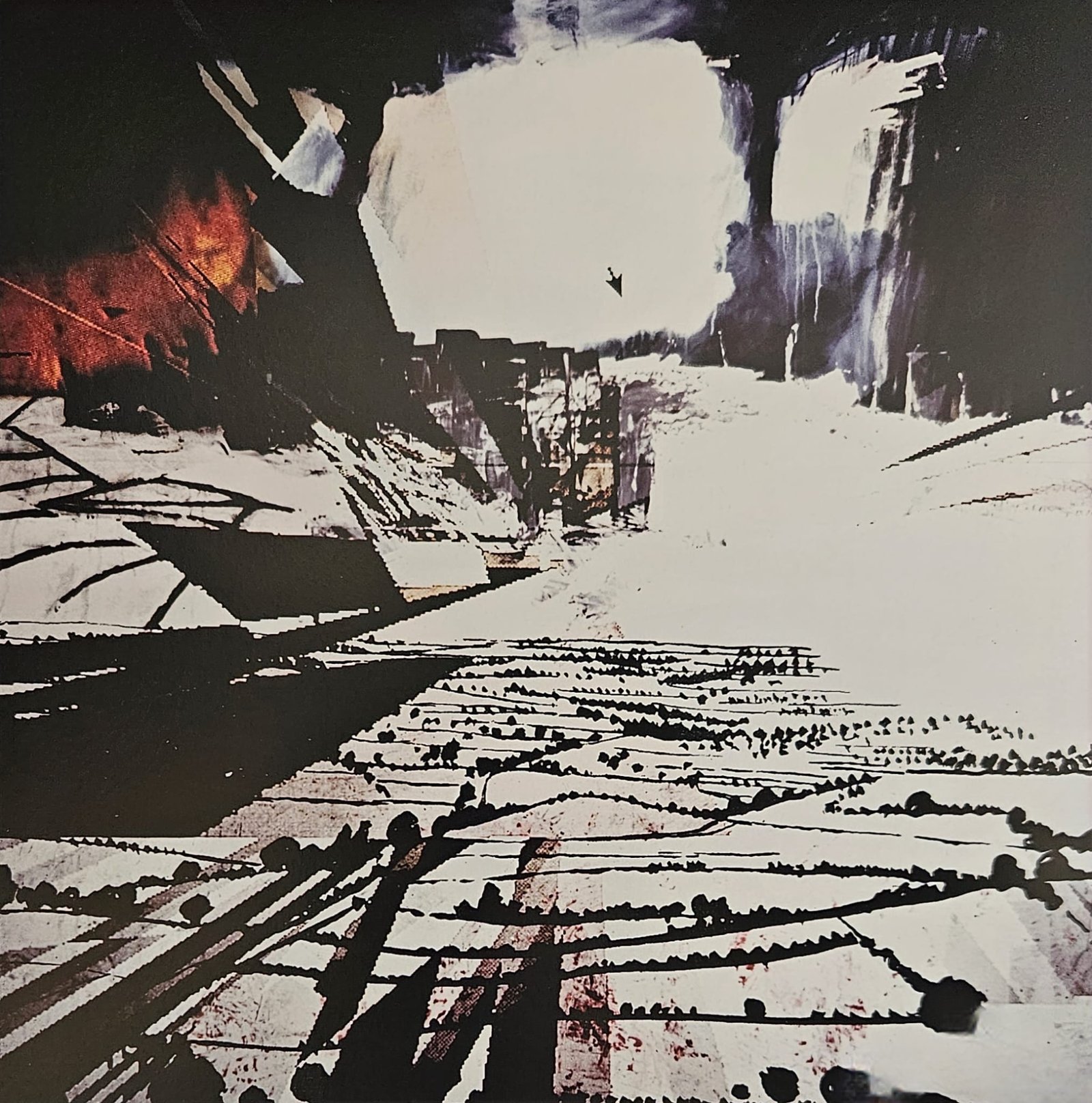
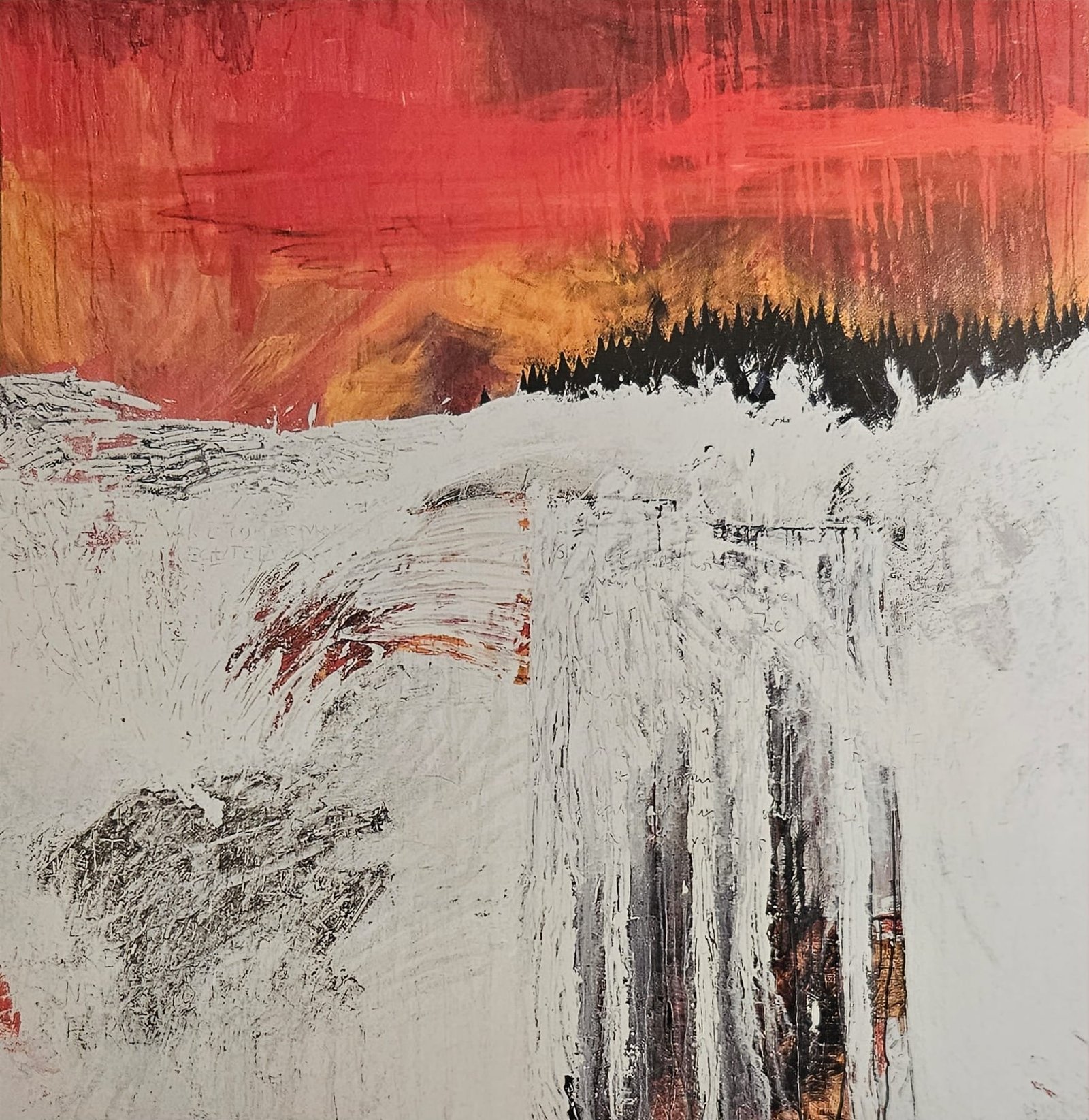
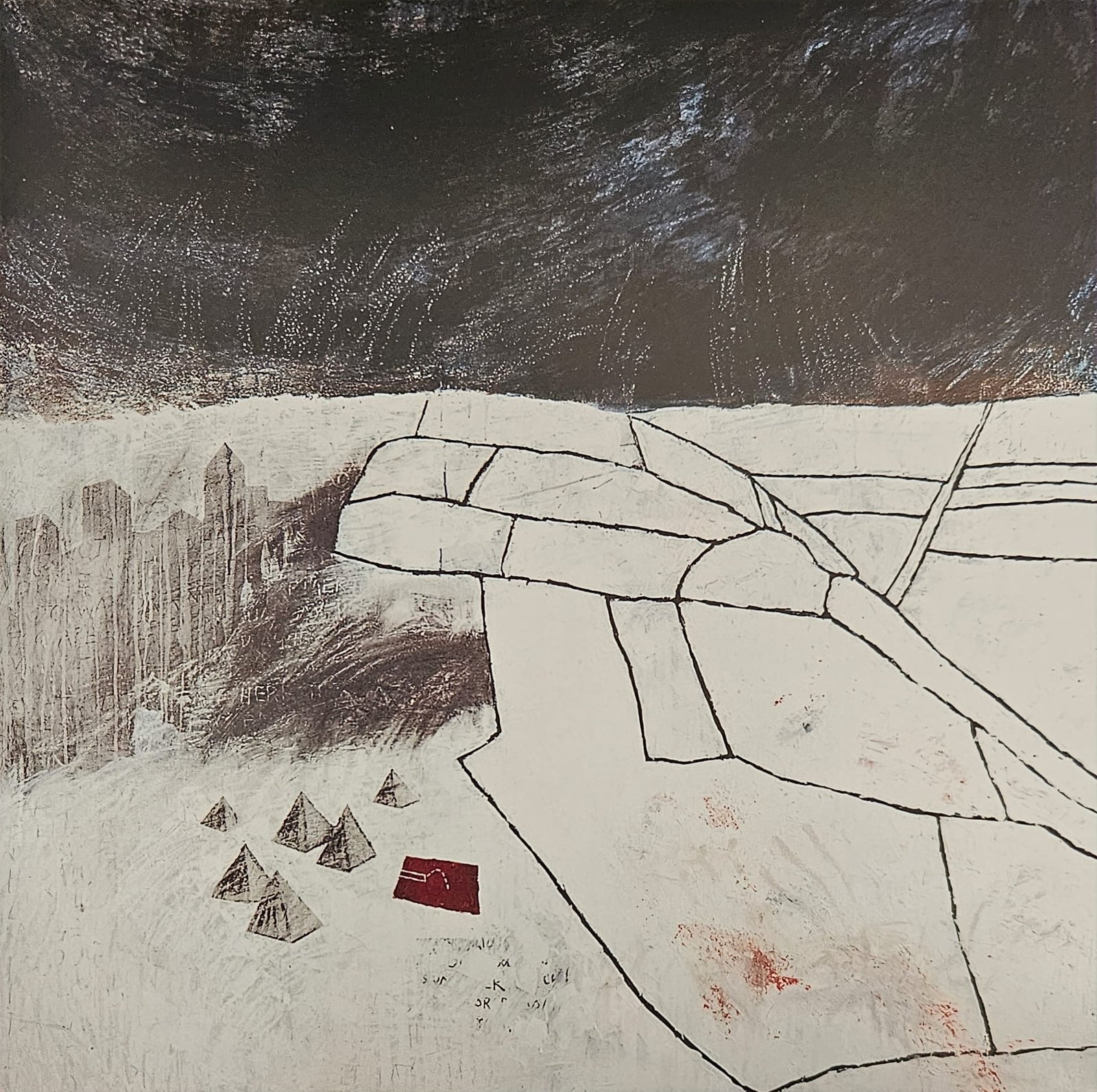
Donwood confessed that even though he knew what was happening in the Balkans, he never really paid proper attention until two particular images from Kosovo made him realise how much humanity failed again. The first image was part of a news reel on TV, showing the remains of a decaying body pulled from a shallow grave. The contrast between the decayed body and the brightly coloured nylon clothing, perfectly preserved, lodged in his conscience. The other picture published on the front page of a newspaper focused on a snowy ground soiled with military boot prints, blood and with some cigarette butts. This really struck a chord with him.
Textures of Disaster
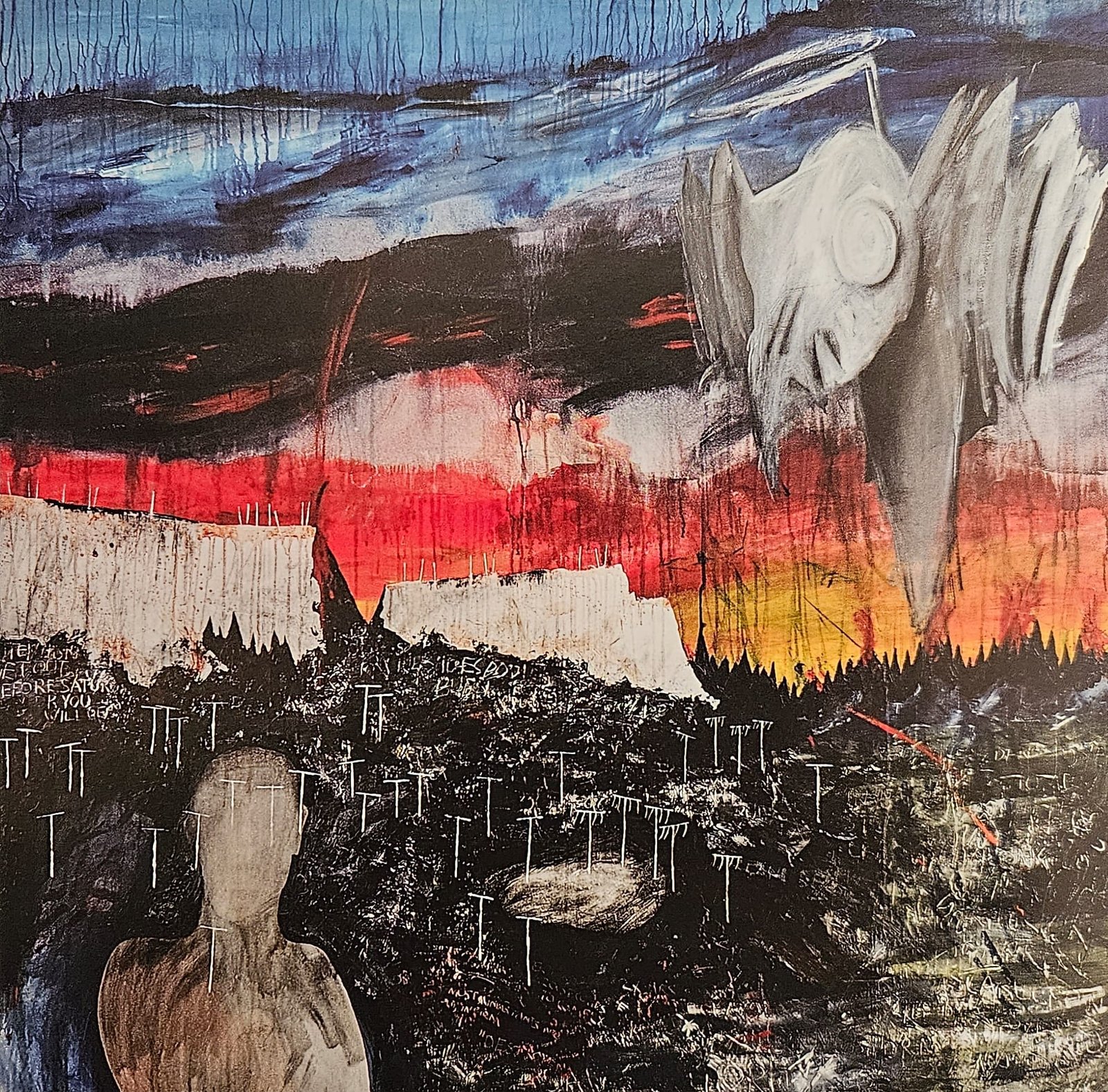
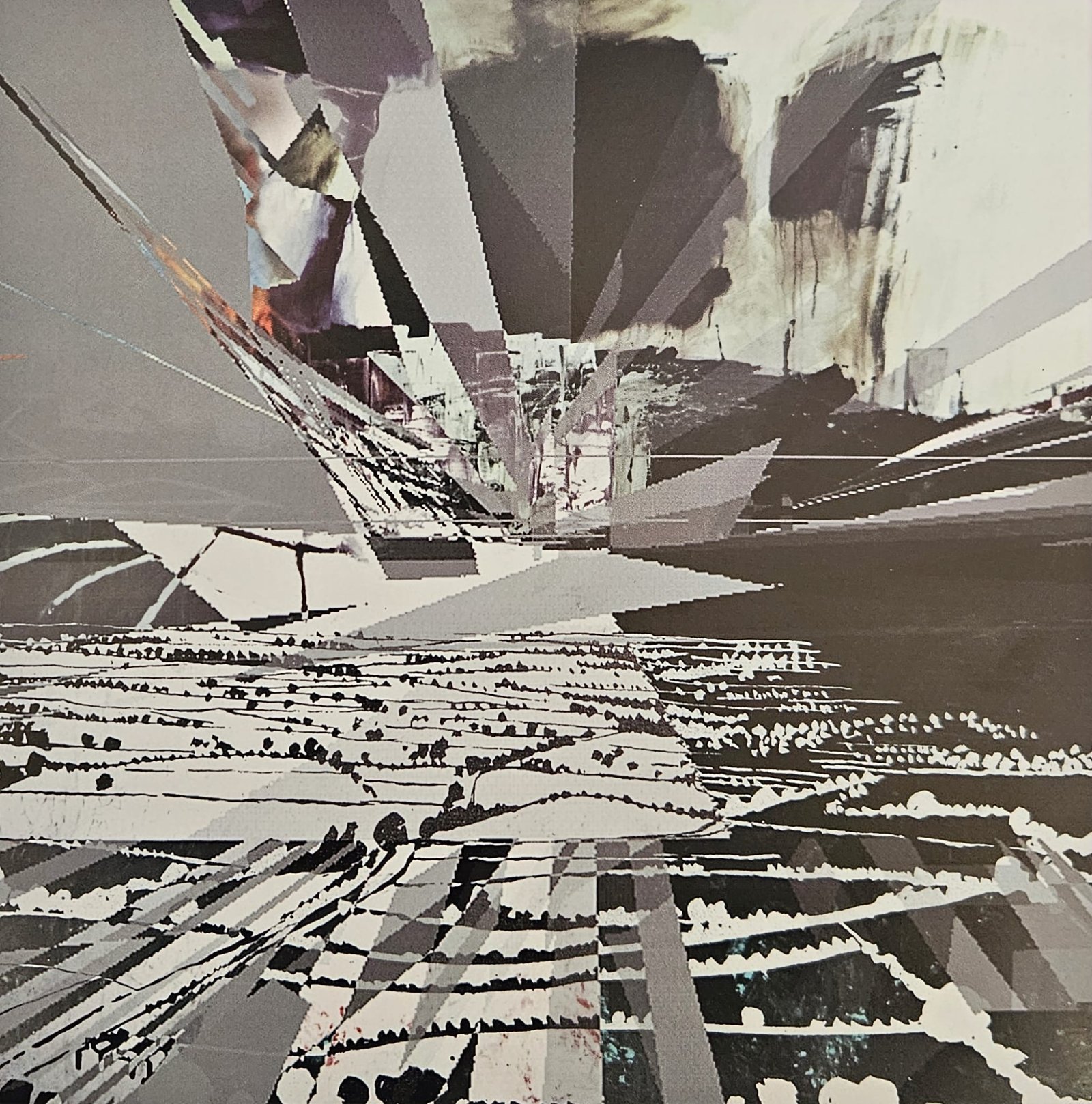
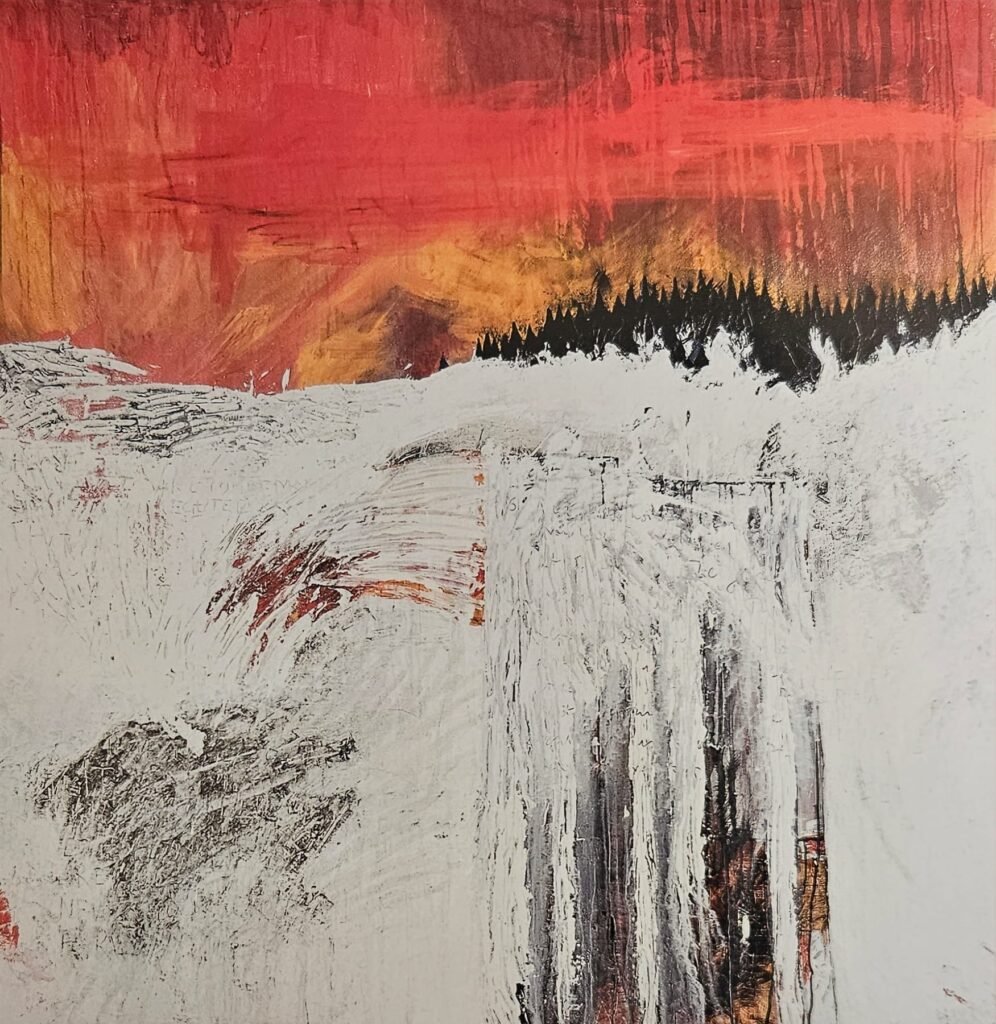
The snow especially haunted him. « Snow showed every mark, every defilement, every drop of blood spilt, each single act of barbarity; all was laid bare, impossible to deny ». He started using putty with his painting and cover entire areas with it. When dried, he would then be able to smear soot over it, stain it with oil or blood —aka red paint. This coincided with Radiohead going back in studios. Donwood moved all his paintings in a barn next door to the barn Radiohead had rehabilitated as a recording studio in Oxfordshire. There he was able to mess around with Thom Yorke —aka Tchock for his design work— painting and feeding off each other’s work (visual, musical or writing)…
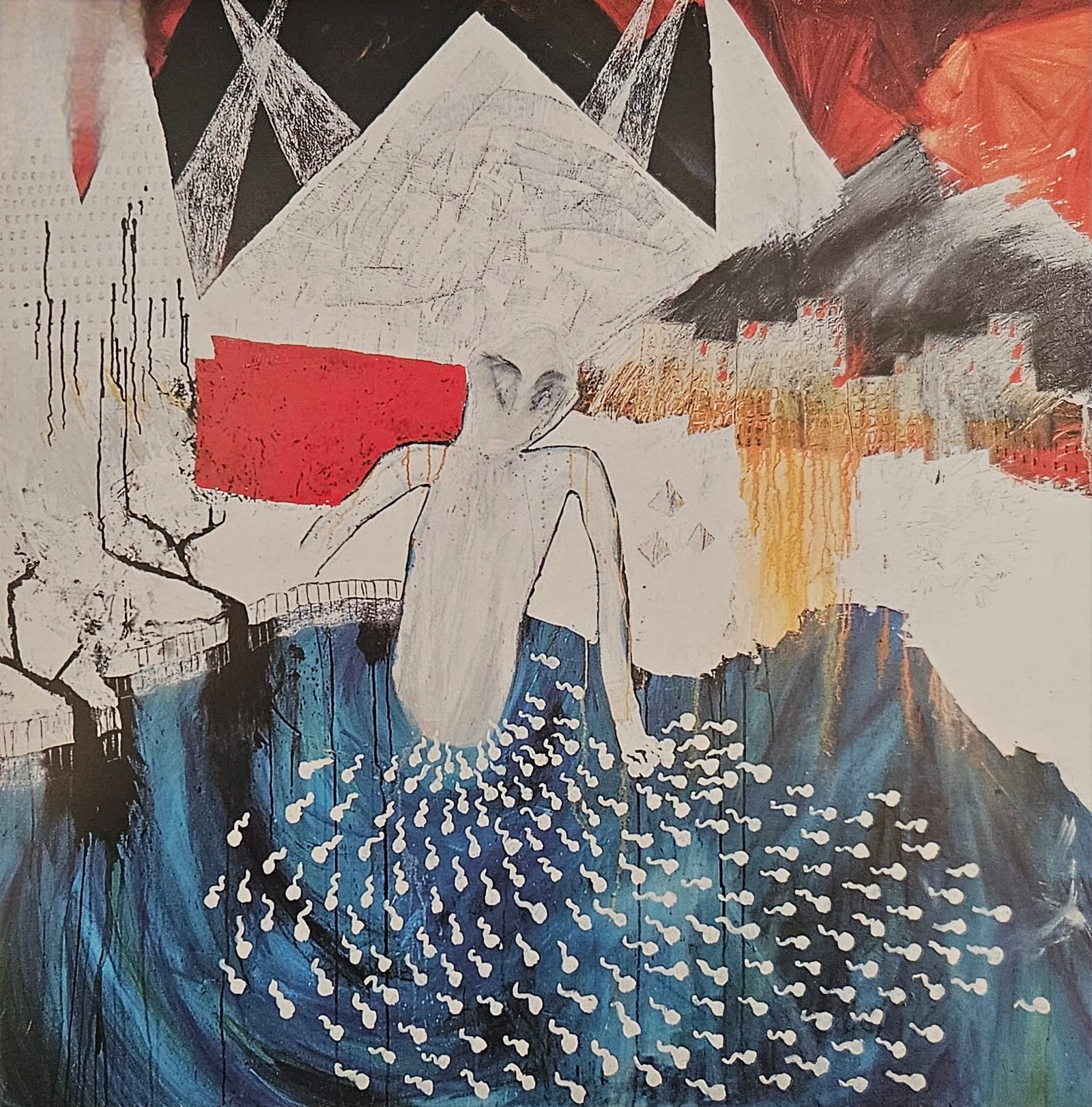
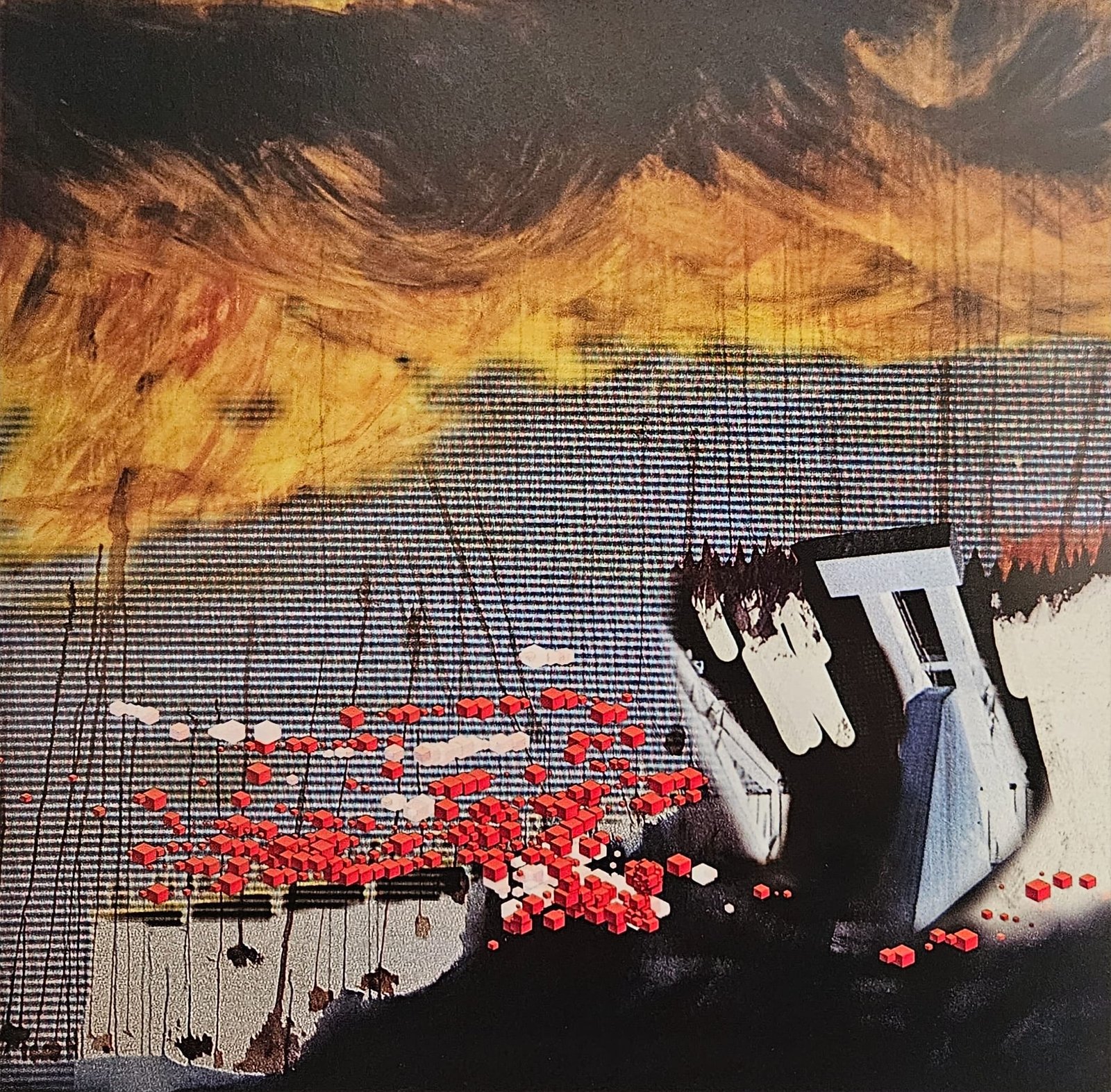
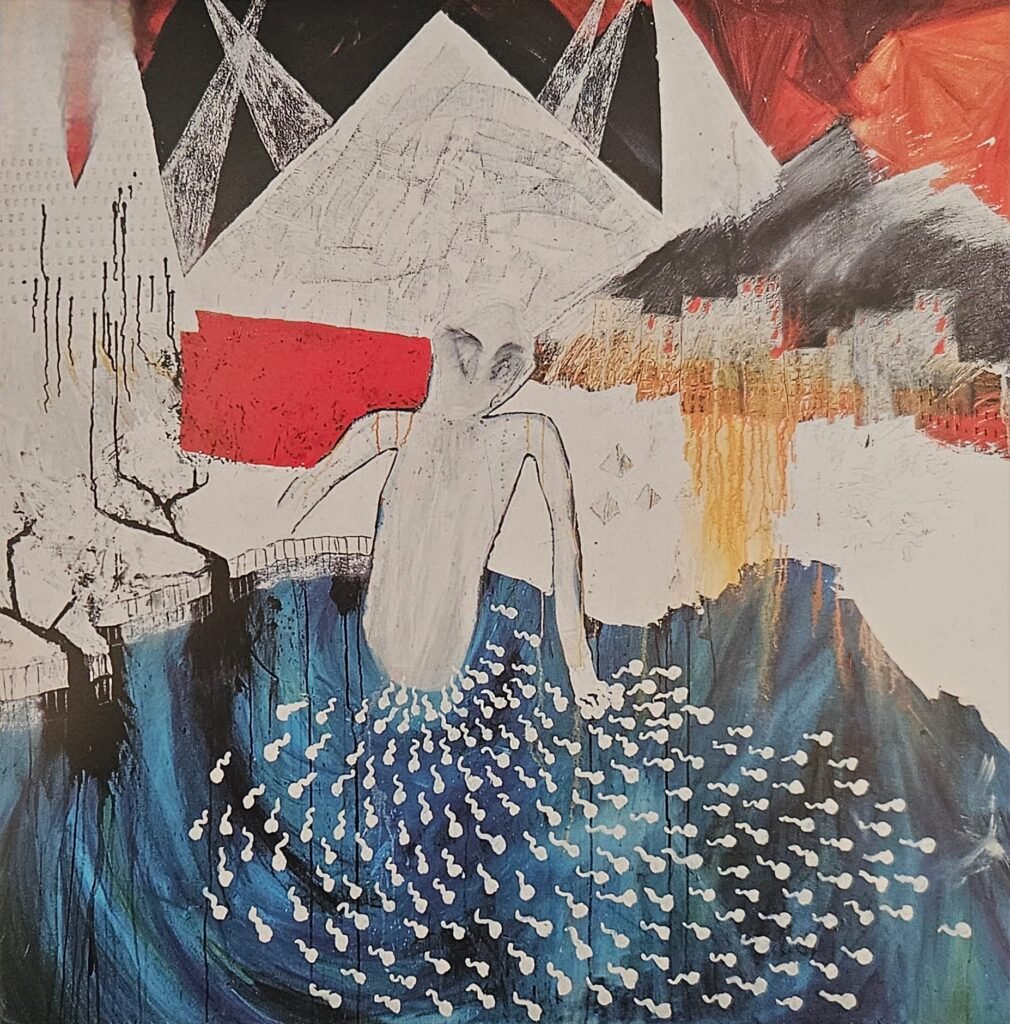
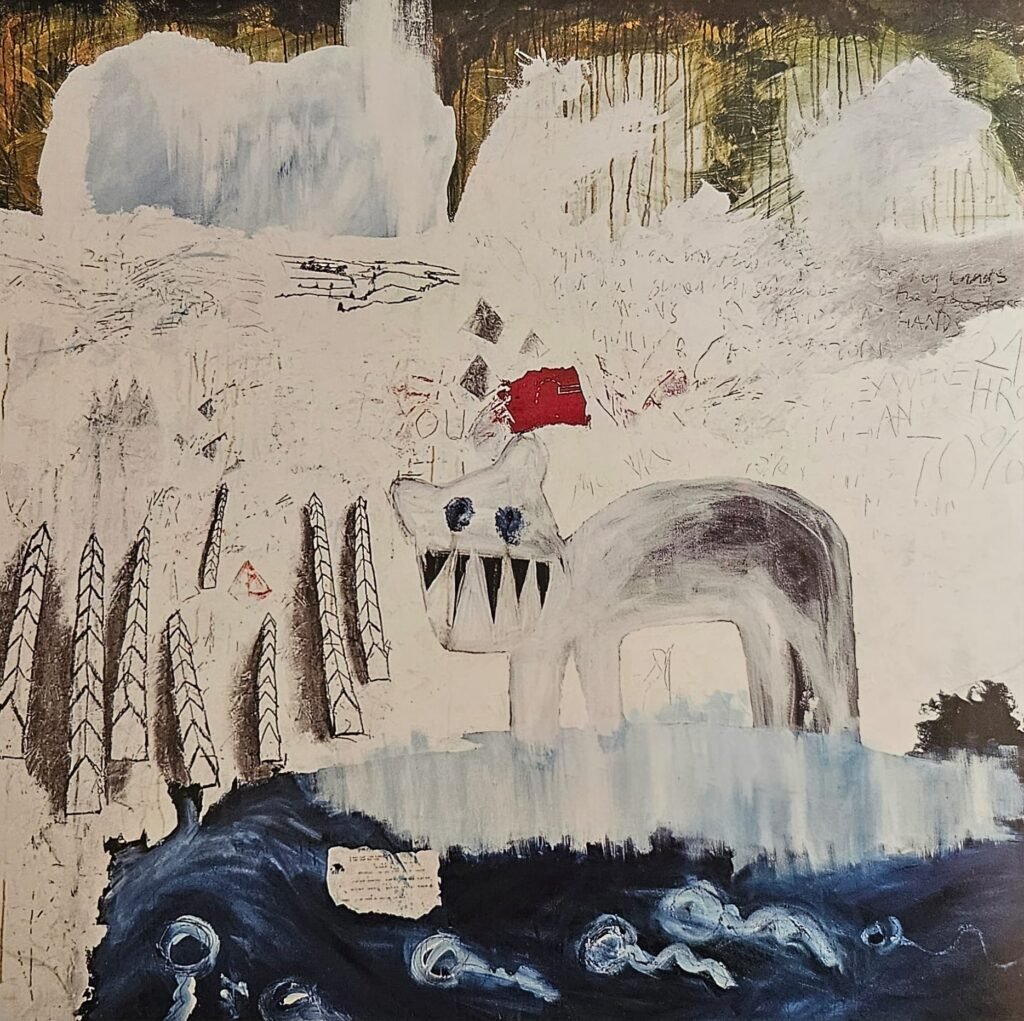
He eventually started using knives and sticks in his process, adding a more urgent dimension to his art. The painting were apocalyptic, with red skies, white fields, weird creatures… At some point Donwood decided to stop painting and take pictures of the paintings. Nigel Godrich, Radiohead’s longtime producer, discovered a piece of software that could convert digital pictures into gradient 3D landscapes. It would render bright parts like mountains and dark colours as deep valleys… Yorke and Donwood began exploring these rendered terrains, combining them with the original paintings. Then they reworked the results both digitally and by hand. Some odd landscape with frozen mountains, dark red skies, and more odd creatures or pools of blood starting to take shape.
« The overarching idea of the mountains was that they were these landscapes of power, the idea of tower blocks and pyramids. It was about some sort of cataclysmic power existing in landscape. »
— Stanley Donwood
The Birth of the ‘Blips’
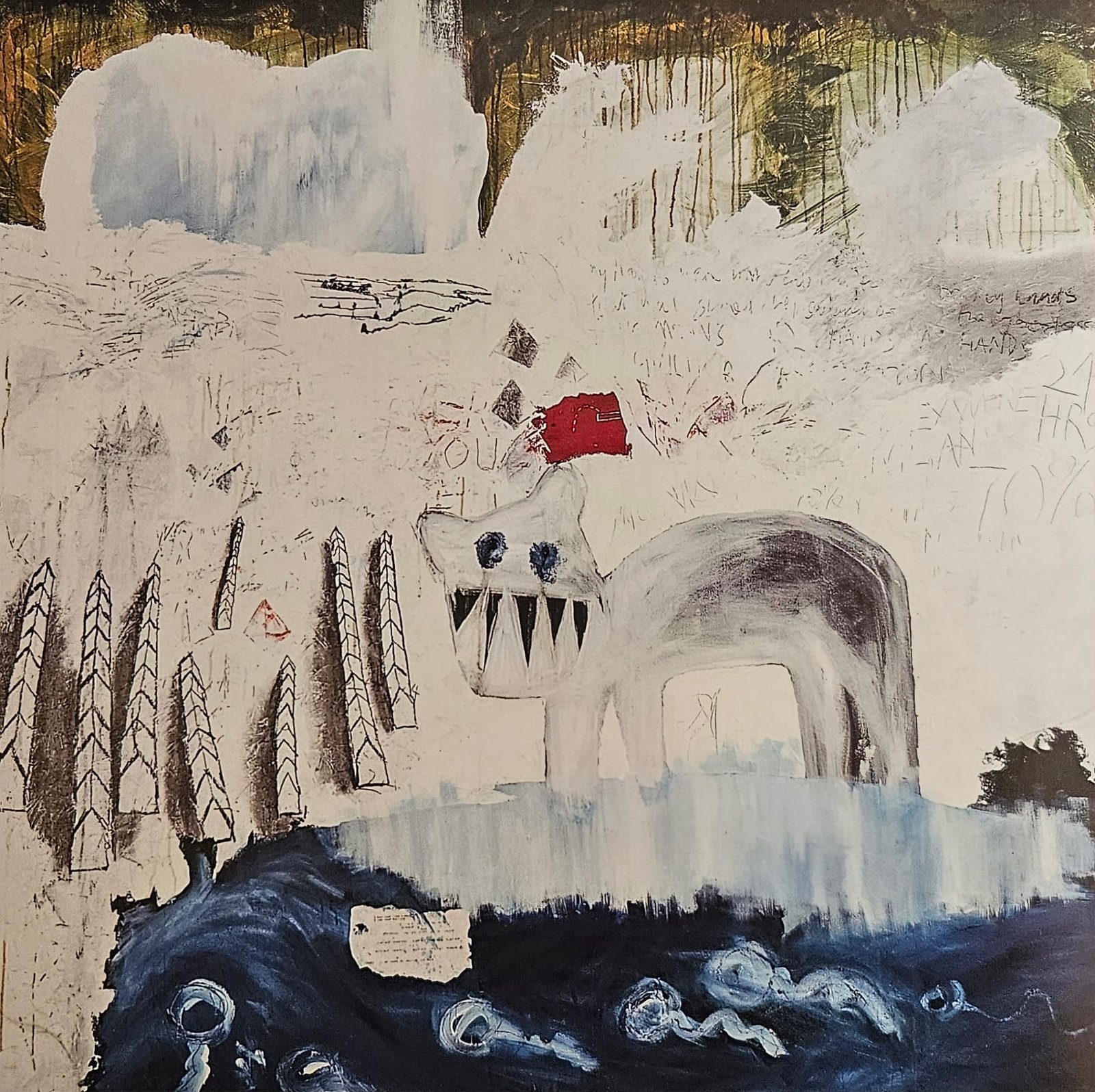
Donwood started to sketch little angry teddy bears everywhere — characters from a story he’d invented for his young daughters. It was about how the relationship between humans and their teddy bears. How the love them, treat them as real beings and care for them as children… And how they end up stored in boxes in the attic as their humans grow older, and forget about them. Donwood imagined the bears being left out, abandoned in their attics, growing angrier and hungrier until they got out of their boxes and their attic to feed on the grown-ups. These creatures soon began populating his paintings.
Radiohead’s website has always been somehow an extension of their art. With Kid A ready for release, the band didn’t want to go down the road of regular music video. Instead they imagined a series of small videos of 20 seconds, mixing their music and their artwork. Donwood and Tchock started animating their work, a new exercise for them, which they published on the website, leading up to the release of the album. They called them ‘blips’: about forty of them ending with an angry bear, and sonic ‘blip’.
The Obvious Choice
Eventually, they had to choose among the wide array of painting they had produced, and decide which would be the cover for the album. « We were exhausted and could no longer think clearly, » Donwood recalls in There Will Be No Quiet. « We had lots of version for the front cover, all with different pictures, different title in different typefaces. » Being unable to chose, they used tape to stick them all over the place, hoping clarity would come the next morning, and the right cover with the right title would stand out. And it did.
An Artwork as Open as the Album
The story of this artwork, in the end, is far more fascinating than this shaky cloning theory. The mountain range cover of Kid A is the fruit of a long artistic process, where the two artist explored how we connect as humans to the world around us. It is also a very accurate reflection of the music of the album, experimenting with electronic soundscapes. You can almost hear the painting. And just like the album, the painting feels also open to interpretation. So if you fancy seeing a clone, then clone it is.