 Richard Bodin
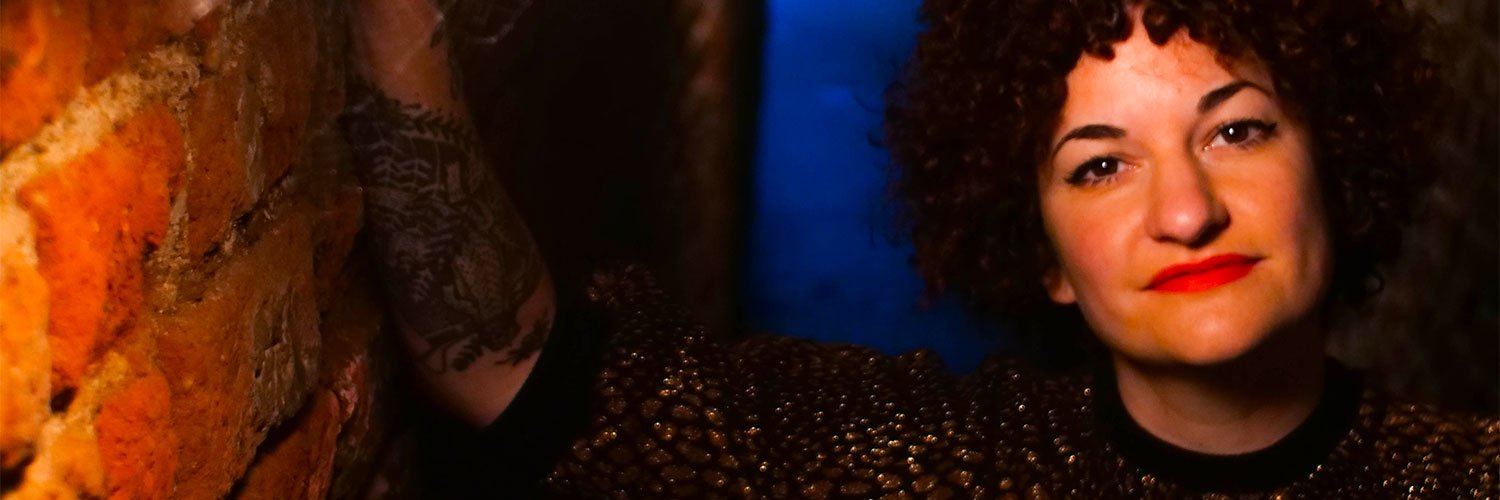
When I discovered Carsie Blanton a little over a year ago, quite by chance, I was immediately drawn to her music. By now, dear reader, you probably know that I come from France — a country with a long and turbulent history of social revolts. I grew up listening to protest songwriters such as Léo Ferré, Georges Brassens, and Renaud, artists who blended politics with wit, poetry, and intimacy.
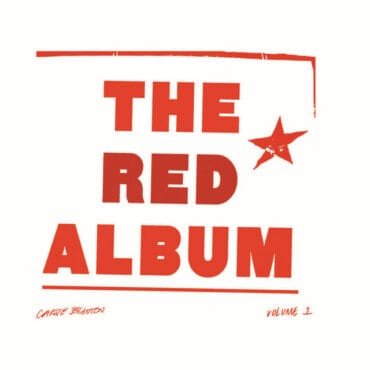
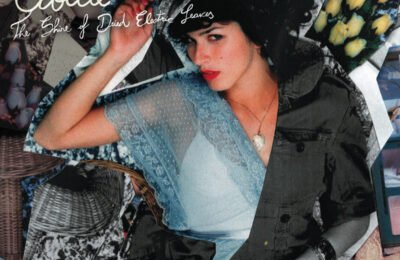
So when I first heard Carsie Blanton’s “Be Good” and “Little Flame”, I immediately felt at home. Here was an artist carrying that same spirit: sharp, hopeful, humorous, and deeply human. Diving into her discography, and especially her first Red Album, only confirmed that first impression.
Since then, I’ve followed her journey closely. Beyond the songs, I discovered an artist whose commitment is not just lyrical but lived, someone actively engaged in the causes she sings about. In an industry that often favours surface over substance, that kind of authenticity feels both rare and refreshing.
Ahead of her return to Ireland, I had the opportunity to exchange with her about protest traditions, independence, humour as resistance, and the role of music in times that often feel increasingly dark.
You seem to have a particular affection for Ireland, and you keep coming back here. What is it about Ireland that keeps drawing you back?
I suppose I’d sum it up this way: Irish life has not yet been entirely enclosed and commodified by capitalism. In most of the U.S., we have very little left in the way of public spaces, pleasant conversations with strangers, or communal musical experiences. Ireland has managed to maintain some of this inherited spiritual wealth (thus far); probably because of its political history. I’m sure there are many other places in the world like this. But as an unfortunate speaker of only-English, I don’t have access to most of them.
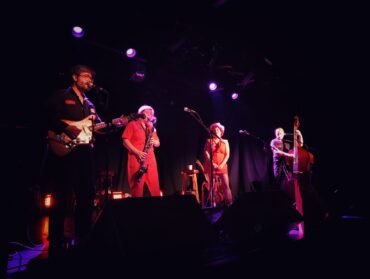
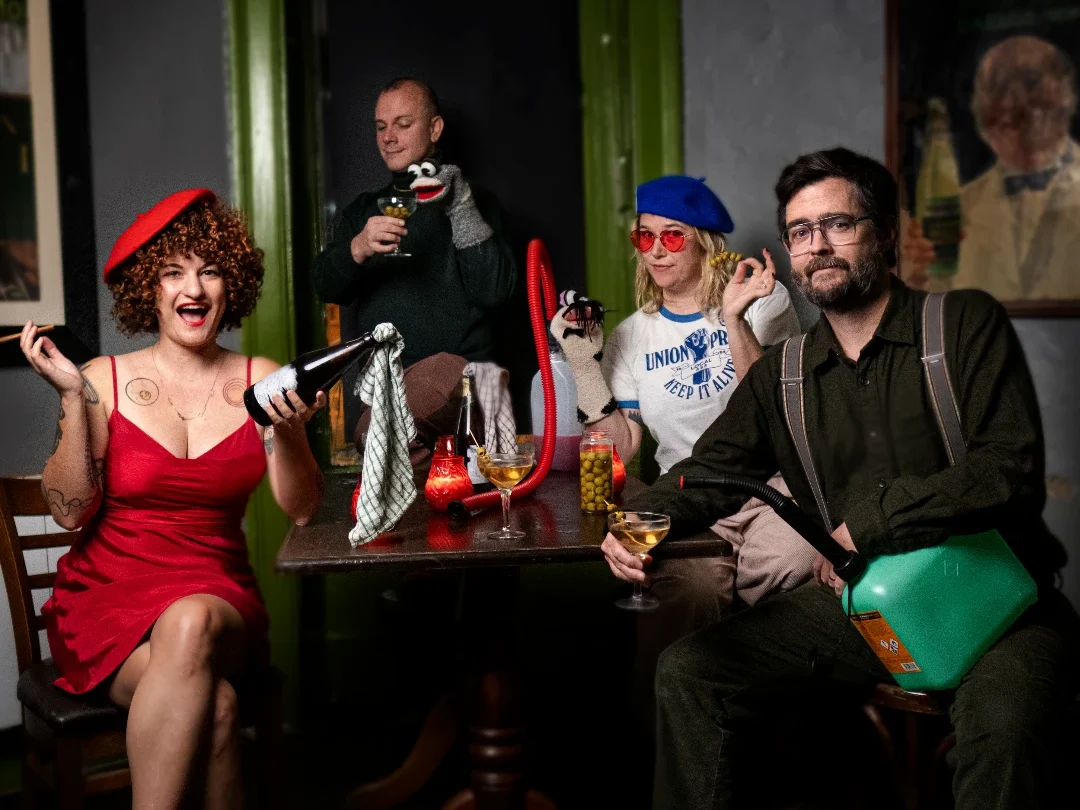
On your last tour you came over on your own, whereas this time you’re touring with The Burning Hell. How did that collaboration come about?
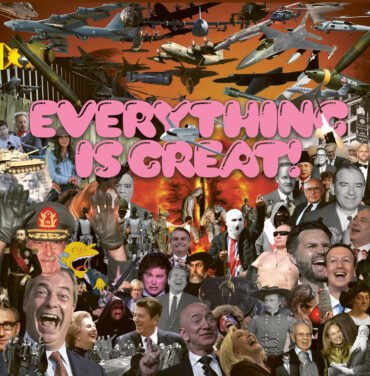
Summer before last, my longtime-bandmate Joe and I traveled to a particularly far-flung gig on Prince Edward Island, in Canada. The Burning Hell opened for us there. After a long lifetime of carving our own idiosyncratic musical paths, we all fell in love with each other. Musically and politically. They are also very, very funny. It took less than a year for us to start writing the album that became Everything is Great, which we recorded at a friend’s house in Kinvara, and which we’ll be releasing on this tour of Ireland and the UK.
Your songs balance political conviction with personal storytelling and a kind of cheeky humour. Is that balance something you consciously work towards?
I wouldn’t say it’s been entirely conscious, but after a decade of songwriting and performing, and another decade of combining that effort with learning political theory and organizing, the two things became equally important to me.
You’ve spoken before about spending time exploring the history of protest songs while working on your own material. What did you learn from that tradition? How did it change the way you approached songwriting?
There’s a very rich history of artists becoming embedded in liberation movements, and allowing their work to become a conduit for the revolutionary spirit. Much of my favorite art and music has come from this lineage, and I didn’t know it until recently, because the U.S. empire has done an incredible job hiding it. The FBI worked very hard throughout the 50s, 60s, and 70s, to create the illusion that art is apolitical. It isn’t, and it never was. Discovering this secret history allowed me to let my interests as a songwriter wander from the standard American fare of personal love and heartbreak, thank God. There’s a lot more going on in the world than personal love and heartbreak.
I read that you left home quite young to join a punk band. Even though your music today isn’t punk in a stylistic sense, I still feel that punk attitude — the independence, the refusal to soften the message. How much of that early experience still lives in your work?
Not quite true — I attended a lot of punk shows as a teenager, most of them in the middle of fields, where I grew up in rural Virginia. But when I left home, I became a backup singer in a funk band. My friend Nicole and I got picked up hitchhiking by the bandleader!
I think my attitude and chutzpah comes from my dad, who was a redneck shitkicker, getting arrested for civil rights and anti-war activism in his day. And from my maternal Grandma, who was a Jewish girl in D.C. doing the same. My whole family has done a fair bit of shitkicking, actually.
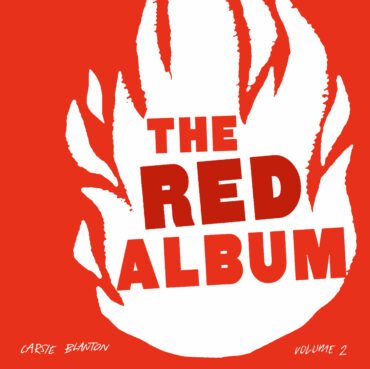
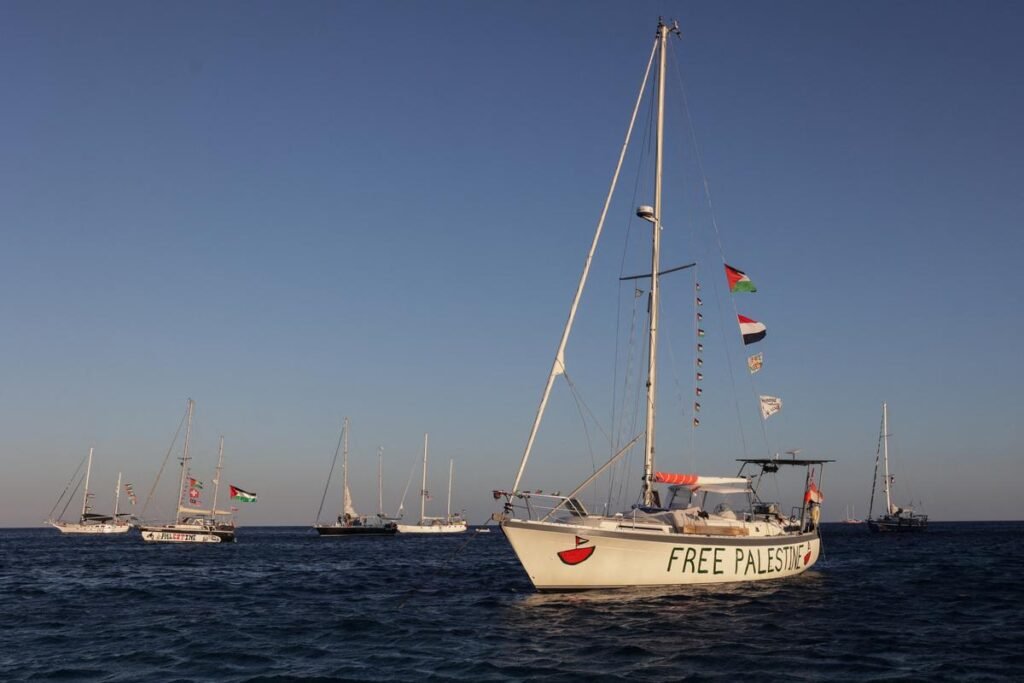
The past year have been particularly intense for you. A lot of touring, working on The Red Album Vol. 2, improving the Little Flame, and then this life-changing mission with the Sumud Flotilla. What lead you to join this human adventure? How did that experience affect you, both personally and artistically?
It’s hard to describe. After years of learning and organizing for Palestinian liberation, with Artists Against Apartheid and others, I was possessed by a sense of being picked up by the wave of history. The experience was a huge one and hard to describe. Suffice it to say, I have never been so full of rage or solidarity. I returned home with a renewed sense of hope, and of the necessity of destroying U.S. imperialism.
The current political climate often feels increasingly bleak. As a protest songwriter, how does that reality feed into your creativity? And on a more personal level, does writing and performing help you cope with it?
Absolutely, music is the way I cope with most of my emotions. When I returned home from the flotilla, I spent the first few weeks writing, recording, and hanging out with my band who are outstandingly hilarious and loving people. In fact, after our tours were canceled while I was in Israeli prison, all three of them flew from different cities to meet me at JFK airport. Even though I was so wrecked I just hugged them all and went directly home.
In an industry where even being signed doesn’t necessarily mean being able to live from your art, you’ve chosen to remain a self-produced, independent artist. What does that freedom give you creatively, and what are the challenges that come with carrying everything yourself?
“Chosen” is a strong word. I started playing gigs professionally around 2006, which was the beginning of the end of the music industry. For years I would’ve loved to have gotten signed, or had a song used in an advertisement.
By the grace of God or whomever, I was never successful as a mainstream musician, and therefore I was broke enough, and free enough, to become a revolutionary.
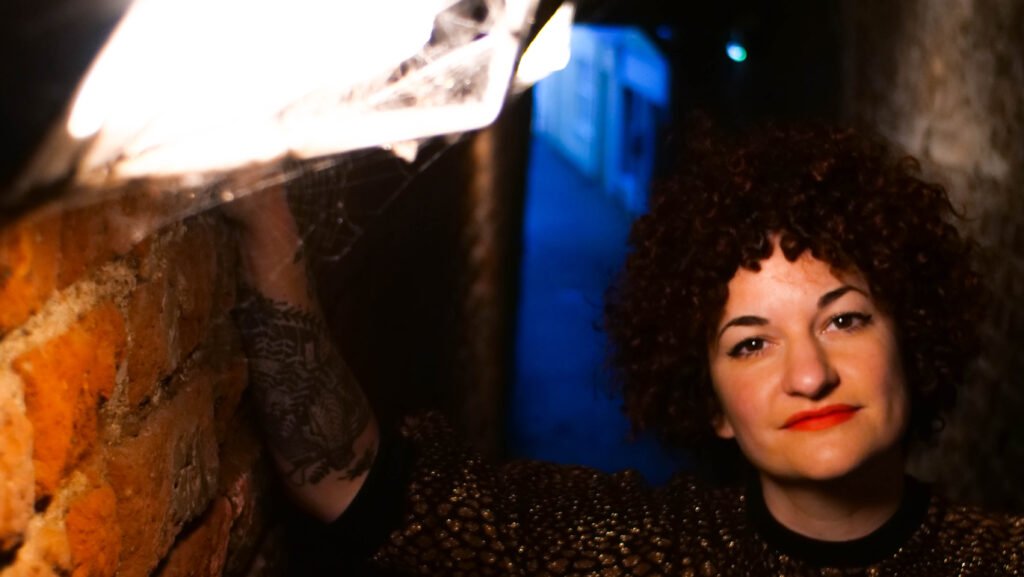
Carsie Blanton & The Burning Hell will arrive shortly in Europe for a full month of touring through Germany, UK and Ireland.