 Richard Bodin
In our spOoky playlist, we deliberately chose a different song by Michael Jackson. “Thriller” would have been the obvious choice, but Jackson had other good track to offer… And we wanted to explore something different. But let’s go back to “Thriller“, as it is probably the most famous in the whole repertoire by Michael Jackson. It might not have turned out that way, if the song had seen the light of day as it was originally written. Jackson’s career would even probably have looked very much different…
From “Starlight” to “Thriller”
The song was written and composed by British writer Rod Temperton, who had already worked with Michael Jackson on Off The Wall, for which he signed the title track, and “Rock With You“. For this new album, Temperton came up with a few songs: “Baby Be Mine”, “The Lady In My Life” and a third one called “Starlight”. With a promising Disco-funk mix, that last song had a theatrical dimension to suit Jackson’s fondness for movies. After playing with it for a while, Temperton had already come up with the iconic bassline and a chord progression that was building up to a climactic momentum. It directly caught the attention of the production team led by Quincy Jones who saw enough potential in it to make it the album’s title track…
But « Starlight » wasn’t exactly a great album title. Temperton was tasked to find a better alternative, that would carry the mysterious aura around Michael Jackson ever evolving persona. After some back and forth, he came up with “Midnight Man” which was a step in the right direction, and eventually ended up with “Thriller”. At first, they worried that the word would be tricky to sing, and sound terrible… But after a few tries, Jackson’s delivery in the mic worked like a charm and “Starlight” became “Thriller”.
Finding the Perfect Fright
Temperton went on to rewrite the lyrics within a couple of hours. It became this spooky masterpiece we all know today. For the final arrangement the engineer Bruce Swedien managed to record multiple sound effects. He rented special doors from Universal Studios designed to produce creepy creaking sounds, and recorded the hinges. Swedien also set up tape recorder around his dog in a barn at night hoping to capture some howling sounds… But the good dog never howled… Instead Michael himself did the howling sounds.
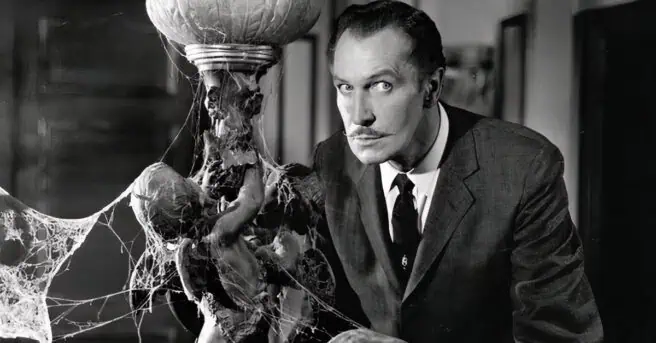
As he was writing it, Temperton envisioned some spoken part toward the end of the song, without really deciding what it would look like. The idea was to ask an actor with a famous voice from the horror genre to do the part. Quincy Jone’s wife, Peggy who was friend with Vincent Price, immediately suggested to ask him. The idea was to have him deliver some horror line he would deliver in some of his movies…
But the night before the Hollywood icon was set to come to the studio, an anxious Quincy Jones called Temperton. « I’m a bit scared. Perhaps you better write something for him. » The writer came up with two verses while riding a cab to the studio the next morning. The actor surprised the producer by nailing his spoken part in only two or three takes. “Rod wrote this brilliant, Edgar Allan Poe spiel. And Vincent really understood it. … Vincent did it in two takes,” Quincy remembered.
Breaking Records, Breaking Barriers
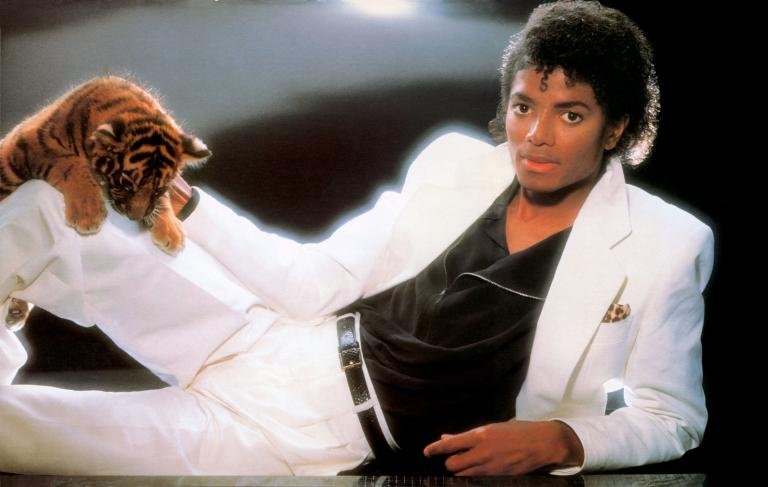
The album was eventually released on November 29, 1982. It made its way to the top of the Billboard charts and reached number one in February 1983. The release of many successful singles helped the album to maintain its position at the top for a long while, breaking records of sale in the process. It is also important to remember that at the time, MTV was airing a new promotional feature for about a year: the music video. Michael Jackson was one of the pioneers to fully embrace this format. With “Billie Jean” and “Beat It”, he broke audience records on the cable channel, while being the first black artist to be aired. But even the biggest success stories can stall — and by mid-1983, the Thriller phenomenon was starting to fade.
When Sales Slipped and Stakes Rose
At this stage, Thriller, was never part of the promotional plan for the album. “Who wants a single about monsters?” would ask Walter Yetnikoff, CBS executive. But around the middle of 1983, the sales of the album started to dip, and Thriller lost its place to the soundtrack of Flashdance. At this stage, many artists would have seen this as an already good performance… But Jackson was watching the charts closely. Although he never considered himself as good as The Beatles, their success inspired him greatly and he aspired to walk in their foosteps. Worried, he reached to Yetnikoff, and Epic head of Promotion Frank DiLeo. “The record is not number one anymore: what are we going to do about it?”.
So far, six singles had already been released. “The Girl is Mine”, the duo with Paul McCartney was released first ahead of the album. “Billie Jean” and “Beat It” followed with their highly successful music videos. “Wanna Be Startin’ Something”, “Human Nature” and “P.Y.T” came next, and were also quite successful, but none of them were good material for a video. So there weren’t many solutions to promote and boost the album further. DiLeo was the first to suggest it: why not make “Thriller” the next single, coupled with a music video. “It’s simple,” he told Jackson. “All you’ve got to do is dance, sing — and make it scary.”
A Monster Idea
Impressed by a “An American Werewolf in London” —a spooky movie with a comedic side— Jackson decided to contact director John Landis, to direct the music video. The song was written a theatrical dimension, so there was room to create something interesting. On the phone the pop star pitched a story where he turn into a werewolf. Although at the time. Hollywood directors were not involved at all in the world of music videos, the offer intrigued Landis enough to have him meet with Jackson.
During that meeting, Landis agreed to do it on the condition that he wouldn’t make a standard music video format. Instead he wanted to direct a short movie, shot in 35mm, that would be released in Theatres before broadcasting it on TV. He would write a short storyline, inspired by the lyrics, about a young man on a date who turns into a monster. Landis also would be calling in a favour from Rick Baker, Oscar-winning makeup artist who had created the monster from “An American Werewolf in London”. Jackson was thrilled and shook hands.
A Freaky Budget
Now, such endeavour cost a lot of money. If CBS had agreed to pay for the $250,000 budget for the “Billie Jean” video, they refused to fund $150,000 for “Beat It”, and Michael Jackson had to pay for it out of his own pocket. The estimated budget for Thriller peaked at $900,000… As you can imagine, this didn’t go well with the record company who straight down told the director to kick rocks. Jackson immediately offered to pay for it himself, until Yetnikoff eventually agreed to pay $100,000…
That was still a hefty budget. Jackson’s partners weren’t very comfortable with the idea of him paying for all of it. George Folsey (Landis’ producing partner) and John Branca (Jackson’s lawyer) managed to struck deals with cable channels MTV and Showtime. They decided to shoot behind the scenes on 16mm for a 45min documentary —Making Michael Jackson’s Thriller— and bundle it up with the “Thriller” short movie. The deal amounted to $550,000. To top things up, Vestron —a pioneer company for the home video market— offered to sell $29.95 copies of the documentary on VHS and Betamax.

The Making of an Icon
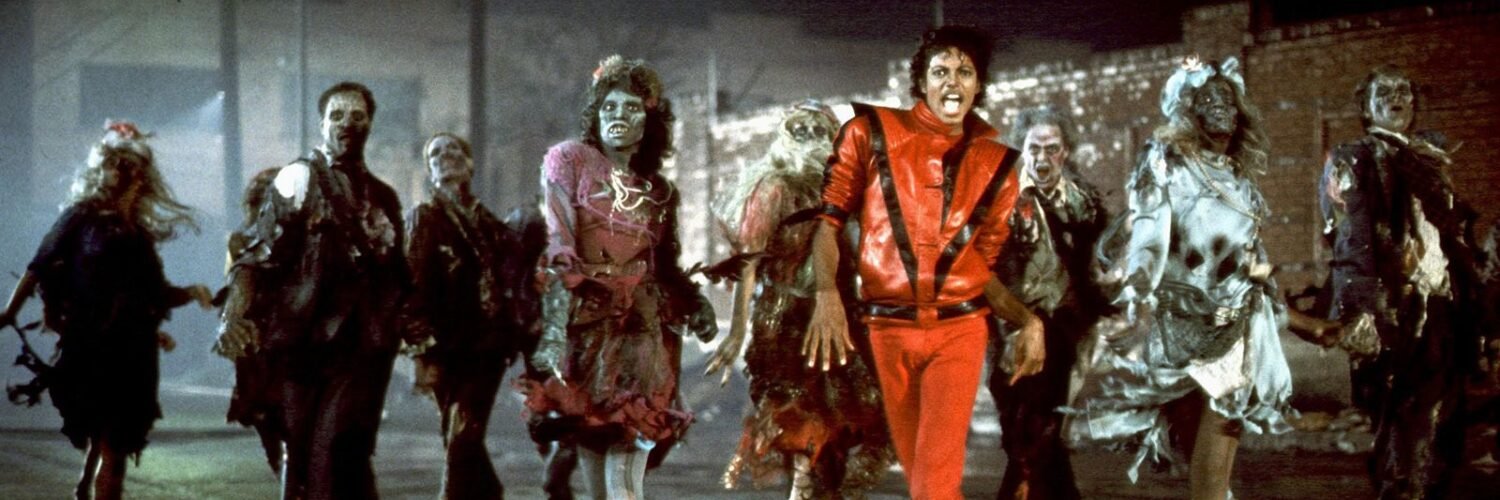
With a budget in better shape, things could get started. The story, would start in the 1950s with a couple of lovers where the boyfriend would turn into a werewolf. It would then transition in a modern days movie theatre where a couple is having a date. The girlfriend, scared by the suggested gory scene on the screen, leaves the theatre followed by her boyfriend in the streets where he eventually turns into a ghoul and breaks into a street dance with a mob of zombies.
Ola Ray, a former playmate —although they didn’t know it at first— was cast as the girlfriend. Landis’ wife Deborah Nadoolman Landis, costume designer responsible for Indiana Jones’ famous look, came up with the iconic red leather jacket that Jackson wears in the clip, to make him look taller and more imposing. Rick Baker created the look for Jackson’s monster transformations as well as all the other zombies —including himself. If all these elements contributed to the success of the video, the most iconic aspect remains the dance above all.
Dancing with Demons
While having people come back to life on the silver screen wasn’t really uncommon, nobody ever really had the idea to make them dance. Which in itself is quite a mystery… “How can you make zombies and monsters dance without it looking comical?”, wondered Jackson. He teamed up with choreographer Micheal Peters who had worked with him for the epic dance staging real-life street gang members in the “Beat It” music video. Together, Jackson —wearing his monster makeup— and Peters made faces in the mirror and tried various dance moves until they found what they were looking for. The result was nothing short of amazing. It remains to this day one of the most iconic episodes of modern dance.
However, the “Thriller” video almost never saw the light of day. After everything was done, shot, and cut, Michael Jackson suddenly had a change of heart. At the time, he was a fervent Jehovah Witness. He even used to wear disguises and a fake moustache to promote his faith door-to-door unrecognised. When the sect heard of Michael’s upcoming video with werewolves and zombies, they threatened to excommunicate him. It was “promoting demonology”… Panicked, Jackson called Branca and told him to destroy the negatives of “Thriller”. The lawyer immediately alerted Landis and Folsey and everybody agreed to move the films to a safe place under lock. Eventually, the director managed to convince Jackson to simply add a disclaimer before the video to clarify that the video’s content did not reflect his personal beliefs.
From Horror to History
The single was eventually released in November 1983 in the UK and in January 1984 in the US. After much anticipation, MTV premiered the video on December 2, 1983 to an audience ten times larger than usual. It doubled the sales of the album which rocketed back to the top of the charts. By the end of 1983, Thriller had sold 32 million copies worldwide. It became the first album to be the best selling record for two consecutive years in USA. In total, it has remained in the Billboard 200 for 626 non consecutive weeks (and counting), and remains to this day the biggest selling album of all time.
The release of “Thriller“, initially considered a mere novelty song, propelled Michael Jackson into history, crowning him as the King of Pop. The single is one of the best selling tracks of all times. It regularly resurfaces in the charts around Halloween times. The music video won awards multiple times, and the Library of Congress even described it as “the most famous of all times”. Finally the iconic dance is also the subject of a yearly event around Halloween each year, bringing together fans from across the world to recreate the dance en masse.
Pop History in the Moonlight
“Thriller” wasn’t just another hit single — it was the moment music and cinema fully merged into pop mythology. What began as a funky disco track called “Starlight” became a cultural phenomenon that reshaped how music could be seen, heard, and performed. Four decades on, its bassline still creeps across dance floors every Halloween. Its red-jacketed zombie shuffle remains instantly recognisable across generations. Beyond its record-breaking sales, “Thriller” cemented Michael Jackson’s transformation into a global icon — proof that even in pop music, sometimes the scariest risks create the most timeless magic.