Akshita Siddhapura
A Primal Scream gig scheduled for 2026 has been cancelled following intense criticism over controversial on-stage visuals. The decision has triggered widespread debate across the music industry and beyond. Festival organisers acted after a video shown during a recent London performance sparked accusations of antisemitic imagery. The fallout has raised urgent questions about artistic freedom, political protest, and responsibility in live entertainment.
Festival Cancellation and Immediate Fallout
Trentham Live organisers cancelled Primal Scream’s scheduled 2026 headline performance after intense public backlash. The band was set to perform at the Trentham Estate in Stoke-on-Trent on August 21, 2026. Organisers took action days after controversial visuals were shown during a London concert. They said the imagery clashed with the festival’s values and inclusive goals. Festival representatives stressed their responsibility toward diverse audiences at a family-friendly event. They acknowledged fans’ disappointment but focused on the community’s well-being. Trentham Live confirmed plans to announce a replacement headliner for the Friday night slot. Organisers highlighted that inclusivity shapes all their booking choices. They framed the cancellation as necessary rather than as a punishment. The decision quickly attracted national attention in music and media circles.
Ticketmaster notified customers of the cancellation and outlined the next steps. Fans received reassurances about ticket validity and updated event details. Some supporters voiced their frustration on social media. Others praised the organisers for their quick and decisive response. The cancellation put pressure on Trentham Live to keep up the momentum. The festival’s reputation now hinges on an impressive replacement announcement. Industry watchers noted that major UK festivals are becoming more cautious. Promoters are now evaluating artists based on more than just their musical performance. Visual content and political messaging are getting more attention. The choice to cancel Primal Scream clearly reflects this changing festival landscape.
The London Performance That Sparked Controversy
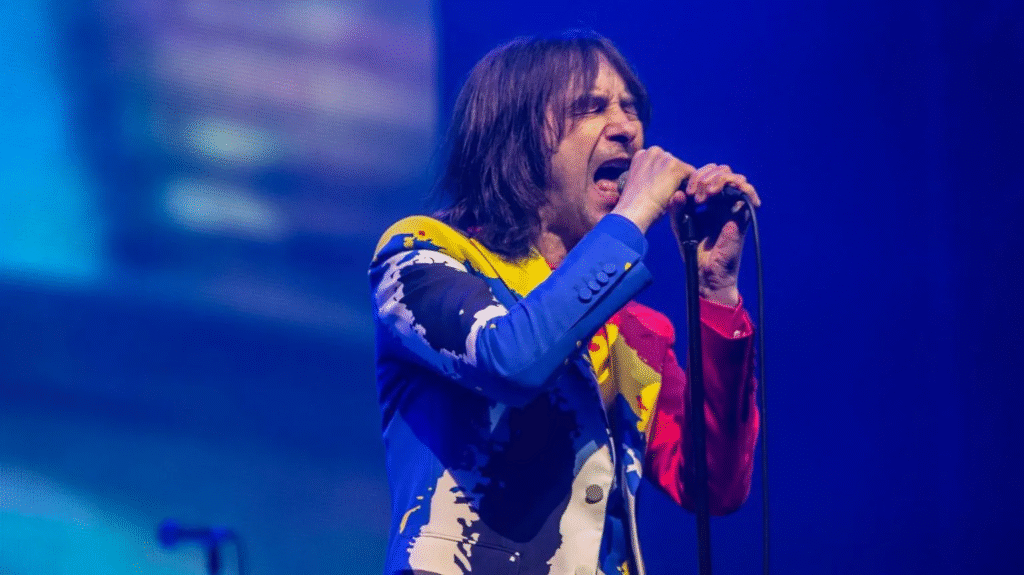
The controversy started during a one-time Primal Scream show at The Roundhouse in Camden. The band played their song Swastika Eyes in front of a packed audience. Large screens showed a politically charged film during the performance. The footage seemed to merge the Star of David with a swastika. These symbols appeared in the eyes of Israeli Prime Minister Benjamin Netanyahu. The screen also showed the slogans “stop genocide” and “free Palestine.” Audience members recorded the visuals and shared clips online. The footage spread quickly across social media platforms. Public reaction grew within hours of the performance. The imagery quickly overshadowed any discussion about the music itself.
Community organisations responded strongly to the footage circulating online. The Community Security Trust reported Primal Scream to the Metropolitan Police. The group warned that the imagery risked encouraging hatred toward Jewish communities. The Campaign Against Antisemitism also issued a public condemnation. It is called the visuals, sickening and completely unacceptable. Both organisations demanded accountability and clear consequences. A Metropolitan Police spokesperson confirmed that officers are reviewing the report. They did not comment on possible outcomes or timelines. The controversy put the band under intense public scrutiny. The incident reignited the debate about symbolism and historical trauma.
Venue Response and Band Defence
The Roundhouse venue issued a statement after the backlash. Management expressed deep regret over the visuals shown on stage. They called the graphics highly offensive and unacceptable. Venue representatives stressed that the band controlled all visual content independently. They said staff had no prior knowledge of the imagery. The Roundhouse emphasized the separation between artist creativity and venue oversight. Management promised to review internal procedures for future events. They reassured audiences about their commitments to safety and respect. The statement aimed to distance the venue from the controversy. It also showed growing concerns about reputational risk.
Primal Scream responded with a statement on Instagram. The band rejected accusations of antisemitic intent. They described the film as a deliberate piece of political art. They said the imagery aimed to provoke debate rather than promote hate. The band explained that the visuals intentionally drew on historical references. They said the work questioned modern government actions through symbolism. Primal Scream defended freedom of expression in liberal societies. They viewed the backlash as a challenge to artistic rights. The statement included no apology or concession. The band remained confident in their creative choices.
Wider Industry Implications and Ongoing Debate
The cancelled Primal Scream gig reveals deeper tensions in live music culture. Artists increasingly use stages to share their political views. Music has long acted as a platform for protest and dissent. However, modern audiences want more sensitivity regarding historical symbols. Festival organizers face growing pressure to protect diverse communities. They must balance expression with responsibility and inclusion. The Trentham Live decision shows this delicate balancing act. Promoters now consider potential backlash alongside artistic credibility. One performance can change major bookings quickly. The industry keeps adjusting to increased public scrutiny.
The controversy may affect how artists communicate political messages on stage. Some performers might choose more subtle ways to express themselves. Others may continue using provocative imagery on purpose. Social media instantly spreads every on-stage moment. Images now reach global audiences in minutes. This reality raises the stakes for both artists and organisers. The Metropolitan Police review is still ongoing. No further action has been announced publicly. The debate over art, offence, and accountability continues. The Primal Scream incident will influence future industry decisions.