 Richard Bodin
On May 3rd, 2026, Hermitage Green will take over the stage at King John’s Castle to kick off their anniversary tour in style. Fifteen years is no small feat for any band, and the Limerick group plans to celebrate the journey and the many evolutions of their sound. After the big hometown show, the band will head to Dublin for two more nights at Whelan’s — the very venue where they recorded their first album.
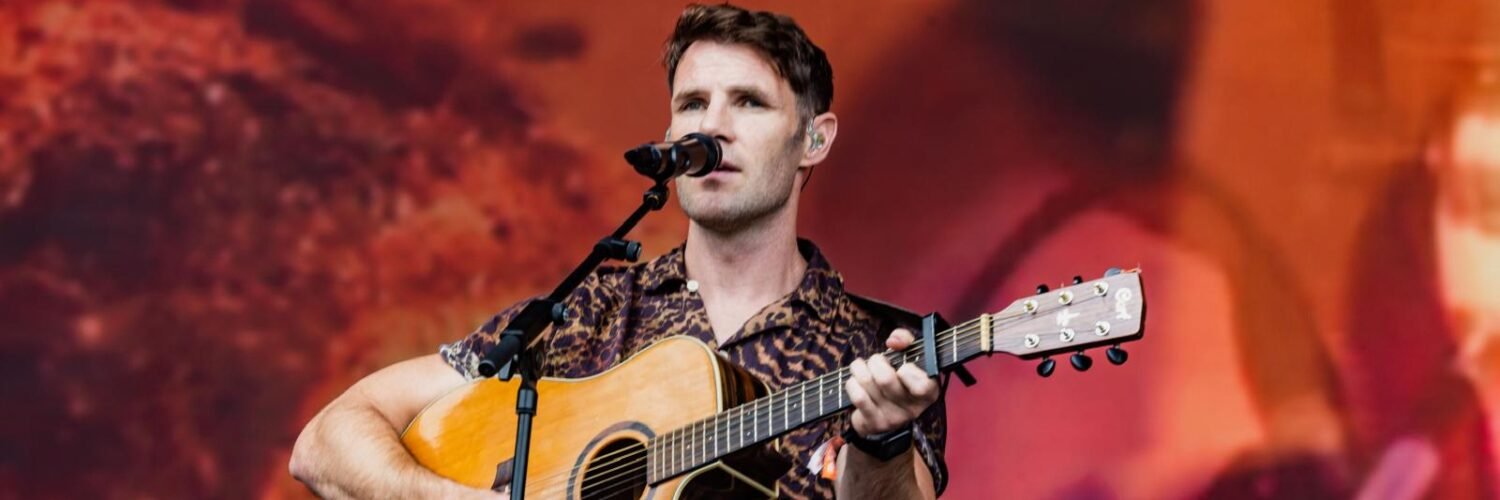
We sat down with frontman Barry Murphy to explore Hermitage Green’s story, from kitchen jam sessions in Limerick to stages around the world. Fifteen years is a long road for a band, so we took the time for a wide-ranging and candid conversation. We talked about dreams, music and rugby, but also about commitment, and taking risks, while staying true to oneself in a tricky music industry.
From Kitchen Sessions to Festival Stages
How does it feel now, looking back on your 15 years career as a band? What would, 2010 Hermitage Green think of what you are now?
We always had serious ambition. Maybe not as early as 2010, but certainly by 2011 or 2012 when we started playing our own music. By then we understood what we were about. All five of us had put our cards in and said: “this is us now for the foreseeable future”. We were very lucky, we really clicked as a unit. The biggest struggle for any band is the dynamic and enjoying each other’s company, even before the music. Then the music grows out of that.
Griff first started writing a few songs that I thought were next level for us, something very unique. That is when I started developing ambition. Although I didn’t really know what it would looked like.
One thing I’m very proud of is that the five of us are still in the same boat and still get on like a house on fire. We’ve grown together and spent our lives together for 15 years — life, death and everything in between. That’s the most important thing. We’re all still here and still very happy doing what we do.
Many bands would have had to do some lineup changes over that time. Hermitage Green hasn’t really had that, has it?
The original bodhrán player for the first six months was Felix, a friend of mine. He was a rugby player who played for Munster. When we started being serious about this, he had different ambitions —turns out he went on to win two World Cups for South Africa as a coach.
So we started looking for bodhrán player. Dermot was probably the third or fourth guy we played with. It was a match made in heaven since Day one. We probably found the best bodhrán player in the world —an unbelievable character, and a hard worker. Dermot became the glue of the band. It’s incredible how lucky we have been to find a guy like that just fits the mould.
And yeah, it’s been us for 15 years since then.
Following your injury in 2010, you found a new life in music. How did you meet the rest of the band ? What brought you together ?
Myself and Darragh (Graham) lived next door to each other in apartments in Castletroy. He was training for the Olympics as a sprinter. We were both training at the same time. Then I got injured, and he got injured.
One day I spotted him bringing a banjo into his house. We didn’t know each other at the time. I just knew him as the fast guy in the gym. We got chatting. I was playing guitar and we started playing a few trad tunes in his kitchen.
My brother Dan lived down the road with another Darragh (Griffin). The two of them had been friends for years and were doing something similar: playing tunes in the kitchen and messing around.
All four of us bumped into each other on a Sunday night out in Limerick, down by the Hunt Museum. We said we’d play a few tunes in the Curragower the following Monday night. And that was it. We clicked from that, socially first, and through liking similar music.
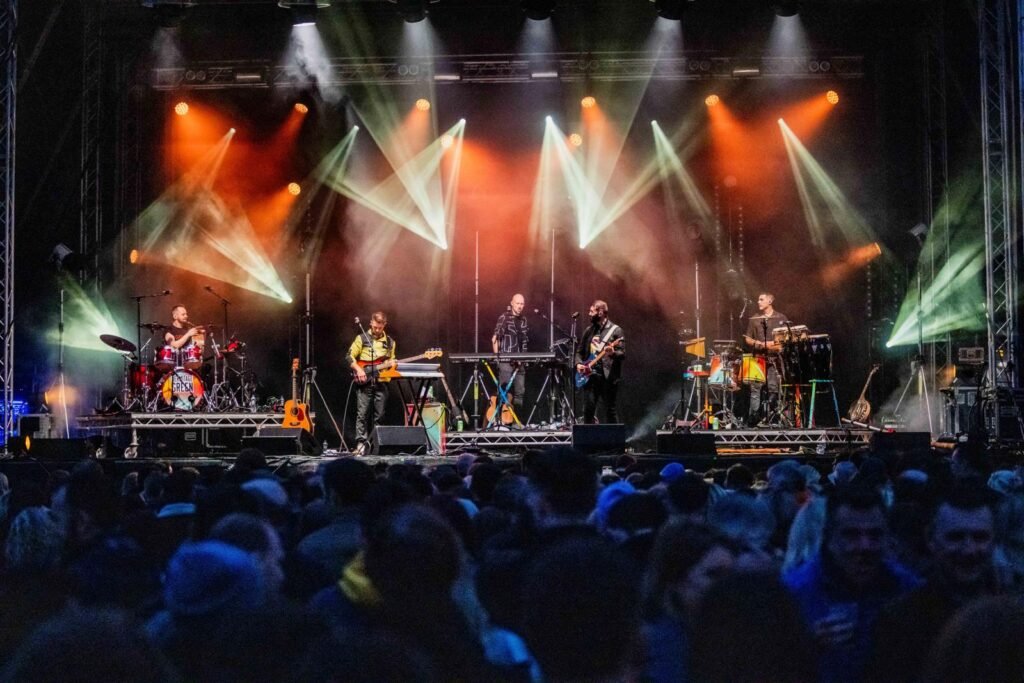
Darragh was playing multiple unusual instruments and my brother was the same, messing with loads of different weird instruments. Even back then, sitting in the corner of a pub, the foundations were there. Now you see us on stage with sixteen different instruments. We can barely fit on most stages because we have so much shit knocking around with us. (laughs) It was in the bone from the first day — it’s a pretty cool way to start.
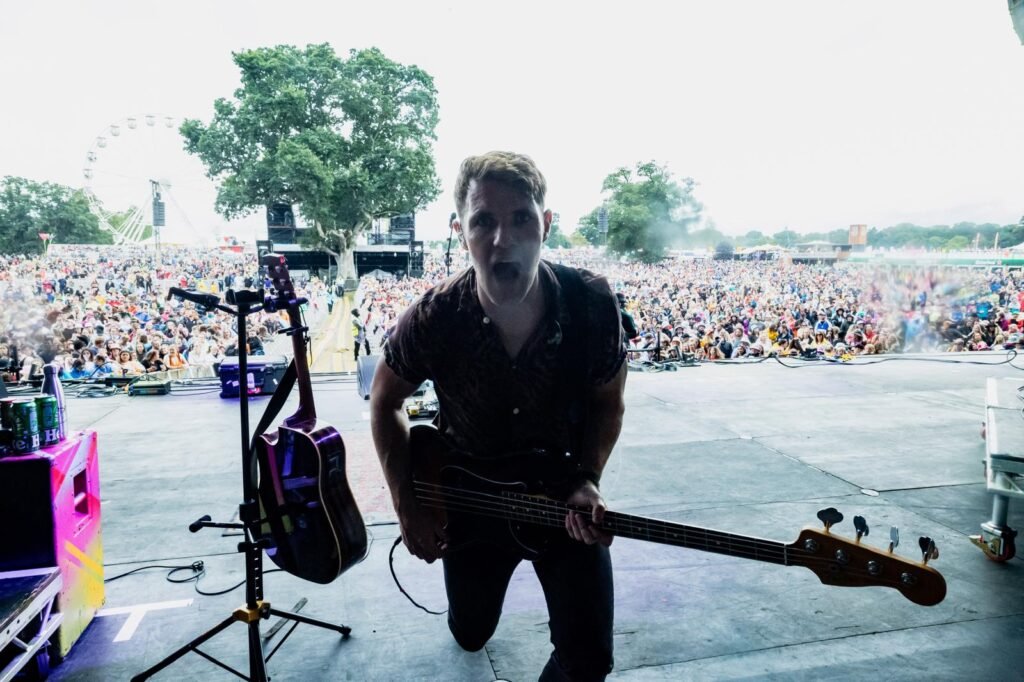
Do you get the same sense of fulfilment when you are walking out the stage in King John Castle, as you would walking at the pitch in Thomond Park?
Yes you really do! It’s unbelievable.
When I was a kid, I used to lie in bed with headphones on listening to “Tuesday’s Gone” by Lynyrd Skynyrd. I’d imagine my brother ripping a guitar solo and me singing the song somewhere live. Then I’d take the headphones off and my wall was plastered with posters of rugby players. My bedroom window framed Thomond Park perfectly. I’d open the curtains in the morning thinking: “I’ll play there someday.”
So the fact that I get to do both is insane to me. But they do go hand in hand.
I wasn’t great at school. I was always meant to do something that just take more graft. Sport was always an option. I also loved music, and I knew I could sing from an early age. My parents were so easy going as well. My mom used to always say that to me: “I don’t think you’re gonna do a regular job. Just do whatever you want. Do what you love”.
I suppose the dream would be to play in music in Thomond Park now (laughs).
You have gone from Limerick Pubs to major festival stages now… What has been the most surreal ‘We’ve made it’ moment along the way?
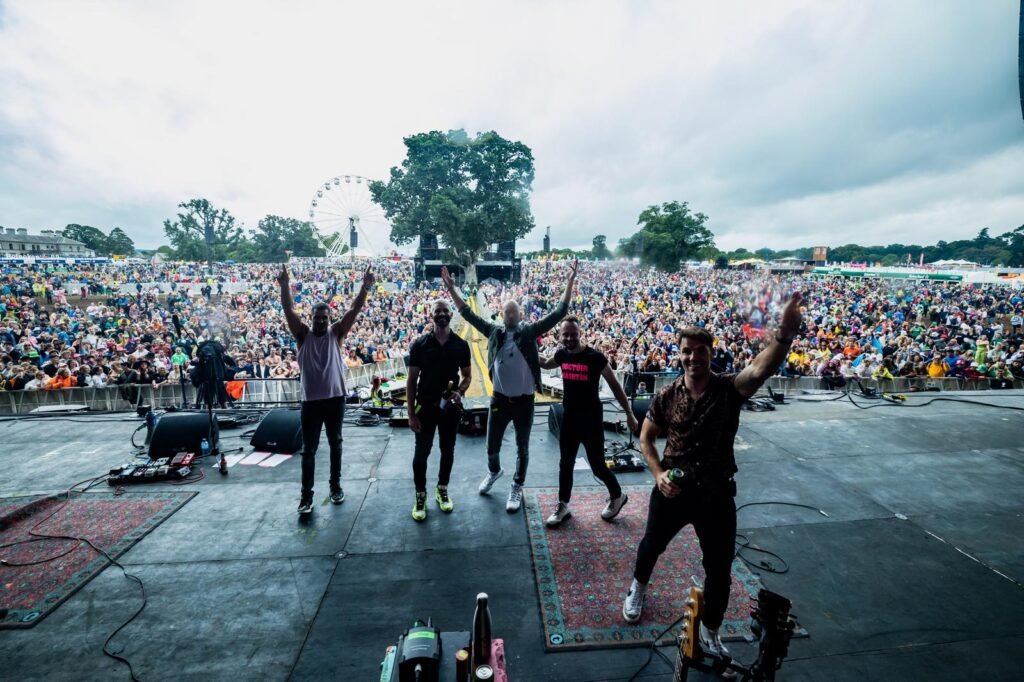
Headlining King John’s Castle two nights in a row in 2019 was pretty special. The buzz around it was incredible. Playing the main stage at Electric Picnic was another big milestone. We had targeted that years before, and then suddenly we were doing it.
But I don’t think we ever thought we’d made it. That never crossed my mind anyway. You’re kind of hungry for more than at that point, I suppose. What’s coming next?
But the rugby mentality sticks with you. I have been in too many dressing rooms. In a Munster environment that was so successful, you couldn’t for a second get ahead of yourself or you’d be clipped straight away. It was always beaten into us: You’re only as good as your last game. And in music you’re only as good as your last gig.
Limerick feels very central in Hermitage Green’s identity. How has the city shaped your music?
It definitely shaped us all as people. It shaped the three of us: Darragh is from Limerick, me and Dan are from the city. A lot of my life has been in and around Limerick city. I know it like the back of my hand. I saw Limerick going through its roughest patches: the recession in the eighties, the recession in the noughties, or most importantly the gangland war. How it has grown in the last 10 years into what it is now… How much Limerick people have helped to change how people view us internationally. Whether it’s because of sport, or Blindboy, or music, the people we export…
When we started playing, some weeks we’d play every night: in the Curragower, at The Office, The White House, Flannery, or Nancy’s, you name it. It did shape our sound and our personalities more than anything. It shaped how we perform live, our personalities and our sense of humour… It is such a unique place, it can only shape you.
We’ve written songs about Limerick. “My Love” is one of my favourite, that Griff wrote on High Generation. It’s like a love story with these two homeless people in Limerick who are struggling. It’s a bit of a love affair with Limerick as well, if you listen to the imagery. And I absolutely love it. He fucking nailed it. It’s one we’ll always be very proud of.
Evolving the Sound
Over the years, how has the songwriting and creative process evolved?
It changed massively.
When we first started out, Griff was writing quite unusual songs which set the tone for our first EP The Gathering. By the time we worked on our second album it had become more collaborative and we were all writing together. At that stage we were still playing mostly acoustic instruments. We didn’t even have a piano yet.
From folk roots to a fuller sound
Around 2014 we signed with Sony on the back of a demo of Quicksand. We went into the studio with Philip McGee and he transformed it into more of a pop-rock song. Save Your Soul changed everything for us. We brought in keyboards, electric guitars and a full drum kit.
Then the label brought us to Nashville for a writing retreat. You’d walk into a room and you’ve got an hour to write with someone. He could be presenting you with a song, half of it about some street in New Orleans that you’ve never fucking been on (laughs). We dipped our toe, didn’t enjoy it, and doubled down on doing our own thing.
Rediscovering the folk roots
After Save Your Soul, we wanted to bring back more of the folk roots while keeping some of the electronic elements. That’s when the didgeridoo came in on songs like The Lion’s Share and Heaven.
We recorded Golden Rust with Matt Lawrence in Rockfield Studios. It was an unbelievable experience, in a historic studio where so many legendary bands have recorded. You can almost lick it off the walls.
Matt focused heavily on the harmonies and helped bring out the richness of the sound, while the percussion setup (djembe, bodhrán, drums and didgeridoo) added another dimension.
Taking risks with Connection
Hi Generation was probably a follow on from that. One thing we had never really captured in the studio was the late-night festival energy of our live shows, so we leaned more into electronic and dance elements. It was the hardest undertaking we’d done, but we’re very proud of Connection. We managed to do it without moving too far away from what we had done before.
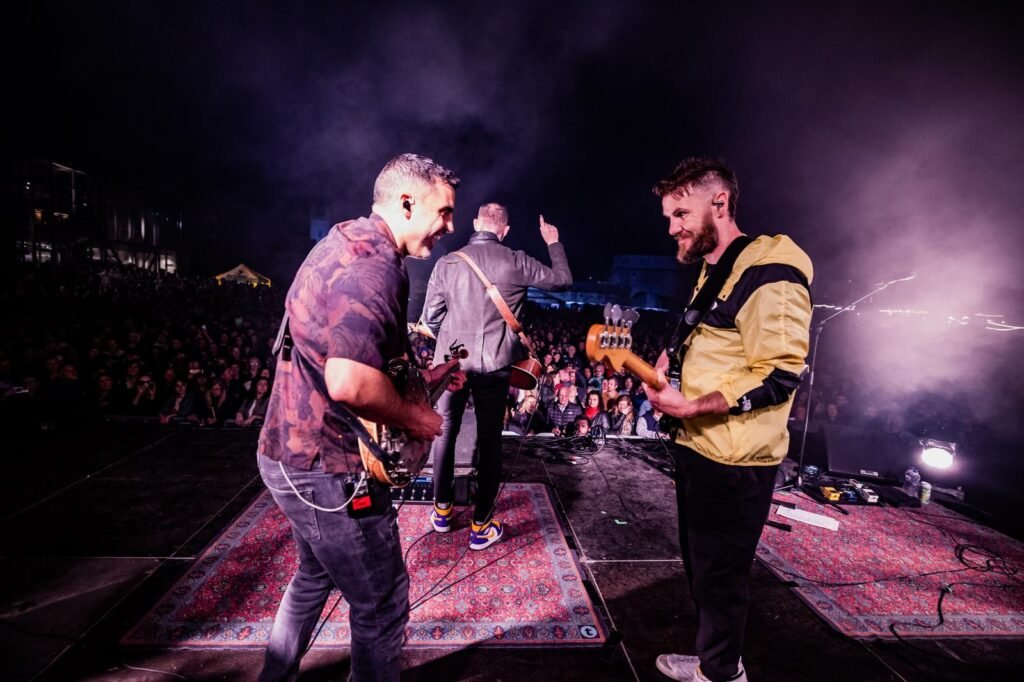
That collaboration with Bobby Fingers was just epic. On record as well as on stage.
Griff and Bob used to go to the same school and have similar sense of humour. Griff has always had a tendency to write songs like that every once in a while. When he wrote that, I told him “It’s not gonna suit my voice, or Dan’s. It has so much attitude”.
He sent it to Bob, who writes and sings his own stuff. When Bob came in he said “I’ve never sang someone else’s song. But it feels like I wrote this song. I’ll do this for you”. And he absolutely nailed it. His performance, when he recorded it, was off the charts. And when he comes and plays it live with us, it’s like getting an injection of Bobby fingers into your veins. It’s incredible.
The Reality of the Music Industry
The pandemic struck on your Ten Years milestone. How did that affect the band?
I felt it horrendous. We went from ten years of constant touring to absolutely nothing for nearly two years. Touring is the only place we make money.
We were never a band that made money from streaming. Not many bands or artists do. Between labels, management, publishers, whatever, taking their cut, we’ve made about two or three grand each from streaming over 15 years. With probably 20 or 30 million plays… So when our gigging money was dried up, it was hell on earth for us.
But look, we got through it. Three of us had young families at that point. That was kind of our focus. But I found it impossible to write or be creative.
We had a few incredible years there after COVID. Everyone got back to work, there was this buzz and the industry exploded for a few years with opportunities and touring.
A lot of artists are struggling financially, even when signed. How does the industry work for you today?
We’ve been lucky, actually.
We’ve been able to tour a lot internationally. It has been huge for us. It makes up a lot of our annual income. Not a lot of bands can tour internationally, whereas when you’re Irish, you can go to Australia, America, Canada, the UK, and even places in Europe.
We go out and play to a lot of people because we have a broader scope in our style of music. So again, we’re very lucky. If we didn’t have that, we wouldn’t be able to do it. For a band that might be more alternative, or that doesn’t have the benefit of touring to Irish people abroad who flock and support their own, it must be so hard.
As I said earlier, the streaming services just take everything. You don’t make a penny off that.
So touring is really where the money is now?
Yeah. But even then, there are costs. Everyone who makes the gig happen needs to be paid — management, engineers, crew. We’re very lucky to have a solid team; the show wouldn’t work without them.
What advice would you give to young artists today?
Social media is the fucking key now, isn’t it? Once you create something you’re proud of, the only way in this day and age to get yourself out there is social media — with proper planning, proper videos, proper editing. It can be tough and even soul-destroying at times, but that’s the reality now.
But more importantly: You have to keep your wits about you big time. And surround yourself with the right people.
There are a lot of people trying to take advantage of young bands —promising the sun, the moon, and the stars. They’ll hoodwink you into thinking you’re going to be this and that. These people are very good at telling you what to do, but for the most part it’s complete bullshit.
The ones who are really successful are the people who have their wits about them.
There are certain young bands in Ireland who get bad reputations for having attitudes. I won’t name any, but when you’ve been through the mill like we have, I say: “More power to them!” If they’re kicking doors open or showing backbone, so they won’t be bullied or controlled, that’s a good thing. Obviously, you have to show respect, but this industry can be dirty and manipulative, and there are people who control a lot of it.
Like any business, there’s a game to play. But having good people around you is key. We’re very fortunate now. It took us a long time to get the right people. It’s a tricky one.
How have you seen the Irish music scene evolve since you started ?
Back in our days, there wouldn’t have been a big Irish scene on the festival lineups. You’d get the odd one. Even in Limerick, there was ourselves and Rusangano Family and, Fox Jaw, Giveamanakick, and Windings had come before us. It didn’t really feel like a scene as such…
Now in Limerick, there’s a music scene. There are studios all over the city. There’s always something going on. We are playing on all the big stages: Hip-Hop, RnB, trad… Like Sean O’Meara playing at All We Have Are Days festival —that was fucking class. There is Denise Chaila, Hazy Hayes, Citrus and Dyrt Davis and even the folk scene, Dylan Flynn & the Dead Poets… It’s very cool.
There’s loads going on and I think that’s the same in most cities in the country. The Irish music scene has never been in as good a shape.
Celebrating 15 Years on Stage
What can we expect with the Anniversary concerts ? What would be different from a typical Hermitage Dream concert?
I won’t be majorly different.
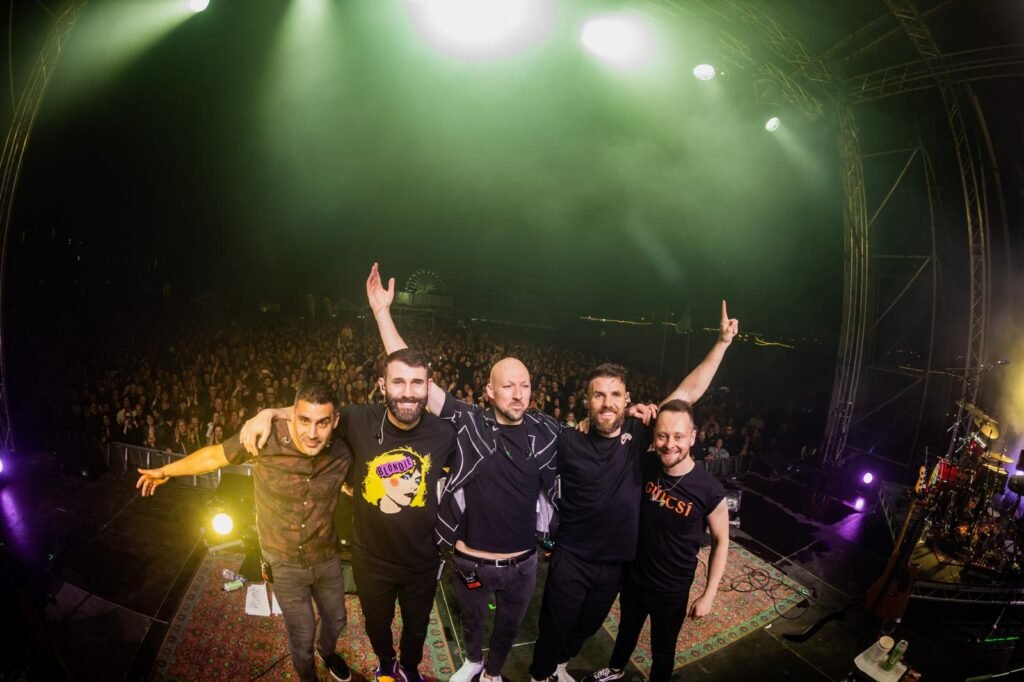
Every time we approach a show we try to tweak the songs slightly different. With the fact that it’s 15 years, we’re gonna try and pull a thread through our career: how it went from the corner of the pub to a bit more of an electronic sound. Try and really get that across the evolution.
We’ll play as many as we can from each album. Especially for King John’s Castle, where we’re gonna try and do slightly longer set, and get in as many as we can. It will be our biggest production. You have to go full on for the castle! There will be fireworks and a big screen, big lighting as well.
It’s a few years since we’ve played there and that’s the opening gig 15 year anniversary tour. Then we’re going right back to Whelan’s, where we recorded our first album, for two nights end of May. We’re gonna have to drop the size of the show for a stage like that.
Then we have between 15 and 20 gigs then to announce between here and the end of the year all over the country. And then we tend to make sure we swap in certain songs to make sure we get every song in over the course of the year.
Will you be revisiting any early material that hasn’t been played live in years?
Over the last seven or eight years in particular, the setlist has changed, but only slightly, other than by adding new songs. But there are definitely ones that get left behind. There’s always someone who didn’t hear the song they love.
We get into so many arguments with one another over this stuff. (Laughs) It’s all good, but you each have favourites, and maybe ones you have a bit more love for because you’ve written them. We try to vary it as much as possible and hopefully people get enough out of it.
Have you ever played that Lynyrd Skynyrd song you wanted to cover live?
No. (Laughs) It’s an option. I mean, how long is “Tuesday’s Gone” — seven minutes? You can’t really get away with that.
But yeah, if I go I will go solo, that’s what I’ll do.
(laughs)
Will there be any special guest ?
There will be, yeah. We’re working on that — definitely in Limerick. We haven’t fully put it together yet, but we’re looking at support slots for the shows and bringing in people who’ve come up with us over the years to play on the night — open for us and then maybe join us on stage.
It’s funny when you look back at all the collaborations we’ve done in those rooms — they’ve been massive throughout our career. We’ve always benefited from getting people up on stage with us to sing songs, especially on the bigger nights.
So yeah, we’ll definitely be bringing a few friends.
What is coming next?
We’ve been talking about doing a small EP for the anniversary, a throwback to everything we’ve done. Pick a couple of songs from each album and, and record them live, mixing old instrumentation with the newer sound, and vice versa. It would be a nice way to look back on the fifteen years.
It’s in the works now.
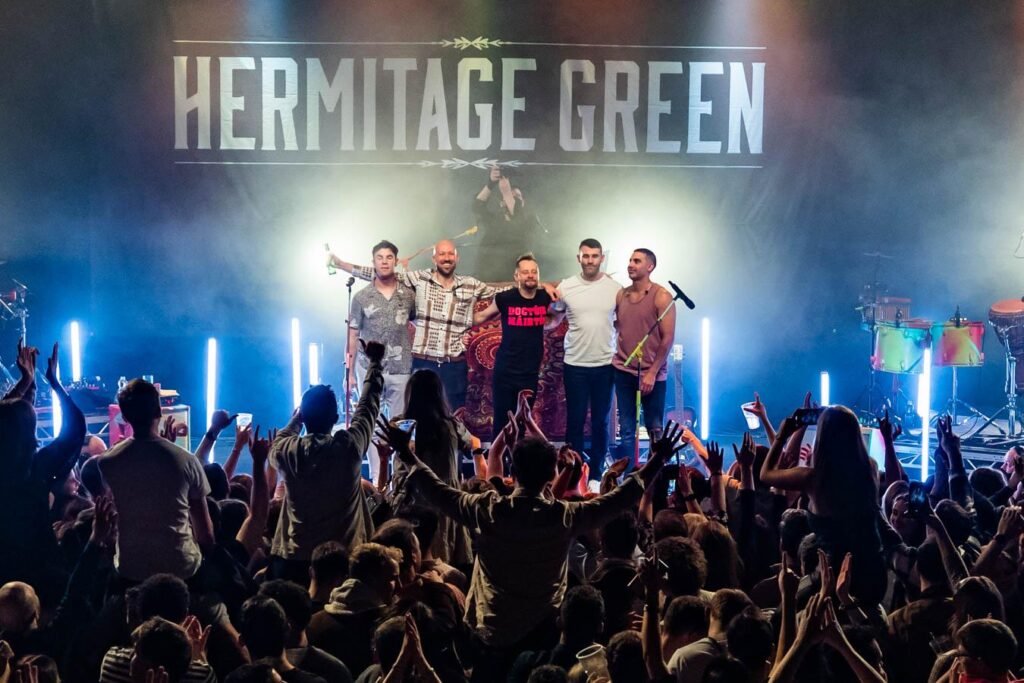
Hermitage Green will be stepping on the stage of King John Castle in Limerick on the 3rd of May 2026. Then they will be on Whelan’s stage in Dublin on the 29th and 30th May 2026. More date should come for a nationwide tour. More information on the band’s website.