


 Emma Lawlor
After their long-awaited 2025 comeback with More, Pulp are back again. But this time, in miniature. Their latest digital EP spans just three tracks, yet it offers a surprisingly broad palette: a daring Johnny Cash cover and two original songs that might have been left off the main album. Originally released as a 12″ single through Rough trade in late 2025, it has been digitally released in March 2026. It’s an experiment in contrast, atmosphere, and reflection, and it’s worth taking the time to sit with.
Track One: Crossing Time with Johnny Cash
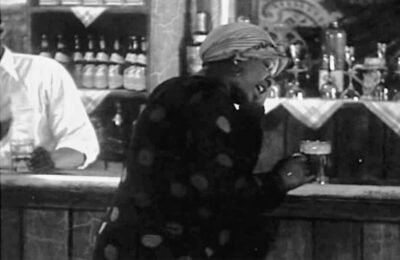
The EP opens with a reworking of Johnny Cash’s song “The Man Comes Around.” It’s immediately clear that Pulp aren’t trying to replicate the legendary voice but instead they’re letting it inhabit a new space. The production replaces Cash’s earthy acoustic gravitas with a cold, spacious synth framework, giving the song a detached, almost cinematic tension.
Jarvis Cocker’s voice doesn’t compete. Instead, it drifts around Cash’s archival vocals in a conversational orbit, adding modern commentary without ever stealing the spotlight.
It’s a bold choice, but it works. The result is haunting, restrained, and unsettlingly intimate—a reminder that Pulp know how to play with tone, space, and narrative in ways few bands can.

Track Two: Back to the City
The second track, “Marrying For Love,” shifts gears entirely. Gone is the spectral tension of Cash’s voice; here, Pulp return to the familiar world of urban observation, irony, and emotional nuance. Synths pulse with purpose, guitars slice in subtly, and Cocker delivers his words in a mix of spoken-word intimacy and slow-burn vocal melody.
The song explores desire and human connection, but it does so with Pulp’s characteristic wry lens. It’s modern, grounded, and theatrical, with peaks of emotional urgency balanced against quieter, reflective passages. After the starkness of the opening track, this feels like a return to center, a reminder that the band’s core strengths—sharp lyrics, clever narrative, and layered production—remain intact.
Track Three: The Afterglow
Closing the EP is “Cold Call on the Hotline,” a track that leans even further inward. Built around a retro electronic pulse, it frames intimacy through distance: a phone call becomes a metaphor for emotional connection and isolation. Here, Cocker’s vocals are reflective, and slightly melancholic which is a counterpoint to the drama of track two.
Where Marrying For Love pushed outward, this song pulls you into a quiet, contemplative space. The arrangement’s warmth and melodic flow create a gentle resolution for the EP, leaving listeners with a lingering sense of human vulnerability and temporal reflection.
Final thoughts
In its brevity, this three-track release feels less like a conventional follow-up and more like a thoughtful epilogue to More. Rather than chasing scale, Pulp lean into mood, contrast, and subtle reinvention—moving from spectral reinterpretation to sharply observed modern storytelling, before settling into quiet introspection. It may be short, but enough to get the taste of good Pulp music.